Not sure what to look for in an excavating contractor? This guide walks you through everything before you make a costly mistake.
Share:
Summary:
Most homeowners spend months researching countertops and flooring. They spend about forty-five minutes researching their excavating contractor. That is the part that goes in the ground first, the part everything else depends on, and it is often the least understood phase of the entire build.
If you are planning a new home in Saratoga County, Warren County, or Washington County, this guide is for you. We are going to walk through what excavation involves, what separates a contractor worth hiring from one worth avoiding, and what questions you should be asking before anyone touches your property.
Excavation is more than digging a hole. We handle land clearing, site grading, foundation excavation, utility trenching, septic system installation, drainage planning, and the soil compaction that makes all of it hold up over time. On a new home build, we are typically the first trade on the property and the ones whose work every other trade builds on top of.
When that work is done right, you never think about it again. When it is done wrong, you find out the hard way, usually when your basement floods in April, your septic fails inspection, or your foundation shifts after the first hard freeze.
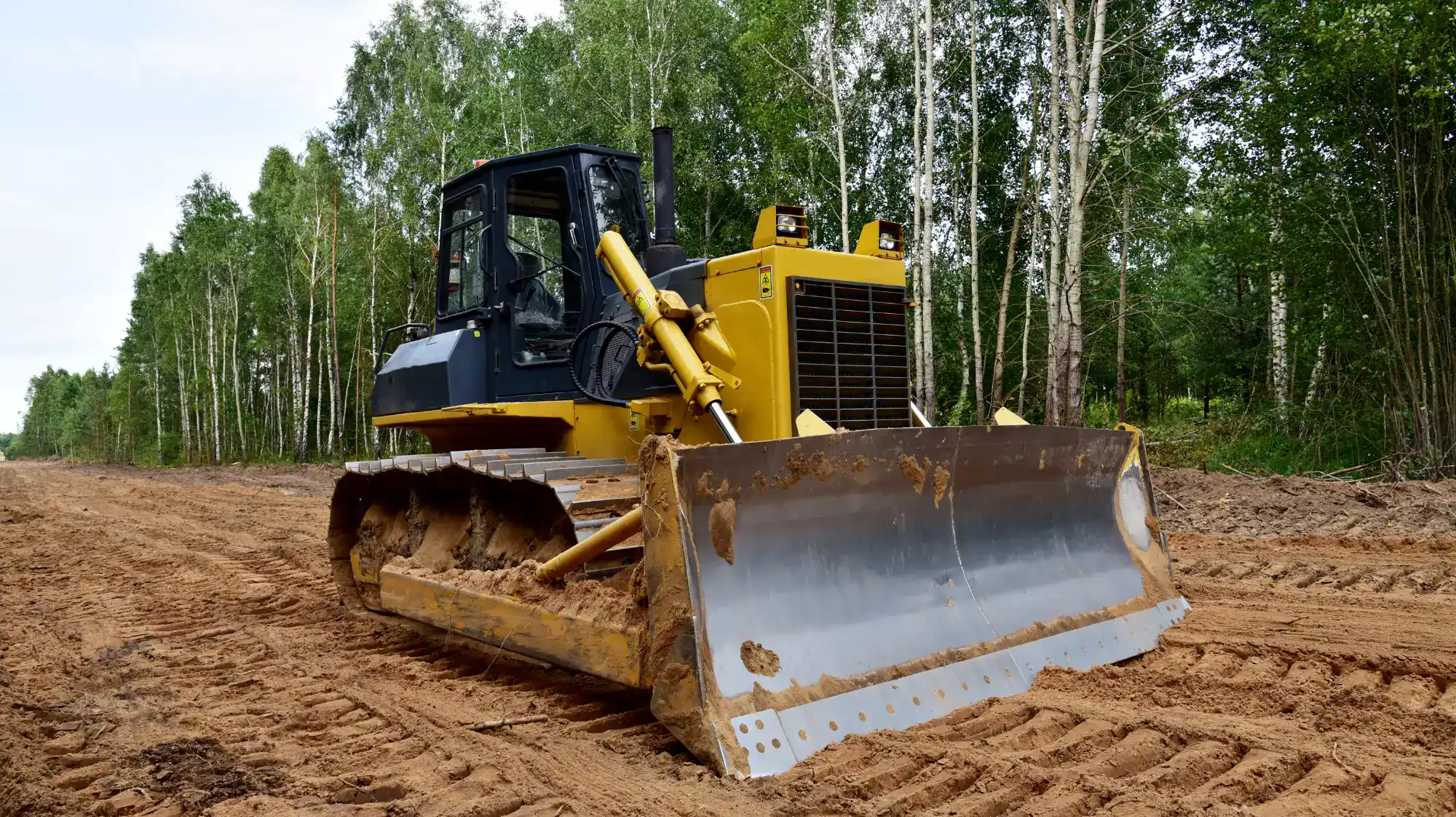
If your lot has trees, brush, or stumps on it, and most buildable lots in Warren County and the rural parts of Saratoga County and Washington County do, land clearing comes before anything else. It is the process of removing vegetation, trees, and root systems from the area where your home, driveway, and septic system will go.
This is not just about cutting trees down. Root systems left in the ground can interfere with drainage, shift soil over time, and create voids that compromise compaction. A contractor who understands what is happening below the surface, not just what is visible above it, handles this phase differently than one who is running a machine through the woods.
We started as a logging operation in 1997, which means we spent more than two decades working with this kind of terrain across Saratoga, Warren, and Washington Counties before we ever ran an excavator commercially. We know how root systems behave in the rocky, clay-heavy soils of the Adirondack foothills. We know the difference between a site that looks clear and a site that is clear. That background matters when you are building on a wooded lot in Queensbury or clearing a sloped parcel off NY Route 9N heading toward Lake George.
Land clearing and excavation handled by the same contractor also means better coordination. There is no gap between the clearing crew finishing and the excavation crew starting, no finger-pointing when something is not where it should be, and no scheduling delays while you wait for two separate companies to sync up their calendars.
Grading is the process of shaping the ground around your home so that water moves away from the structure rather than toward it. It sounds straightforward. In practice, it requires a real understanding of how water behaves in your specific soil on your specific lot, and that varies significantly across this tri-county area.
Near the Hudson River in Washington County, you are often dealing with sandy, alluvial soils that drain quickly but shift easily. Move inland toward the Adirondack foothills in Warren County and you hit rocky ledge and dense clay that holds water and creates drainage challenges that do not show up until after a wet spring. In parts of Saratoga County, especially in the faster-growing communities in the southern end of the county like Clifton Park and Malta, you can find all of it within a few miles of each other.
Upstate New York’s freeze-thaw cycle adds another layer. Frost depth in this region reaches 36 to 48 inches in a hard winter. Soil that was not properly compacted or graded in the fall does not just look bad the following spring, it can heave, shift, and create drainage problems that are expensive to fix after the fact. We work with the seasonal calendar in mind, not against it.
Poor grading is one of those mistakes that stays invisible for months. You will not know it happened until you are standing in a wet basement or watching pooled water sit against your foundation after a storm. Getting it right from the start, with someone who understands the specific soil conditions of your lot, is worth more than any amount of savings on a low bid.
Want live answers?
Connect with a Emerson Excavating and Trucking expert for fast, friendly support.
Saratoga County issued 1,112 new housing permits in 2024 alone, a 25% jump from the year before. That kind of growth brings serious contractors to the market, and it also brings operators who are not ready for the work they are taking on. Knowing how to tell the difference before you sign anything is the most valuable thing this guide can give you.
The instinct to get three bids and go with the lowest one makes sense on paper. In excavation, it almost always backfires. A low bid typically means something is being left out of scope, underestimated, or cut. You will find out what it was when the job hits a complication and the contractor either disappears or hands you a change order that erases the savings.
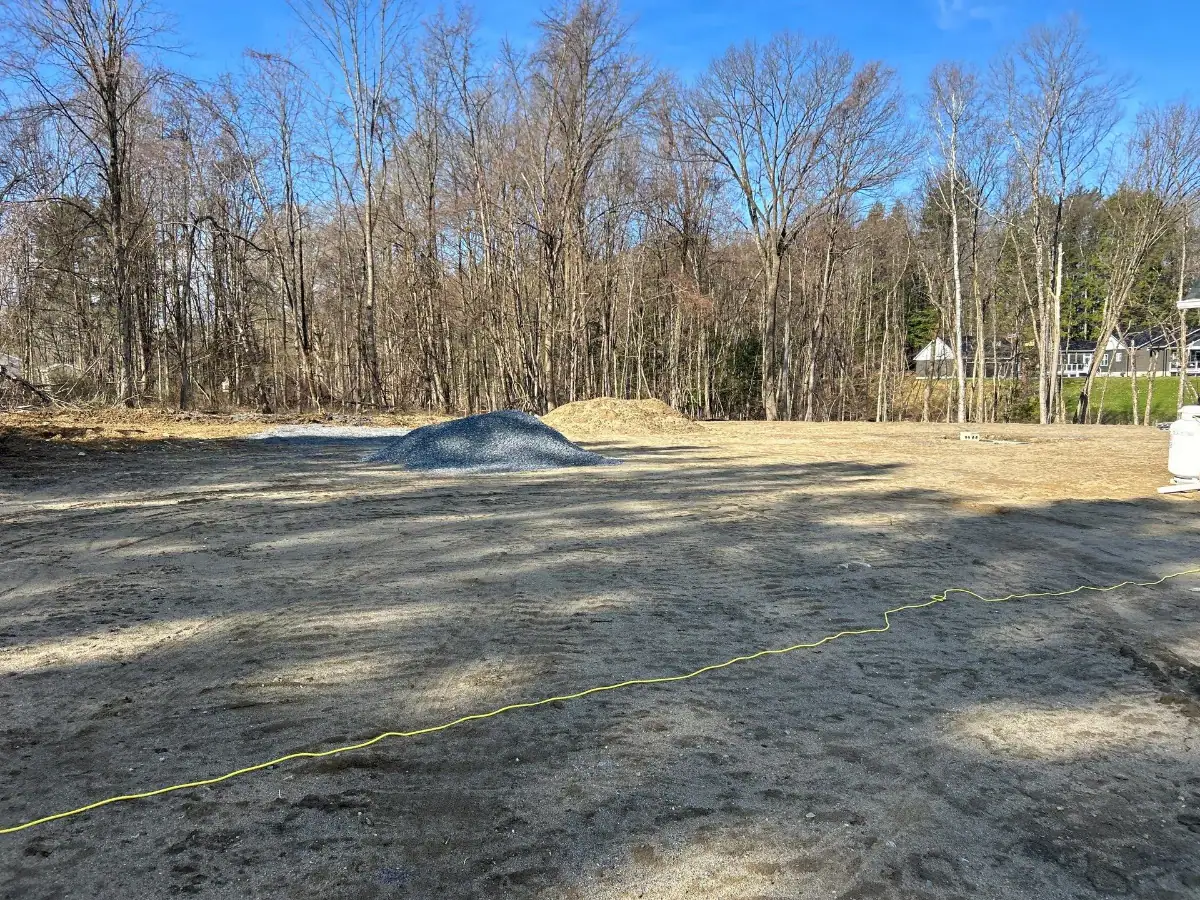
Start with the basics: Are you licensed and insured, and can you show me proof before work begins? Any contractor worth hiring will say yes without hesitation. Licensing requirements in New York are handled at the county and municipal level for private residential work, so what matters is that we are operating legally in your specific area and carrying comprehensive liability insurance that protects your property, not just our crew.
Ask who will be on the job. This is a question a lot of homeowners forget to ask, and it is one of the most important. Some contractors sell the job and then hand it off to a subcontractor you have never met. If you are hiring based on someone’s reputation and experience, you should know if that person is going to be present when the work is happening.
Ask how we handle permits. In Saratoga, Warren, and Washington Counties, excavation work often requires coordination with local building departments, and in some cases, state-level compliance for stormwater and environmental regulations, particularly for projects near the Adirondack Park or along waterways. A contractor who handles permit coordination in-house is one less thing you have to manage. One who leaves it to you, or worse, tells you it is not necessary, is a red flag.
Ask for a written estimate that breaks down the scope. Vague verbal quotes do not protect you when something changes. A written, itemized estimate tells you what is included, what is not, and what might affect the final number. It also tells you a lot about how the contractor runs their business. Specificity is a sign of professionalism. Vagueness is a sign of something else.
Finally, ask how we communicate during the project. How a contractor responds to your calls and messages during the estimate process is a preview of how they will respond once they have your deposit. If they are hard to reach before the job starts, they will be harder to reach once it is underway.
Saratoga, Warren, and Washington Counties are not a uniform landscape. The terrain changes meaningfully as you move across the region, from the flatter, faster-developing corridors along I-87 in southern Saratoga County, through the rolling hills and rocky ground of the Adirondack foothills in Warren County, to the rural, river-adjacent parcels of Washington County where most properties depend on private wells and septic systems. Hiring a contractor who does not know the difference is not just inconvenient. It can result in a septic system that fails inspection, a foundation that shifts after the first frost, or a drainage plan that looked fine on paper and fails every time it rains.
This is why 60% of successful excavation projects in the industry come through word-of-mouth referrals. People who have had good work done talk about it. People who have had bad work done talk about it louder. In a region this connected, where the contractor who did your neighbor’s foundation in Ballston Spa is the same one your builder recommends in Queensbury, reputation follows you everywhere.
We have been working in this specific terrain since 1997. We know what the ground looks like in late March when the frost is coming out and the clay is saturated. We know what happens on a sloped lot in Warren County when the grading is not quite right and the first hard rain comes through. We know which communities along US Route 4 in Washington County have the sandy soils that behave completely differently from the rocky ground twenty miles west. That is not something you learn from a manual. It comes from years of showing up and doing the work.
Josh is present on virtually every job we run. When you hire Emerson Excavating and Trucking, you are not handing your project to a crew you have never met. You are working with someone who is personally accountable for how the job goes, start to finish. For a homeowner who is about to break ground on the most expensive thing they will ever build, that matters.
Hiring the right excavating contractor is not complicated once you know what to look for. You want someone who knows your soil, handles their own work, gives you a written estimate with no surprises, and is present when the job is happening. You want someone who is going to be around, not just for this project, but for the next one.
Saratoga County is one of the fastest-growing counties in New York State. New homes are going up in Malta, Halfmoon, Clifton Park, and communities throughout Warren and Washington Counties. The demand for qualified site work is real, and so is the gap between contractors who are ready for it and those who are not.
If you are planning a new home build, a land clearing project, a driveway, or a septic installation in this region, we would like to talk through it with you. Reach out to Emerson Excavating and Trucking by phone or text, and we will give you a straight answer and a clear estimate, and we will take it from there.
Article details:
Share:
Continue learning: