Thinking about clearing land in Saratoga, Warren, or Washington County? Here is what eco-friendly land clearing really means in practice, along with what to watch out for.
Share:
Summary:
Most people building a new home in Saratoga, Warren, or Washington County think land clearing is simple: hire someone with equipment, clear the trees, and move on. But the reality is more involved, and the way it is handled has a lasting impact on your property. Done right, clearing sets up your build for success. Done carelessly, it creates drainage nightmares, erosion problems, and headaches that follow you for years. The good news is that the land clearing industry has changed significantly, and the modern approach is smarter, less destructive, and better for the land you are about to build on. Here is what that really looks like.
The term “eco-friendly land clearing” gets thrown around a lot, but it rarely gets explained. It is not just a marketing phrase; it refers to a real shift in how excavating contractors approach wooded and undeveloped land. The old method was straightforward: bulldoze everything, pile it up, and haul it away or burn it. It was fast, but extremely rough on the land.
The modern approach is more deliberate. It starts with understanding what is on the property before anything gets touched: which trees are worth preserving, where the natural drainage flows, what the soil is doing, and if there are any wetlands or water features nearby that need to be respected. From there, the clearing is sequenced to minimize soil disruption and protect what stays behind.
For homeowners in Saratoga, Warren, and Washington Counties, that care matters. The Adirondack foothills terrain across this region is not forgiving. Rocky glacial soils, clay pockets, and variable drainage patterns mean that how you clear the land directly affects how well your future driveway, foundation, and yard perform.
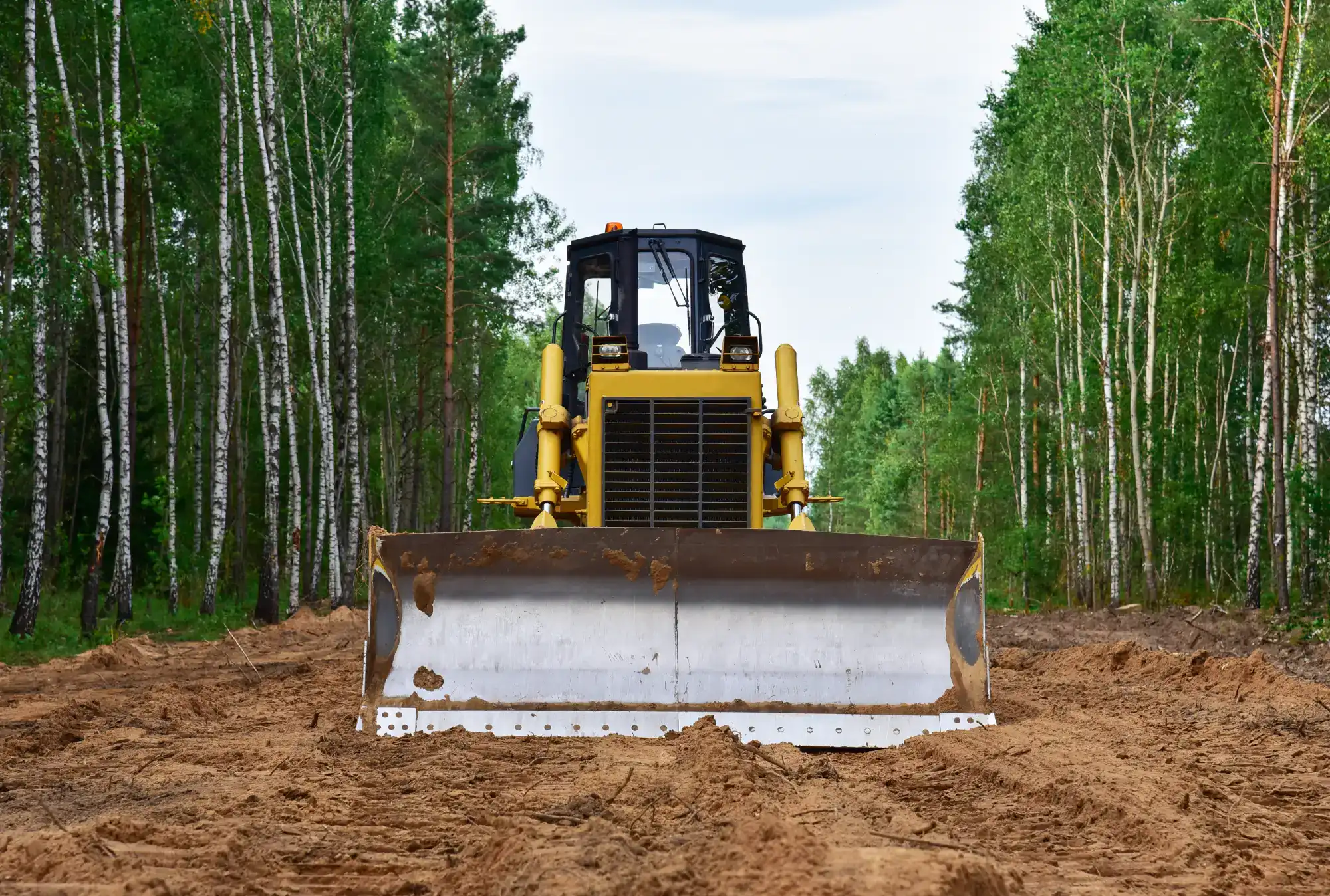
One of the most significant shifts in land clearing over the past decade is the rise of forestry mulching. Instead of cutting trees and hauling debris off-site, a forestry mulcher grinds everything (trees, brush, and stumps) into fine mulch that stays on the ground. That mulch returns organic matter to the soil, reduces erosion, and eliminates the cost and emissions associated with hauling truckloads of debris to a disposal facility.
For the right property, this is a genuinely better approach. The ground stays more intact, soil compaction is reduced compared to heavy bulldozing, and the site looks finished when the work is done. It is also often faster and, in many cases, less expensive overall because you are not paying for debris removal on top of the clearing itself.
That said, forestry mulching is not the right tool for every situation. If you are excavating for a foundation, installing a septic system, or doing significant grading work, you will still need traditional excavation equipment. The key is matching the method to the project instead of defaulting to one approach just because it is what a contractor always uses.
Selective clearing is another method worth understanding. Rather than clearing every tree on a parcel, selective clearing targets only what needs to go: trees in the direct footprint of the build, brush blocking drainage, and dead or diseased wood that poses a hazard. Healthy trees outside the build zone stay put. This protects the aesthetic value of the property, preserves root systems that stabilize surrounding soil, and keeps the character of the land intact. For homeowners in Wilton, Hadley, or Warrensburg who chose their lot specifically because of the trees on it, selective clearing is often the best call.
The bottom line is that we give you options. A contractor worth hiring will walk the property with you, explain the tradeoffs, and recommend the approach that makes the most sense for your specific site, not just the one that is easiest for them.
Here is something a lot of property owners do not find out until it is too late: erosion does not wait. The moment you remove vegetation from a slope or disturb the top layer of soil, you create the conditions for runoff. Rain hits bare ground, picks up sediment, and carries it downhill into your neighbor’s yard, into a nearby stream, or across your future driveway.
We install erosion controls as part of the clearing process rather than an afterthought. Silt fencing, straw wattles, and strategic grading all play a role in keeping disturbed soil where it belongs while the site is worked. This is not optional; it is required by New York State for any project that disturbs one acre or more of land.
That regulation is worth understanding if you are planning a build in Saratoga, Warren, or Washington County. Any land disturbance over one acre triggers the NYSDEC SPDES General Permit, which requires a Stormwater Pollution Prevention Plan: a formal document outlining exactly how erosion and runoff will be managed throughout the project. Many homeowners have no idea this requirement exists until a stop-work order shows up. We handle this from the start, protecting your timeline and your wallet.
Warren and Washington Counties add another layer of complexity. Both counties border the Adirondack Park and contain significant regulated wetlands, streams, and water bodies. Clearing within 100 feet of a regulated wetland in New York requires a DEC permit, regardless of the total acreage disturbed. The ponds, streams, and wetland areas throughout the Lake George watershed, the Hudson River corridor, and the interior of Washington County are not just scenic; they are regulated. A contractor who does not know where those lines are can create serious problems for your project.
This is exactly the kind of knowledge that comes from working this specific region for years.
Want live answers?
Connect with a Emerson Excavating and Trucking expert for fast, friendly support.
Saratoga County issued 1,112 new private housing building permits in 2024, representing a 25 percent increase over the previous year. That is a lot of new homes going up, and every single one of them started with someone clearing land and preparing a site. If you are in that pipeline, it helps to understand what the clearing process really involves, because it goes far beyond removing trees.
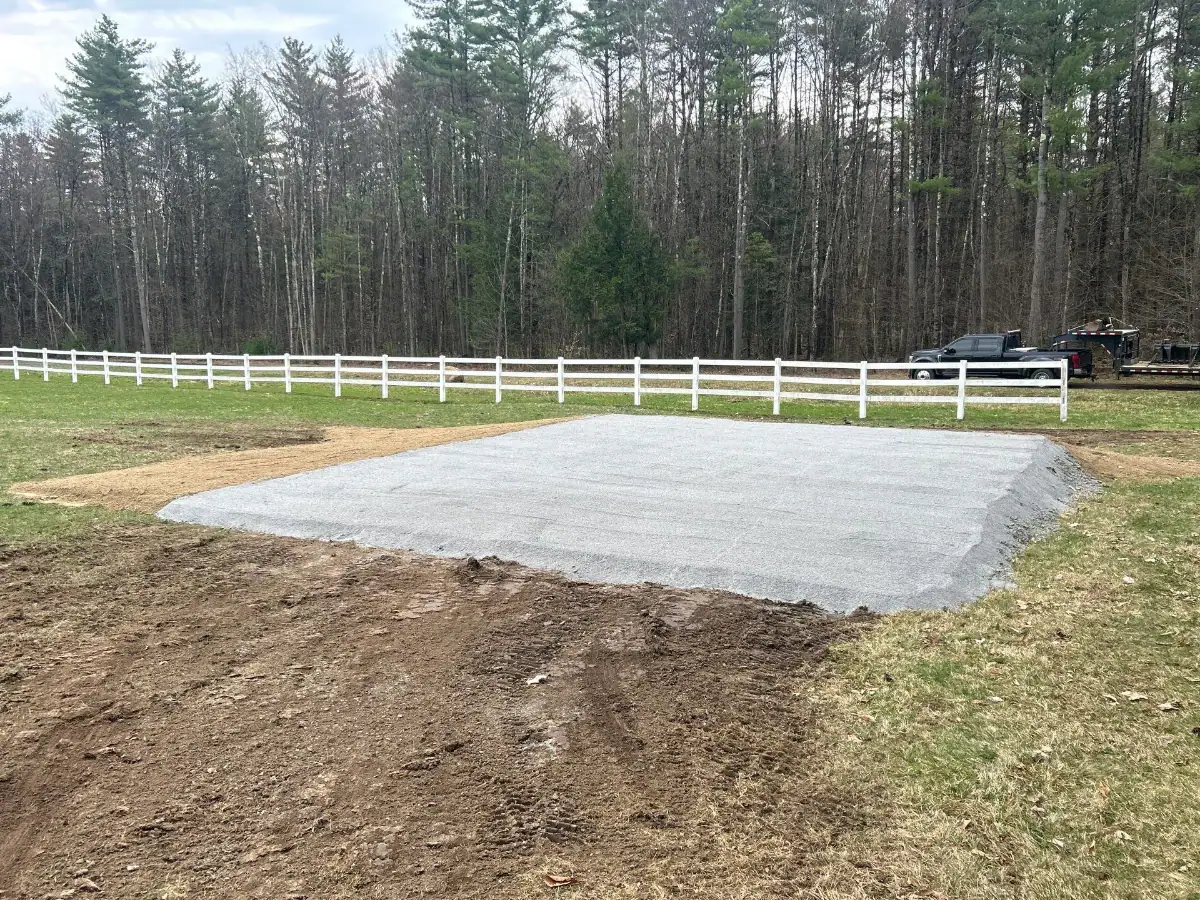
A complete land clearing and site prep sequence typically moves through several stages: initial clearing of trees and brush, stump removal and grubbing, rough grading to establish the general elevation and drainage of the site, erosion control installation, and final grading to bring the site to precise spec ahead of construction. Skipping or rushing any of these steps creates problems that show up later, often in the form of drainage issues, settling, or a foundation that fights the natural slope of the land.
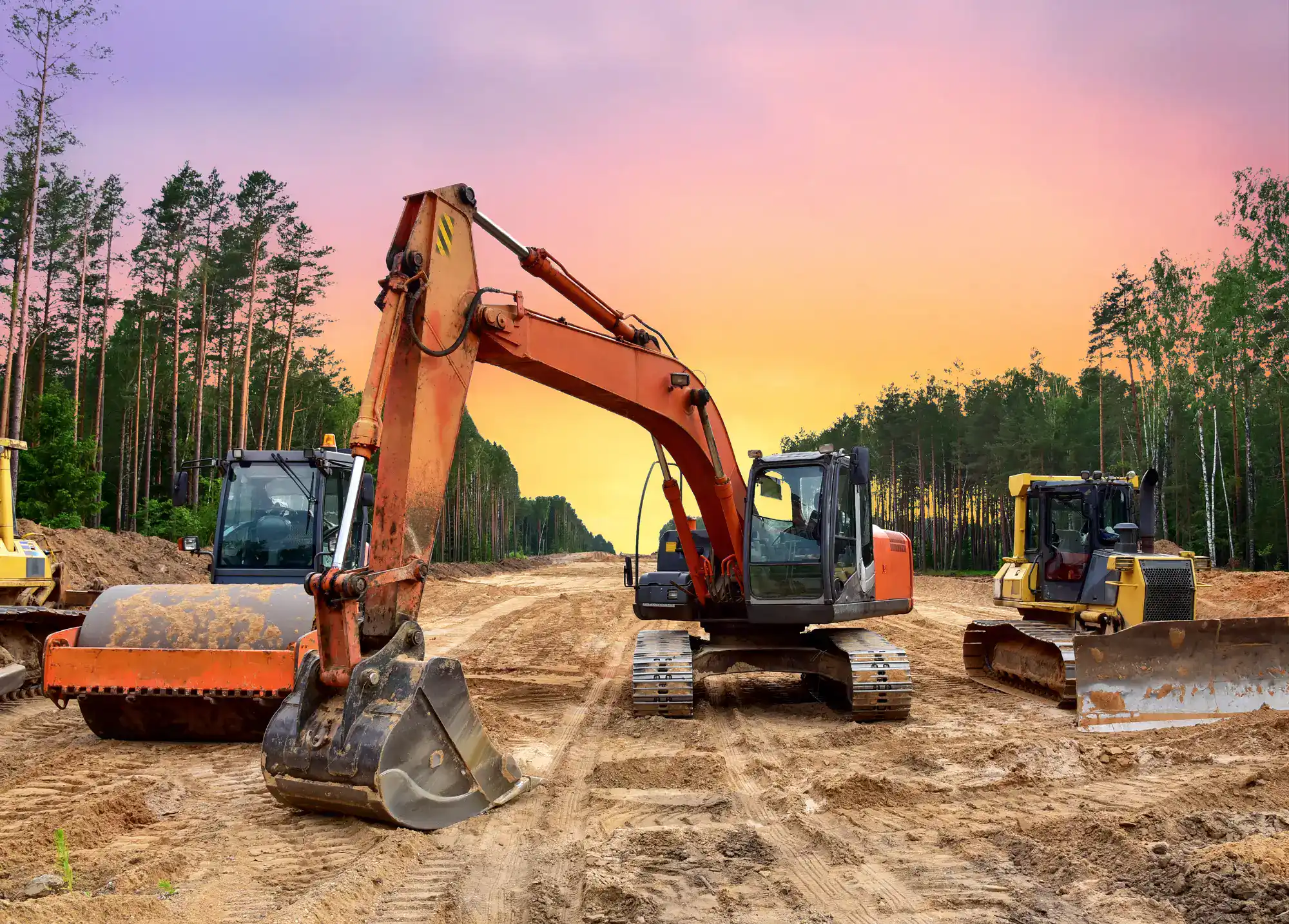
Timing matters more in upstate New York than it does in most parts of the country. The ground here can freeze three to four feet deep over winter, which makes excavation impractical from roughly December through March. That creates a compressed spring season, typically April through June, when demand for land clearing and site prep spikes sharply and quality contractors book up fast.
If you plan to break ground in May or June, you need to be talking to us well before spring. Waiting until April to line someone up for a May start is usually too late. Builders in Clifton Park, Malta, Ballston Spa, and Queensbury who miss the spring window often lose their contractor’s slot entirely and push their build back a full year.
The real time it takes to clear a parcel depends on the size of the property, the density of the vegetation, the terrain, and the equipment being used. A well-equipped crew working a flat, moderately wooded lot can move quickly. Rocky terrain, steep slopes, or dense second-growth forest (common across Warren County and the hillier parts of Washington County) take longer and require specialized machinery. We give you an accurate timeline upfront based on what sits on your property, rather than promising a fast turnaround without ever walking the site.
The other detail to plan for is the permit timeline. If your project triggers a SPDES stormwater permit, which happens when disturbing more than an acre, that documentation needs to be in place before clearing begins. Local grading and land disturbance permits from your town building department add another step. These are not roadblocks, but they do take time. We handle them routinely so you move through the process much faster than you would with a contractor who is figuring it out as they go.
The land clearing contractor you hire is the first person to touch your property. How they work sets the tone for everything that follows. Beyond price, here is what really matters.
Local experience in this specific terrain is a major factor. The rocky glacial soils of the Adirondack foothills behave differently from the clay-heavy soils along the Hudson River valley in Washington County. A contractor who has spent years working parcels in Glens Falls, Hudson Falls, Saratoga Springs, and the surrounding communities knows what to expect, building that knowledge directly into how they quote and schedule the job. Generic contractors who work across a broad, distant region do not carry that same site-specific understanding.
Ask if the contractor handles the full sequence: clearing, stump removal, grading, erosion control, and debris management. Find out if they hand off pieces to subcontractors. Every handoff introduces a coordination risk and a potential delay. We control the full process ourselves, meaning we retain full control over the timeline.
Ask about permits. Specifically, ask if they will handle the NYSDEC stormwater permit and local grading permits, or if that responsibility falls to you. The answer tells you a lot about how experienced they are with projects in this region.
Ask who will be on your job. There is a meaningful difference between a contractor who sends a crew and one where the owner is present on-site overseeing the work personally. When the person running the equipment has their name on the business, the standard of care is noticeably higher.
Finally, ask for a written quote that spells out exactly what is included. Stump removal, final grading, and debris hauling are common line items that get left out of low-ball quotes and added back later as change orders. A quote that covers the full scope upfront, with no hidden fees, is worth far more than one that looks cheaper on paper.
We started Emerson Excavating and Trucking because too many property owners were getting burned by contractors who overpromised and underdelivered. That remains the most common complaint we hear from new clients. The questions above will not guarantee a perfect experience with every contractor, but they will quickly surface the ones worth trusting.
Sustainable land clearing is not just a trend; it is simply a smarter way to work. Preserving what does not need to go, managing erosion from day one, handling permits correctly, and sequencing the work so the site is genuinely ready for construction are not optional extras. They represent the baseline for doing the job right.
We have been working in Saratoga, Warren, and Washington Counties since 1997, starting out as a logging operation before building a full excavation and site prep company. That background means we understand these forests before we clear them. We know the terrain, the regulations, and the seasonal realities of building in this region inside and out.
If you are planning a build and want to talk through what your clearing project really involves, reach out to Emerson Excavating and Trucking directly. Call or send a text; we will give you a straight answer and a clear quote with zero surprises.
Article details:
Share:
Continue learning: