Building on raw land in Saratoga County, Warren County, or Washington County? Here's what the grading process actually looks like — and why it matters more than most people realize.
Share:
Summary:
You bought the land. You have a builder lined up. Now you’re staring at a wooded lot in Saratoga County — or maybe up near Lake George in Warren County, or out in Washington County — wondering what has to happen before any of that can actually move forward. Grading is usually the answer, and it’s usually the part nobody explains.
Most people don’t think about it until their contractor brings it up, and by then they’re already behind on the timeline. This post is here to fix that. We’ll walk you through what grading actually involves, why it matters so much in this specific region, and what to look for when you’re deciding who to hire.
Grading is the process of shaping the land so that water, weight, and structure all behave the way they’re supposed to. It’s not just leveling — it’s engineering the surface of your property so that water flows away from your foundation, your driveway doesn’t pool, and the ground can support what you’re building on top of it.
A grading contractor handles the earthwork that comes after clearing and before construction. That means cutting down high spots, filling in low ones, compacting the soil so it won’t shift, and creating the slopes and drainage paths that protect your investment for decades.
When it’s done right, you don’t think about it again. When it’s done wrong, you’re dealing with soggy yards, cracked driveways, and wet basements — sometimes for years.
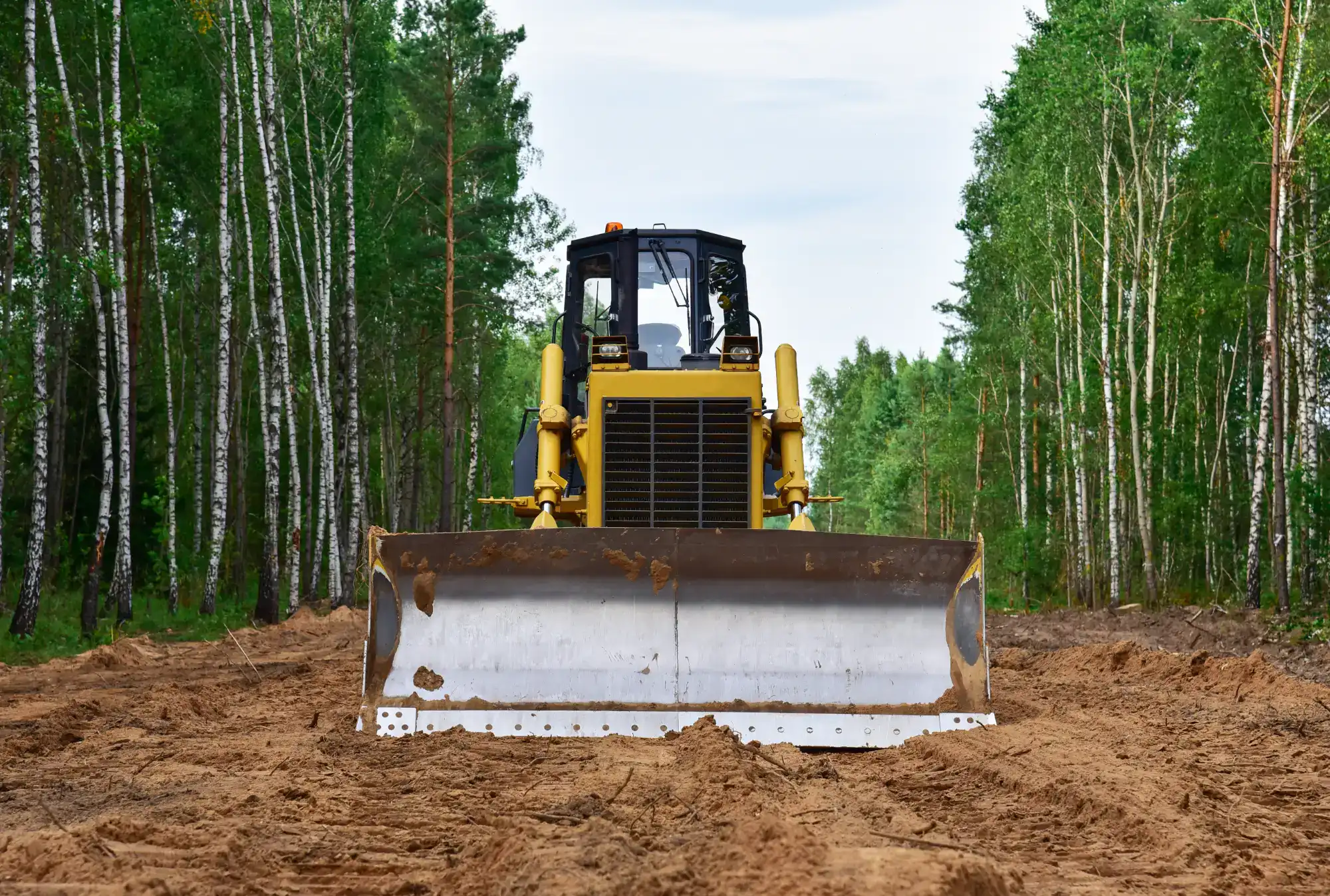
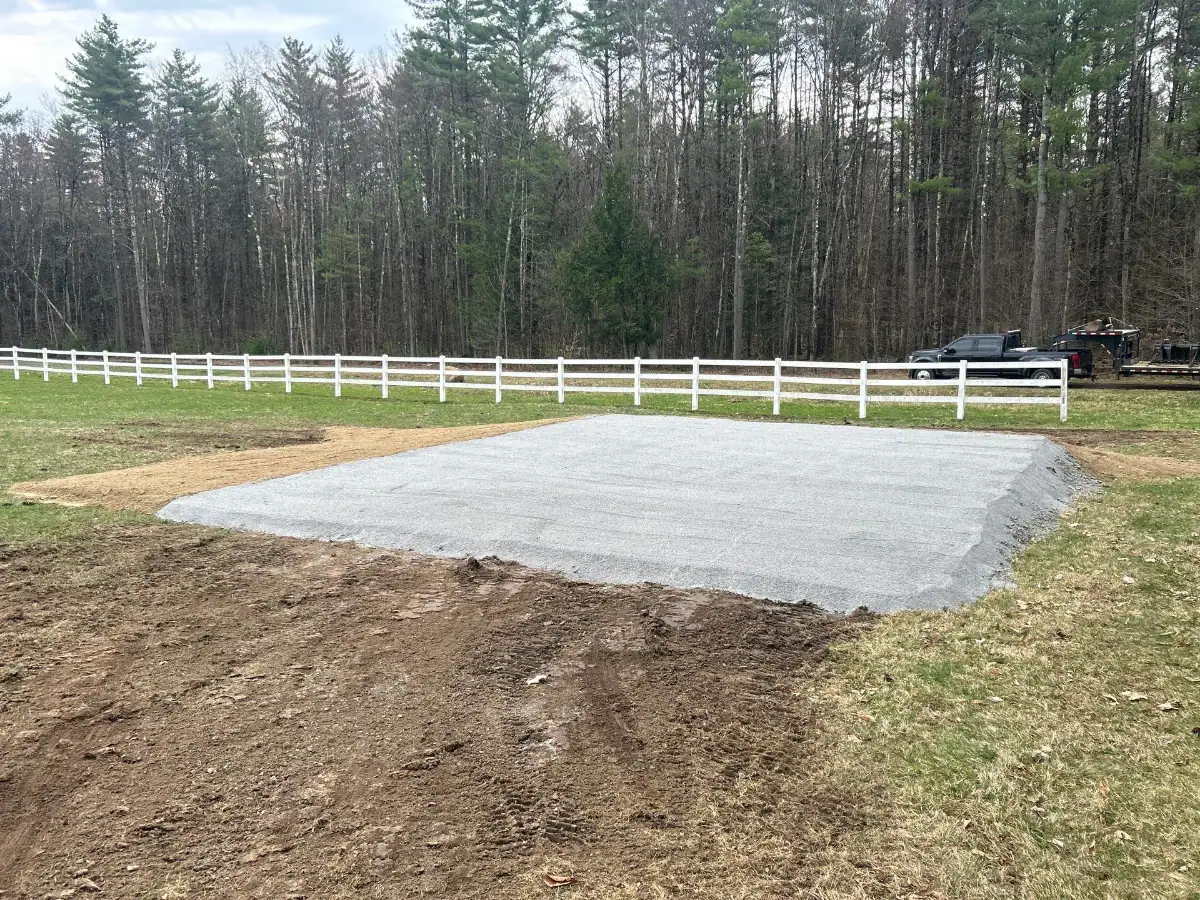
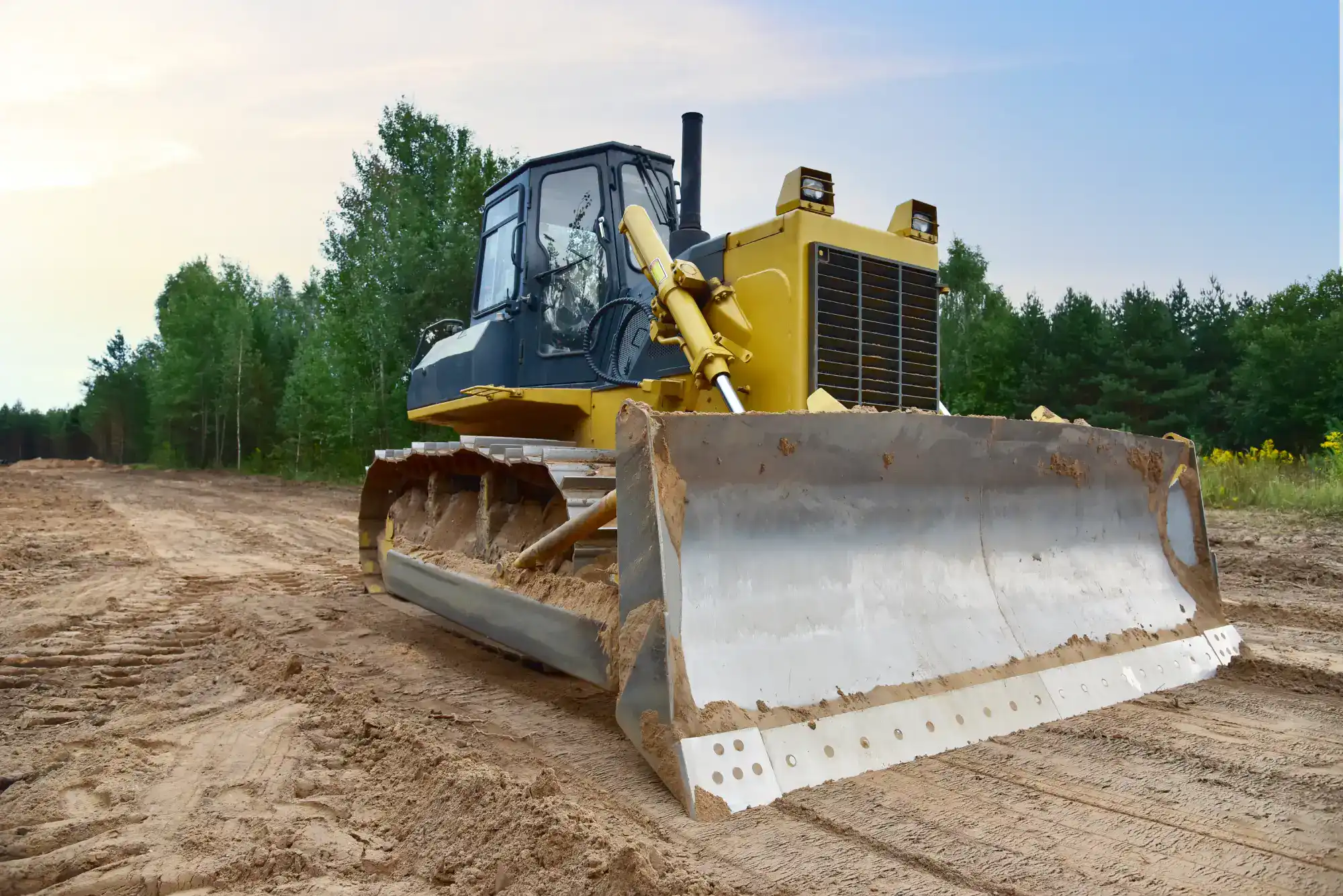
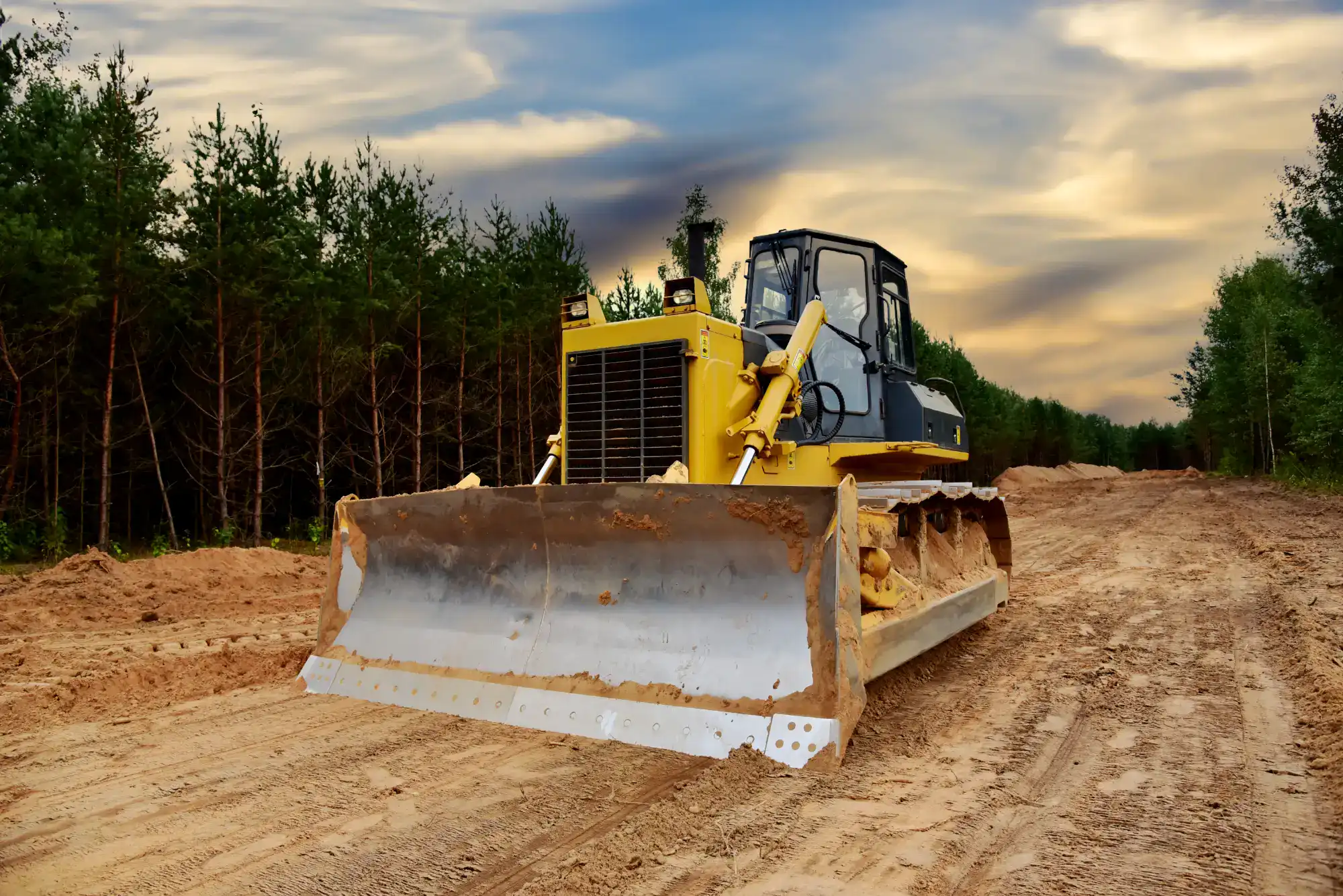
These two phases are often confused, and they serve very different purposes. Rough grading is the heavy work — moving large volumes of soil to get the site close to the right elevation, establishing the basic drainage slope, and preparing the building pad where your foundation will sit. This is where excavators, bulldozers, and graders do most of the work. It’s not precise to the inch at this stage, but the decisions made here set the foundation for everything that follows.
Finish grading comes later, after the foundation is in and the major underground work — septic, utilities, drainage lines — is complete. This is where the surface gets shaped to its final form. Finish grading is precise work. It accounts for the exact elevation of your foundation, the grade needed to direct stormwater away from the structure, and the contours that will eventually be paved, seeded, or landscaped.
Even a small error at this stage — a slope that runs toward the house instead of away from it — can create drainage problems that cost far more to fix than they would have to prevent.
In upstate New York, where frost penetrates the ground 36 to 48 inches deep in a typical winter, finish grading carries extra weight. Freeze-thaw cycles are relentless here. If water is allowed to collect near your foundation, it freezes, expands, and starts working against the structure. Getting the grade right the first time isn’t a luxury — it’s a necessity in this climate.
Rough grading and clearing should be planned together, not separately. The grading plan should inform how the land is cleared — which trees come out, where stumps are removed versus ground down, and how debris is staged. Treating them as separate jobs often creates rework and adds cost. We plan both phases as a single sequence from the start.
Drainage is the reason grading matters as much as it does. The grade of your land determines where water goes when it rains — and in Saratoga County, Warren County, and Washington County, that question has a real answer with real consequences.
Saratoga County has notable variation in soil types depending on where you’re building. The areas near the Hudson River corridor tend toward sandier soils that drain reasonably well. Move into the lower-lying sections of the county and you hit clay-heavy ground that holds water and drains slowly.
Head north into Warren County toward the Adirondack foothills and the terrain gets rockier and more unpredictable. Washington County, further east, has more agricultural flatland but plenty of rocky outcroppings and areas where drainage doesn’t behave the way you’d expect.
A grading contractor who doesn’t know these conditions is guessing. The slope that works on a sandy lot in Clifton Park may not work on a clay-heavy parcel in Ballston Spa. The drainage solution that handles a flat Washington County lot won’t necessarily translate to a sloped Warren County build site near Lake George.
Local knowledge isn’t a selling point — it’s a functional requirement. Good drainage design means shaping the land so that water moves away from your foundation and toward designated collection areas, swales, or natural drainage paths. It means accounting for your septic system layout, your driveway grade, and the eventual landscaping.
A site that drains well in spring thaw — when the ground is saturated and snowmelt is running everywhere — is a site that was graded by someone who understood what spring looks like in this region. That’s the standard we work to on every job.
Want live answers?
Connect with a Emerson Excavating and Trucking expert for fast, friendly support.
The excavation and grading industry has a real reputation problem, and it’s earned. Too many property owners have dealt with contractors who took a deposit, sent whoever was available, and went quiet when problems showed up.
When you’re hiring a grading contractor for a new home build, the stakes are high enough that you can’t afford to guess. Here’s what actually matters — and what to ask before you sign anything.
This is one of the most common questions we hear, and the answer depends on where you’re building and how much land is being disturbed. As a general rule, a grading permit is required when you’re disturbing more than 5,000 square feet of land. That’s not a large threshold — most new home builds exceed it easily.
New York State doesn’t issue a single statewide excavation contractor license for upstate counties the way it does for electrical or plumbing work. Licensing requirements vary by municipality. Some towns have specific permit processes and inspection requirements; others are more straightforward.
What that means for you as a property owner is that you need a contractor who knows the local building departments — not just the general rules, but the specific timelines, inspection sequences, and documentation requirements for the town where your land sits.
In Saratoga County, towns like Clifton Park, Malta, and Ballston Spa are among the fastest-growing communities in all of upstate New York. Building departments in those towns are busy, and permit timelines can affect your construction schedule in ways that ripple through every other contractor you’ve hired. Washington County’s rural towns have their own processes, and Warren County municipalities near Lake George sometimes have additional environmental considerations tied to proximity to the Adirondack Park.
We factor permit requirements into every project schedule from day one. Before any excavation begins, we also coordinate utility marking through Dig Safe — it’s legally required in New York, and it’s not a step you want skipped. A contractor who doesn’t mention permits or utility marking in their initial conversation is a contractor worth questioning.
Ask who will be on-site running the job. It’s a simple question, and the answer tells you a lot. If the person giving you the estimate is the owner and they tell you they’ll be present on almost every job — not delegating to a crew you’ve never met — that’s a meaningful commitment. It means the person accountable for the outcome is the one watching the work happen.
Ask whether they own their equipment. Contractors who depend on rented machinery or subcontracted crews don’t control their own schedules. One equipment delay or subcontractor conflict and your timeline shifts — and your builder’s timeline shifts with it. Equipment ownership is a practical differentiator, not just a talking point.
Ask for a written estimate that spells out the full scope of work. Vague verbal quotes are where surprise charges come from. A detailed written estimate tells you what’s included, what isn’t, and what the job will actually cost. If a contractor won’t put the scope in writing before you sign, that’s a red flag.
Ask about their experience with the specific terrain and soil conditions on your lot. A contractor who’s been working in Saratoga County, Warren County, and Washington County for decades has encountered the clay-heavy lowlands, the rocky Adirondack terrain, and the sandy Hudson River corridor. They’ve seen what spring thaw does to saturated ground. They know which soil conditions require different compaction approaches and which drainage solutions hold up over time.
That experience doesn’t show up on a license — it shows up in the quality of the finished grade. We’ve been doing this work since 1997, starting as a logging operation before transitioning to full-time excavation. That history in this landscape — the terrain, the soil, the local regulations, the building departments — is what we bring to every job. We provide written estimates after seeing the property because every lot is different, and we don’t guess at scope or price.
Grading isn’t the most visible part of building a home, but it’s the part everything else depends on. Get it right and you never think about it again. Get it wrong and you’re dealing with drainage problems, foundation issues, and expensive corrections that could have been avoided from the start.
If you’re building in Saratoga County, Warren County, or Washington County and you’re trying to figure out what site prep actually involves — or you’re ready to get an estimate — we’re straightforward to reach. Call or text us, tell us about your property, and we’ll come take a look before we quote anything. Every lot is different, and we want to see yours before we tell you what it’s going to take.
Emerson Excavating and Trucking has been working this land since 1997. We’d be glad to help you get your project started the right way.
Article details:
Share:
Continue learning: