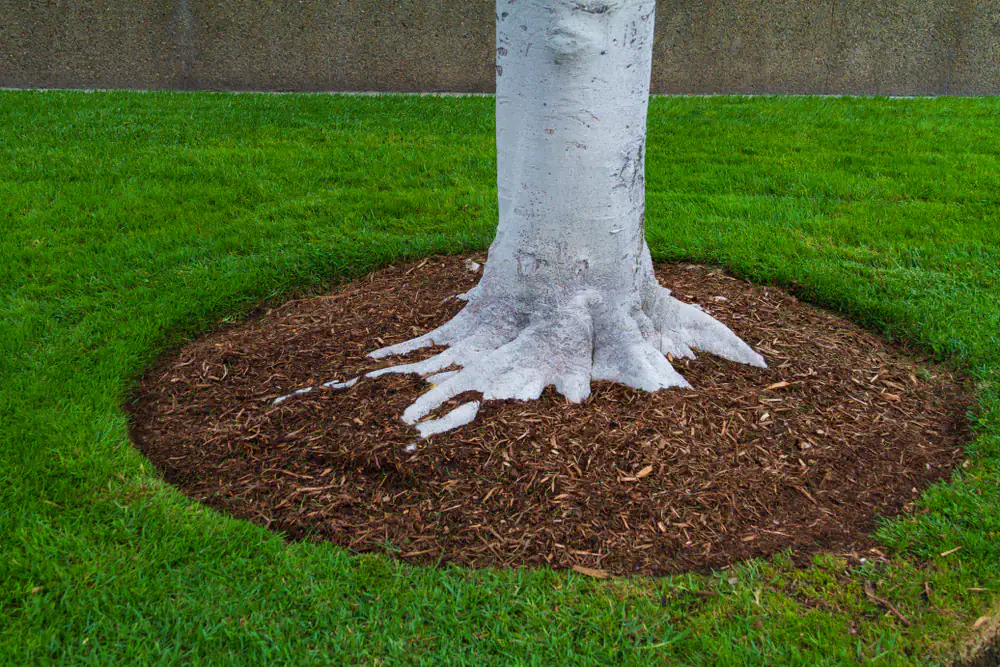
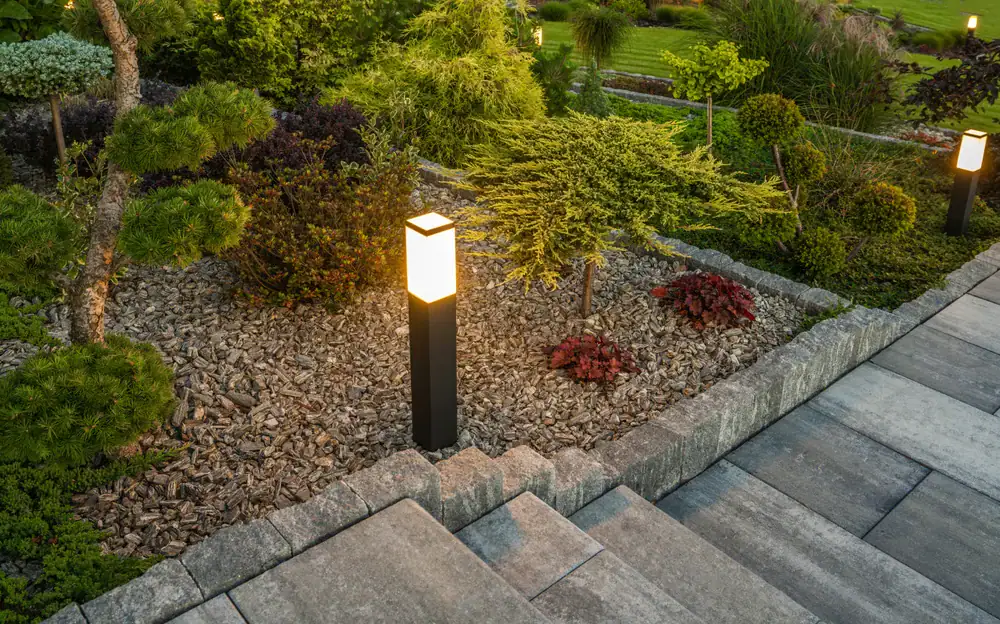
You’re not just covering dirt. You’re cutting your watering time in half because mulch holds moisture where roots need it. You’re blocking weeds before they start because a proper 2-4 inch layer stops sunlight from hitting the soil.
Your plants stay cooler in July and warmer in October. The soil underneath gets better every year as organic mulch breaks down and adds nutrients back in. And your beds look clean—not messy, not overdone, just right.
Most homeowners in Johnsburg who finally hire someone for mulch installation say the same thing: they didn’t realize how much time they were wasting doing it themselves, or how much better it looks when someone who knows what they’re doing handles it. The difference isn’t just visual. It’s in how much easier your landscape is to maintain after we’re done.
We started as a logging operation in 1997. We moved into full-time excavation in 2020, and in 2022, Josh’s son joined as a partner. We’re a family business, and Josh is on almost every job to make sure it’s done right.
We serve homeowners across Johnsburg and the surrounding areas in Warren, Saratoga, and Washington Counties. We know the soil here. We know what works in this climate. And we know that when you’re spending money on your property, you want it done once, done well, and done by someone who’ll be around if you need us again.
You’re not getting a crew that shows up, dumps mulch, and disappears. You’re getting people who live and work here, and who care about how your property looks when we leave.
First, we’ll come out and take a look at your beds. We’ll talk about what you’re trying to accomplish—whether it’s flower bed mulching, garden mulching, or full landscape bed mulching across your property. We’ll measure, give you a clear estimate, and explain what we’re going to do.
Before we lay down new mulch, we prep the area. That means pulling weeds, edging your beds so they have clean lines, and removing old mulch if it’s compacted or breaking down into sludge. This step matters more than most people think. If you just pile new mulch on top of old problems, you’re wasting money.
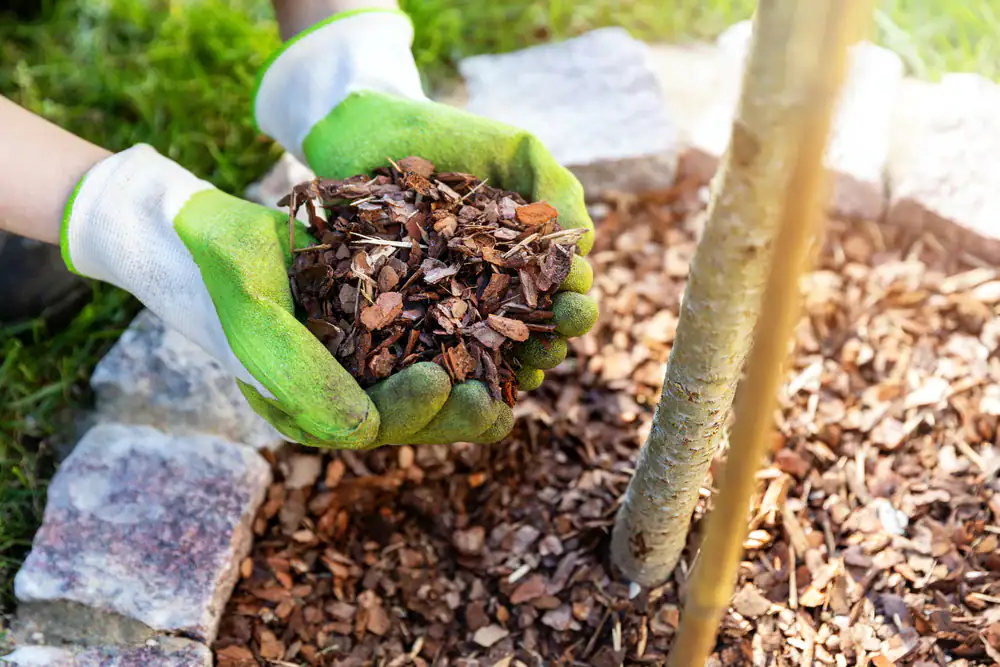
Then we spread the mulch evenly at the right depth—usually 2 to 4 inches depending on what’s already there and what your plants need. Too much mulch suffocates roots. Too little lets weeds through. We get it right the first time. When we’re done, your beds look sharp, your plants are protected, and you’re set for the season.
Ready to get started?
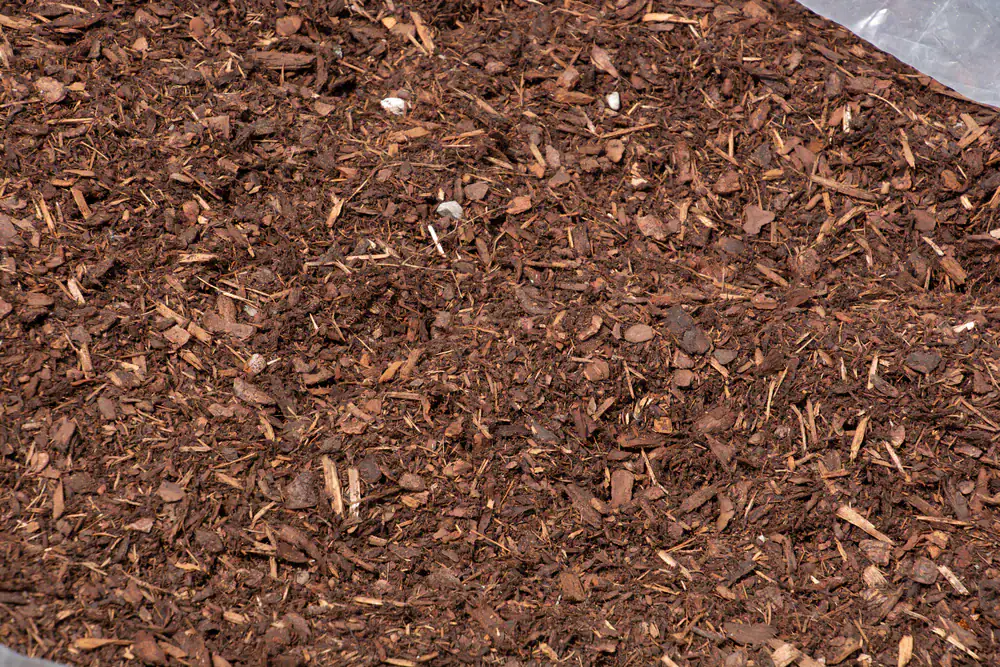
We handle the full process—delivery, site prep, installation, and cleanup. You don’t have to pick up bags from a store or schedule a bulk delivery and figure out where to put it. We bring quality mulch, not the cheap recycled stuff that’s full of splinters, nails, or weed seeds.
In Johnsburg, where properties deal with sloped terrain and heavy seasonal rain, mulch also helps with erosion control. A good layer stabilizes soil and keeps it from washing out during storms. That’s especially important if your beds are on a hill or near a driveway.
We also make sure your mulch isn’t introducing problems. Some bulk suppliers use ground-up pallets or low-grade material that can carry contaminants or pests. We source clean, organic mulch that actually benefits your soil as it breaks down. And we don’t over-mulch. We’ve seen too many landscape beds buried under six inches of mulch that’s choking out plants. We do it right, so your investment actually works for you.
Professionally installed mulch typically runs between $90 and $180 per cubic yard in New York, depending on the type of mulch, site access, and how much prep work is needed. That price includes delivery, labor, and spreading.
If your beds need edging, weed removal, or old mulch taken out first, that adds to the cost—but it’s also what makes the job last. Skipping prep to save a few bucks usually means you’re redoing the whole thing sooner than you should.
We give you a clear estimate upfront. No surprises, no hidden fees. You’ll know exactly what you’re paying before we start, and you’ll know what’s included in that price.
Most properties need fresh mulch once a year, usually in spring. Organic mulch breaks down over time—that’s actually a good thing because it adds nutrients to your soil. But as it decomposes, it loses volume and stops doing its job as well.
If your mulch is faded, thin, or you’re seeing more weeds than you used to, it’s time to refresh it. Some properties can go 18 months if the mulch was applied thick enough and the beds aren’t in full sun all day.
In Johnsburg, where we get heavy snow and spring runoff, mulch can also wash out or compact over winter. A quick check in early spring will tell you if you need a new layer or just a top-up in certain areas.
Bagged mulch from a big box store is convenient for small jobs, but it’s expensive per cubic yard and the quality is hit or miss. You’re also doing all the labor yourself—loading, unloading, hauling, spreading.
Bulk mulch delivery is more cost-effective for larger areas, but not all bulk mulch is created equal. Some suppliers sell cheap material made from ground-up construction waste, which can contain nails, treated wood, or contaminated debris. That’s not something you want in your garden beds.
When we deliver and install mulch, you’re getting quality material that’s been sourced properly, and you’re not spending your weekend doing heavy lifting. We handle the whole job, and it’s done right the first time.
Yes, and in a lot of cases, you should. Old mulch that’s been sitting for years turns into a compacted, sludgy layer that blocks water and air from reaching your soil. If you just keep piling new mulch on top, you’re creating a thick barrier that can actually harm your plants.
We’ll pull out old, broken-down mulch if it’s causing problems, then prep the bed properly before putting down a fresh layer. This is especially important if the old mulch has started to mat together or if you’re seeing fungus or mold.
Mulch removal isn’t something every company offers, but it’s part of doing the job right. If your beds need it, we’ll let you know upfront so there are no surprises.
It depends on what you’re trying to do. Hardwood mulch is the most common—it looks good, breaks down at a reasonable rate, and works well for most flower beds and landscape beds. Cedar and pine mulches last a bit longer and have natural oils that help repel insects.
If you’re mulching around vegetable gardens, you want something that breaks down faster and adds organic matter to the soil. If you’re mulching a slope, you want something chunky enough that it won’t wash away in the rain.
We’ll talk through your options when we come out for the estimate. There’s no one-size-fits-all answer, but we’ll recommend what makes sense for your property, your plants, and your budget.
Yes. We serve Johnsburg and the surrounding areas across Warren, Saratoga, and Washington Counties. If you’re nearby and need landscape bed mulching, garden mulching, or flower bed mulching, we can probably help.
We’re based locally, so we’re familiar with the soil conditions, climate, and common landscape challenges in this area. That matters more than people think—what works in one region doesn’t always work here.
If you’re not sure whether we cover your area, just reach out. We’ll let you know right away, and if we can’t help, we’ll point you in the right direction.
Other Services we provide in Johnsburg