
You’re tired of pulling weeds every weekend. Your garden beds dry out faster than you can water them, especially during July and August when Clifton Gardens hits those stretches of 85+ degree days.
Proper mulch installation changes that. A professionally applied 3-4 inch layer blocks sunlight from reaching weed seeds, which means they never germinate in the first place. Your soil stays moist longer because the mulch acts like a blanket, reducing evaporation by up to 70%. That means you’re watering 2-3 times a week instead of daily.
Your landscape beds look cleaner, more defined, and frankly, more expensive. The right mulch in the right amount makes a $50,000 landscape look like a $75,000 one. It’s not magic—it’s just knowing how to do it correctly.
And when winter hits, that same mulch layer insulates your plant roots from freeze-thaw cycles that kill azaleas, dogwoods, and ornamental shrubs. You’re not replanting every spring because something didn’t make it through February.
We’ve been working in Saratoga, Washington, and Warren Counties since 1997. Josh started in logging, moved into excavation, and brought his son into the business as a partner in 2022.
Here’s what matters to you: Josh is on almost every job. You’re not getting a crew that shows up unsupervised and dumps mulch wherever. You’re getting someone who’s been doing this for over two decades and knows exactly how Clifton Gardens properties behave—the soil composition, the drainage patterns, the way spring runoff moves through yards built in the 1940s through 1960s.
This is a small, family-run operation. That means when you call or text, you’re talking to the people actually doing the work. No call center, no project manager who’s never seen your property, no runaround.
First, we assess your landscape beds. Not every area needs the same depth or type of mulch. Flower beds around your foundation get treated differently than tree rings or garden borders. We’re looking at existing mulch levels, weed pressure, soil exposure, and drainage.
If you’ve got old, compacted mulch or weeds that need clearing, we handle mulch removal first. There’s no point in piling fresh material on top of problems. We clear it out, prep the bed edges, and make sure water can actually reach your plants.
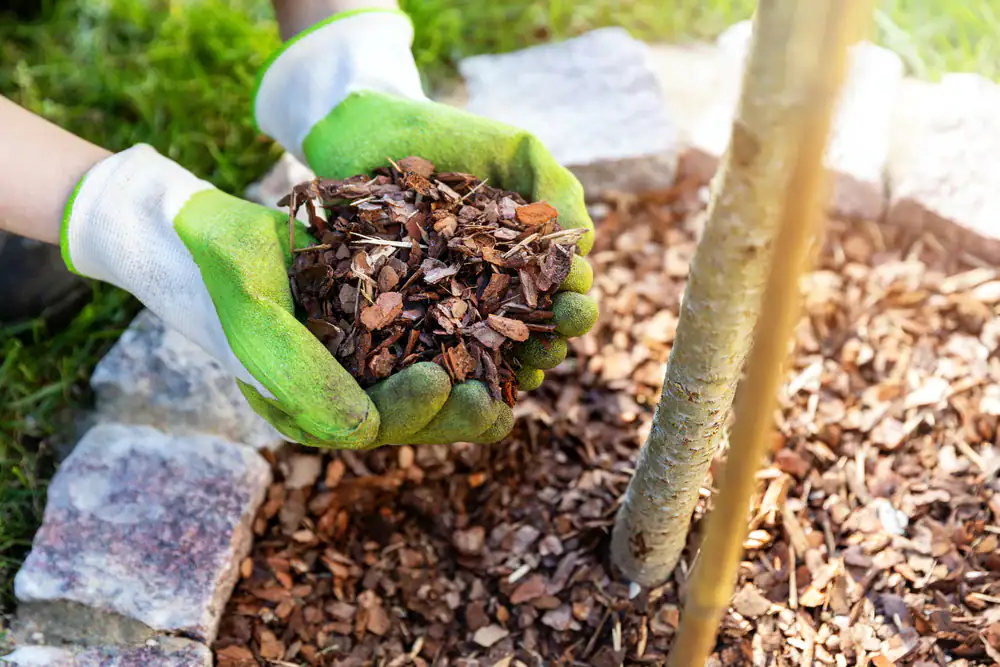
Then we install fresh mulch at the right depth—usually 2-4 inches depending on the area. Around trees, we keep it away from the trunk to prevent rot and disease. In flower beds, we apply enough to suppress weeds but not so much that it smothers your perennials when they emerge in spring.
We’re not just dumping and spreading. We’re thinking about how water moves, where weeds are most likely to break through, and how the mulch will settle over the next few months. The goal is a landscape bed that looks great now and still looks great in October.
Ready to get started?
You get mulch applied at the correct depth for each area of your property. That’s not the same depth everywhere—trees need different treatment than shrub beds, and vegetable gardens need different material than ornamental landscapes.
You get clean bed edges. Mulch that spills onto your lawn looks sloppy and creates maintenance headaches. We define the borders so everything stays where it belongs.
You get weed suppression that actually works. Most DIY mulching fails because the layer is too thin or applied over existing weeds. We address the problem at the source, which means you’re not fighting the same battle every month.
In Clifton Gardens, where properties often have mature trees and established landscapes, you also get someone who understands how to work around existing root systems without damaging them. Your 40-year-old dogwood doesn’t need mulch piled against its trunk—that’s how you kill a healthy tree over the course of two years.
And because we’re local, we know which mulch types hold up best in this climate. Hardwood mulch breaks down slower than pine in our freeze-thaw cycles. Cedar repels insects but costs more. We’ll talk through what makes sense for your property and your budget.
Most landscape beds need fresh mulch once a year, typically in spring before plants start their active growth. If you mulched last April, you’re probably ready again this April.
That said, high-traffic areas or beds with a lot of shade and moisture might need a refresh twice a year. Mulch breaks down faster in wet, shaded spots because of increased microbial activity. If your beds look thin, faded, or you’re seeing more soil than mulch, it’s time.
You don’t want to just keep piling new mulch on top of old layers every year. After 2-3 years, you should have old mulch removed before adding fresh material. Otherwise, you end up with 8-10 inches of mulch, which creates drainage problems and suffocates plant roots.
For most flower beds and shrub borders, 2-4 inches is the target. That’s enough to block weeds and conserve moisture without creating problems.
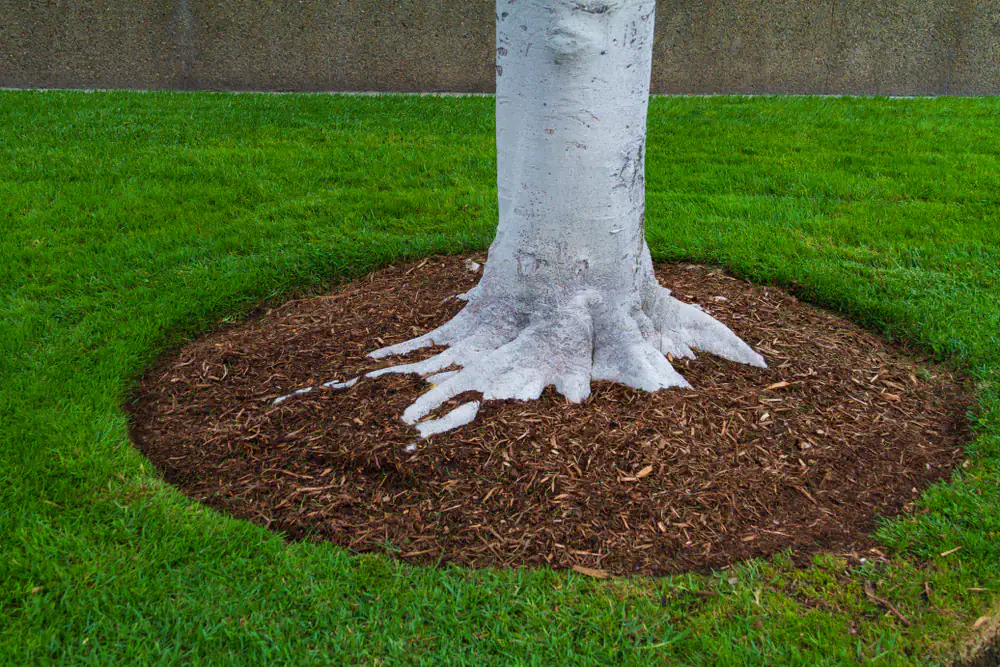
Around trees, you want 2-3 inches max, and it should never touch the trunk. The “mulch volcano” look—where mulch is piled high against the tree bark—causes rot, invites pests, and slowly kills the tree. Keep a 3-4 inch gap between mulch and trunk.
Vegetable gardens and annual beds can go lighter, around 2 inches, because you’re replanting frequently and need easier access to the soil. Perennial beds can handle 3-4 inches since you’re not disturbing them as often. If you have sandy soil, which drains fast, you might push toward the higher end of that range to maximize moisture retention.
If your existing mulch is compacted, moldy, or more than 2 years old, yes—remove it first. Compacted mulch doesn’t allow water or air to reach the soil, which defeats the purpose of mulching in the first place.
If last year’s mulch has mostly broken down and you’re only seeing a thin layer, you can top-dress with fresh material. But if you’re stacking new mulch on top of thick old layers, you’re creating a barrier that prevents water from reaching plant roots.
Mulch removal also gives us a chance to pull any weeds that have taken root and check the health of your soil. It’s a reset. You’re not just covering up problems—you’re actually addressing them. That’s the difference between mulch that works and mulch that just looks good for a month.
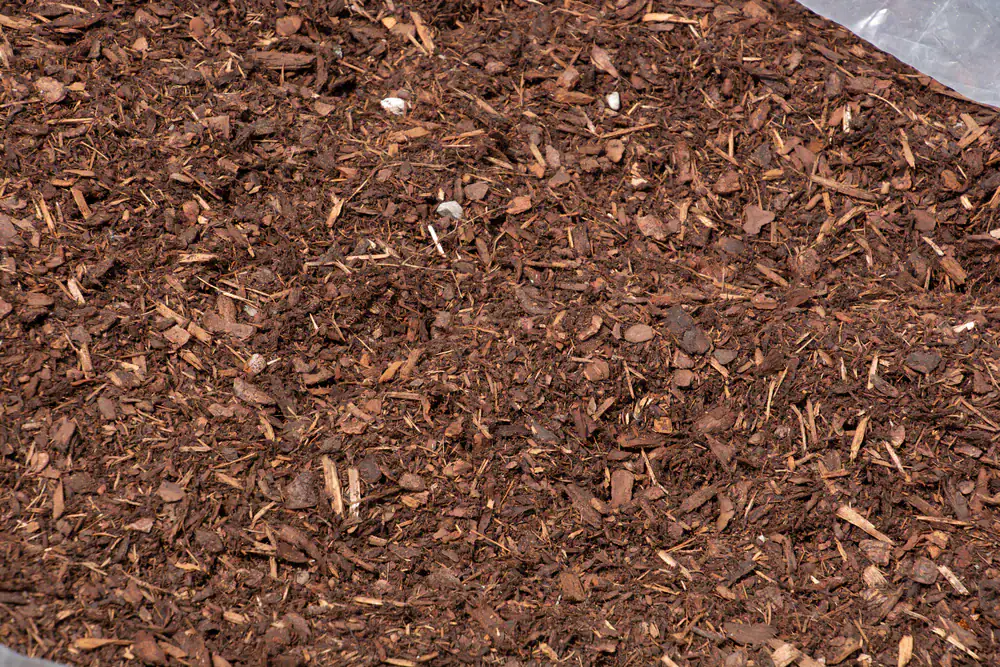
Hardwood mulch is the most common choice here. It breaks down slower than pine, holds color longer, and handles our freeze-thaw cycles without turning to mush. It’s a good all-around option for most landscape beds.
Cedar mulch costs more but repels insects naturally and has a pleasant smell. If you’ve had problems with termites or carpenter ants near your foundation, cedar is worth considering for those beds.
Pine bark mulch is lighter and cheaper, but it breaks down faster and tends to float during heavy rain. If you have sloped beds or areas with drainage issues, pine isn’t your best bet. For vegetable gardens, you might want straw or a finer shredded hardwood that integrates into the soil more easily as it decomposes.
We’ll walk your property and recommend what makes sense based on your landscape, your budget, and what you’re trying to accomplish.
Mulch itself won’t fix drainage problems, but it can help manage them when applied correctly. If you have areas where water pools or runs off too fast, mulch slows down the flow and gives water more time to soak into the soil.
That said, if you have serious drainage issues—standing water after every rain, erosion channels, or soggy spots that never dry out—you need more than mulch. You might need grading work, French drains, or other excavation solutions to redirect water properly.
Because we handle both excavation and landscape mulching, we can assess whether your drainage problem is something mulch will help with or if you need a more involved fix. A lot of Clifton Gardens properties have older grading that doesn’t account for how neighborhoods have developed over the decades. Sometimes the solution is bigger than mulch, and we’ll tell you that upfront.
Yes. We’re expanding into more commercial work, and landscape bed mulching is part of that. If you manage a commercial property, HOA common areas, or rental properties in Clifton Gardens, we can handle seasonal mulch installation and maintenance.
Commercial properties need mulch that looks clean and professional without constant upkeep. We focus on high-traffic areas, entryways, and visible beds that impact curb appeal and tenant satisfaction. The process is similar to residential work, but we’re coordinating around business hours and making sure the property looks finished, not like there’s an ongoing project.
We also work with property managers who need reliable, consistent service year after year. You’re not hunting for a new contractor every spring—you’ve got someone who knows your property, shows up when scheduled, and doesn’t need hand-holding to get the job done right.
Other Services we provide in Clifton Gardens