
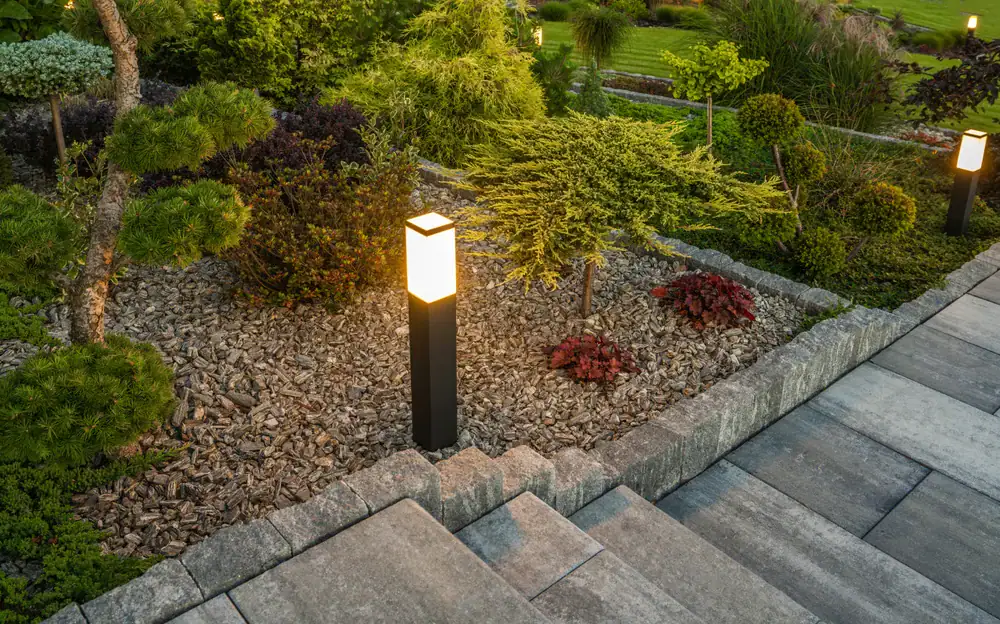
You’re not mulching just to make your property look good. You’re doing it because proper landscape mulching in Bemis Heights means you spend less time fighting weeds and less money on water bills.
When mulch is installed right, it acts as a barrier between your soil and everything trying to steal moisture or choke out your plants. That means your garden mulching and flower bed mulching aren’t just cosmetic—they’re functional. The right depth keeps roots cool in summer, protects them when temperatures drop, and breaks down slowly to feed your soil over time.
Most homeowners underestimate how much difference professional installation makes. Piling mulch too high around trees kills them. Spreading it too thin does nothing. Getting it right the first time saves you from redoing the job every season and watching your plants struggle in between.
We’ve been working throughout Saratoga, Warren, and Washington Counties since 1997. What started as a logging operation became a full-time excavation and site services company in 2020, and we’ve been handling landscape bed mulching, site prep, and property improvement projects across Bemis Heights ever since.
Josh is on almost every job. That’s not a marketing line—it’s how we operate. When you’re building a business around repeat customers and long-term relationships, you can’t afford to send a crew and hope for the best.
We’re not the cheapest option in Bemis Heights, and that’s intentional. You’re paying for mulch that’s spread evenly, at the right depth, with proper site prep and cleanup. You’re also paying for someone who shows up when they say they will and finishes what they start.
We start with a walkthrough of your property to assess what you actually need. That includes measuring landscape beds, checking drainage, and identifying any areas where old mulch needs removal before we add new material.
If you’ve got existing mulch that’s compacted, faded, or breaking down unevenly, we’ll remove it or work it into the soil depending on its condition. Then we prep the beds—edging where needed, clearing debris, and laying landscape fabric if it makes sense for your setup.
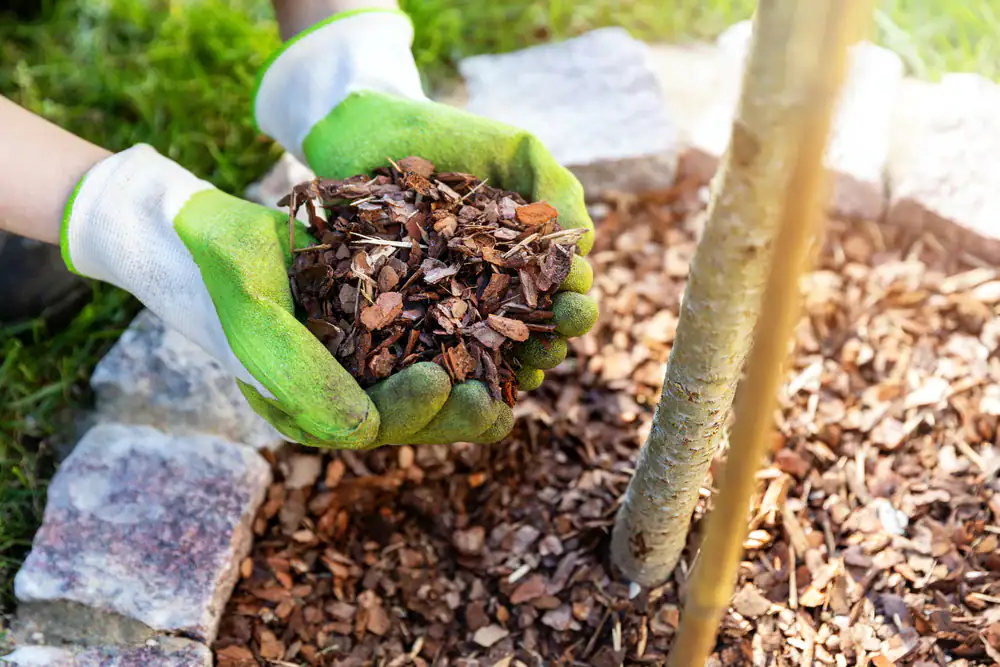
Once the site is ready, we spread mulch at the proper depth. That’s typically two to four inches depending on the mulch type and what you’re covering. We keep it away from tree trunks and plant stems to avoid rot, and we make sure the coverage is even so it actually does its job.
After installation, we clean up completely. No piles left in your driveway, no mulch scattered across your lawn. The goal is for you to look at the finished job and know it was done right.
Ready to get started?
Every mulch installation in Bemis Heights includes site evaluation, material delivery, proper bed preparation, and even spreading. We’re not just dumping mulch and calling it done.
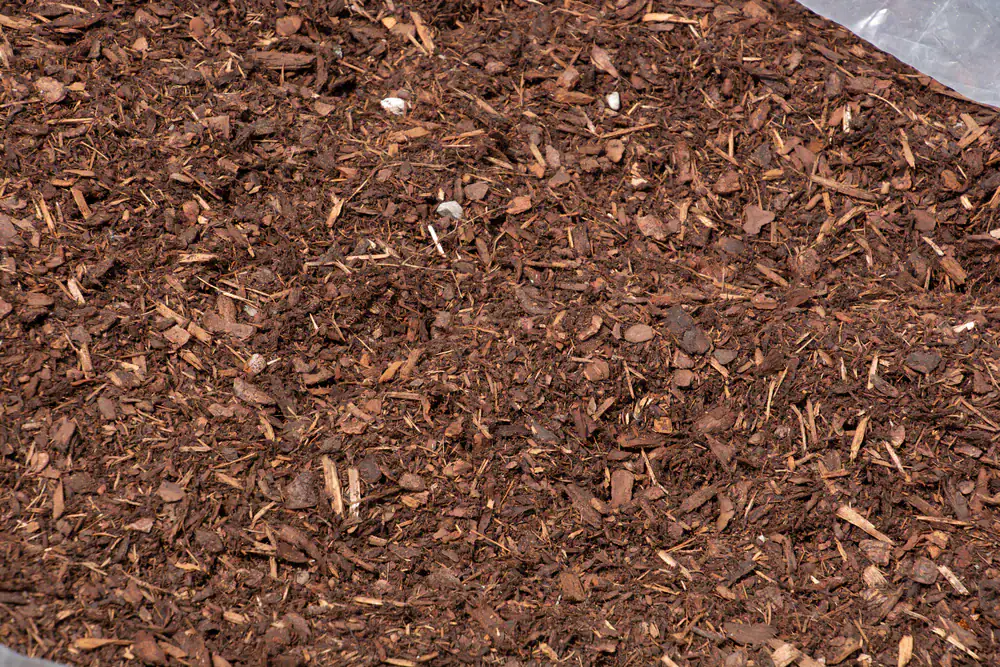
You’ll also get guidance on mulch type. Hardwood mulch breaks down slower and works well for most landscape beds. Pine bark is lighter and better for slopes or areas with delicate plants. Colored mulch—like Buffalo Brown, Brick Red, or Midnight Black—holds its appearance longer if curb appeal is a priority.
Bemis Heights properties deal with variable weather, especially during spring when late frosts can stress plants and summer when heat spikes dry out soil fast. Proper mulching helps regulate soil temperature and moisture levels so your plants aren’t constantly fighting the conditions. That’s especially important if you’re managing flower bed mulching around perennials or shrubs that need consistent care.
We also handle mulch removal service if you’re dealing with old, compacted material that’s doing more harm than good. Sometimes the best move is to start fresh rather than pile new mulch on top of a mess.
Most organic mulches need refreshing every one to two years depending on the material and how quickly it breaks down. Hardwood mulch lasts longer than pine bark or shredded leaves, but even quality mulch will decompose over time as it releases nutrients into your soil.
You’ll know it’s time for new mulch when the color fades significantly, the layer compresses to less than two inches, or you start seeing more weeds pushing through. If your mulch starts looking thin or patchy, it’s not doing its job anymore.
In Bemis Heights, spring is the most common time for mulch installation because it prepares beds for the growing season. Fall applications work too, especially if you want to protect roots heading into winter. Timing matters less than making sure you’re maintaining that protective layer year-round.
Hardwood mulch is dense, breaks down slowly, and works well for most landscape beds. It’s a solid all-around choice if you want something that lasts and doesn’t need frequent replacement.
Pine bark mulch is lighter and tends to float during heavy rain, so it’s better for flat or slightly sloped areas. It’s also more acidic as it breaks down, which benefits plants like azaleas or blueberries but might not be ideal for everything.
Colored mulches—dyed brown, red, or black—hold their appearance longer than natural mulch. If curb appeal is a priority and you don’t want faded mulch by mid-summer, colored options make sense. Just make sure you’re using quality dyed mulch, not cheap material that leaches color onto walkways or driveways after it rains.
Two to four inches is the standard depth for most landscape mulching. Go thinner than two inches and you won’t get effective weed suppression or moisture retention. Go thicker than four inches and you risk suffocating plant roots or creating a habitat for pests and rot.
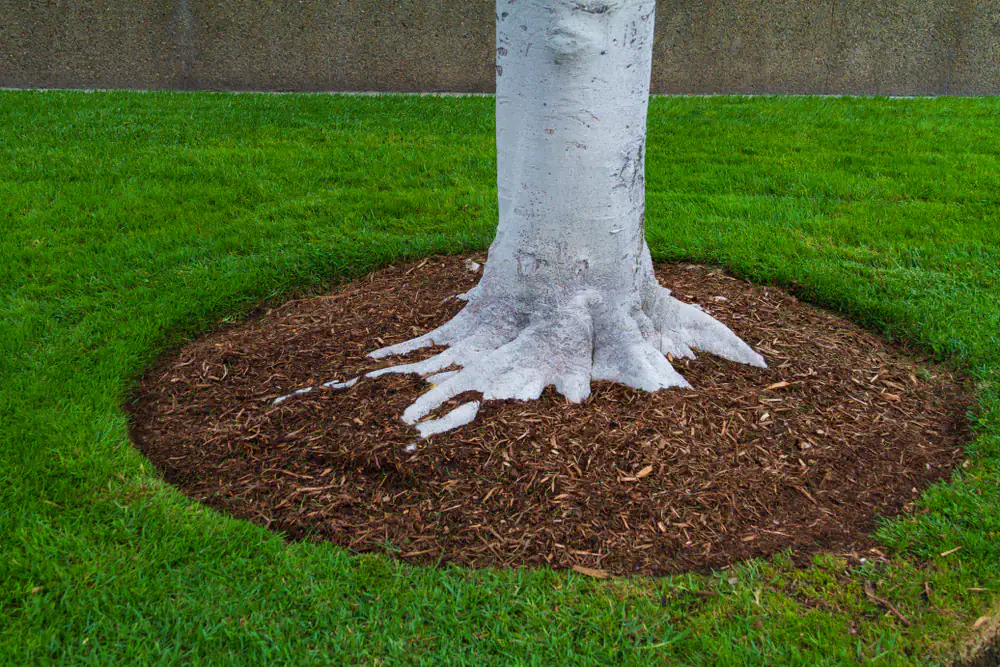
Around trees, keep mulch at least three to six inches away from the trunk. Piling mulch against tree bark traps moisture, encourages disease, and can kill the tree over time. You’ll see this mistake all over Bemis Heights—mulch volcanoes that look tidy but cause serious damage.
For flower bed mulching, the same depth applies, but you need to be more careful around perennials and smaller plants. Mulch should sit close enough to suppress weeds but not so close that it smothers stems or traps moisture against plant crowns.
Sometimes, but not always. If your existing mulch is still relatively loose and hasn’t compacted into a dense mat, you can top it off with a fresh layer to bring the depth back up to three or four inches.
If the old mulch is compacted, matted, or starting to smell sour, adding new mulch on top won’t fix the problem. Compacted mulch blocks water and air from reaching the soil, which defeats the purpose of mulching in the first place. In those cases, mulch removal service makes more sense—pull out the old material, prep the bed properly, and start fresh.
You also don’t want to keep piling mulch year after year until you’ve got six or eight inches sitting on top of your beds. That creates drainage problems, buries plant crowns, and turns your landscape beds into a soggy mess. If you’re not sure whether to add or remove, it’s worth having someone take a look before you make the call.
It helps, but it’s not magic. A proper layer of mulch blocks sunlight from reaching the soil, which prevents most weed seeds from germinating. You’ll still get some weeds—especially aggressive ones that push through anything—but you’ll see a lot fewer than you would with bare soil.
The key is depth and coverage. Two inches of mulch won’t do much. Four inches of evenly spread mulch makes a real difference. If you’re dealing with persistent weeds, landscape fabric under the mulch adds another layer of defense, though it’s not necessary for every situation.
Mulch also makes it easier to pull the weeds that do come through because the soil underneath stays looser and more workable. You’re not fighting compacted dirt every time you try to yank out a dandelion. Over time, consistent mulching reduces your weed pressure significantly, especially if you’re refreshing the mulch before it breaks down completely.
Most professional mulch installation in New York runs between $90 and $180 per cubic yard, depending on the mulch type, site prep requirements, and how much material you need. That price includes delivery, spreading, and cleanup.
If you need old mulch removed first, that adds to the cost. Same with landscape fabric installation or significant bed edging. The more prep work involved, the higher the total, but that prep work is what makes the installation last.
For a typical residential property in Bemis Heights with standard landscape beds, you’re usually looking at several cubic yards of mulch. Larger properties or commercial jobs obviously scale up from there. The best way to know what you’re actually looking at is to have someone measure your beds and give you a clear estimate based on what your property needs—not a generic price range that doesn’t account for your specific situation.
Other Services we provide in Bemis Heights