Seeding a lawn means waiting. Watering constantly. Watching bare patches turn into mud every time it rains. Then waiting some more while weeds move in faster than the grass you actually wanted.
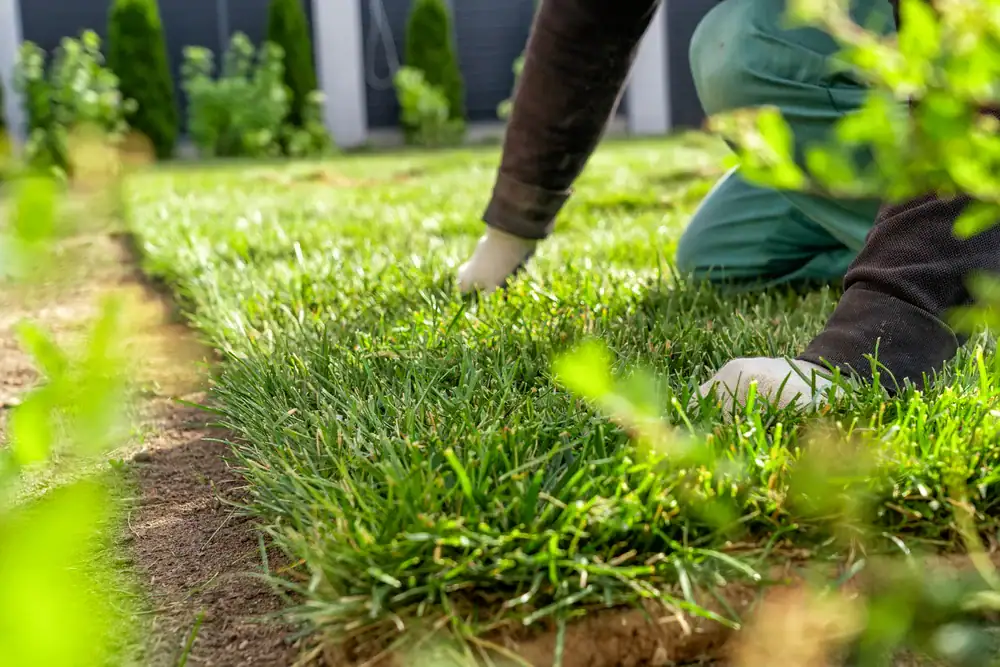
Sod changes that timeline completely. You get an established lawn in days, not months. Roots take hold in two to three weeks, which means you’re walking on real grass before summer even hits. No more staring at dirt. No more explaining to neighbors why your yard looks like a construction zone six months after you moved in.
The difference isn’t just speed. Sod blocks out weeds from day one because there’s no open soil for them to take root. It stops erosion on sloped areas where rain would otherwise wash everything downhill. And if your yard has drainage issues or uneven grading, proper site prep fixes that before the sod ever goes down. You’re not just covering up problems—you’re actually solving them.
We started as a logging operation in 1997. We moved into full-time excavation in 2020, and Josh’s son joined as a partner in 2022. That’s not a corporate timeline—that’s a family business that’s been working this land for over 25 years.
Josh is on almost every job. Not because we don’t trust our crew, but because quality matters more than speed. When you’re grading a yard or prepping for sod installation in Thurman, NY, you’re dealing with Adirondack soil, bedrock that shows up where you don’t expect it, and drainage patterns that change depending on which side of the hill you’re on. You learn that stuff by being here, not by reading about it.
We work across Warren, Saratoga, and Washington counties. Most of our customers are building new homes or finally fixing a yard that never got done right the first time. Either way, the job starts the same: figure out what the land is actually doing, then make it work for you.
First, we look at your property. That means checking grade, drainage, soil condition, and any problem areas where water pools or erosion happens. If your yard slopes toward your foundation or has low spots that turn into swamps, we’re fixing that before sod goes down. There’s no point in laying grass over a drainage problem.
Next comes site prep. We clear out old grass, rocks, roots, and anything else that’ll keep sod from rooting properly. Then we grade the area so water moves away from your house and doesn’t collect in random spots across the yard. If your soil is too compacted or too sandy, we’ll amend it. Sod needs a solid base to establish, and that doesn’t happen on hard clay or loose fill.
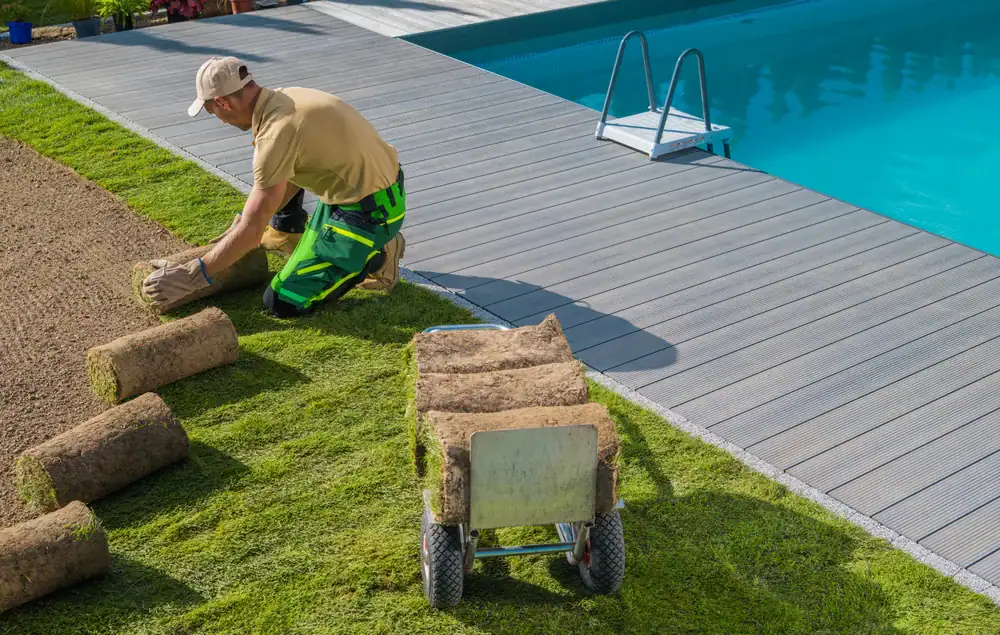
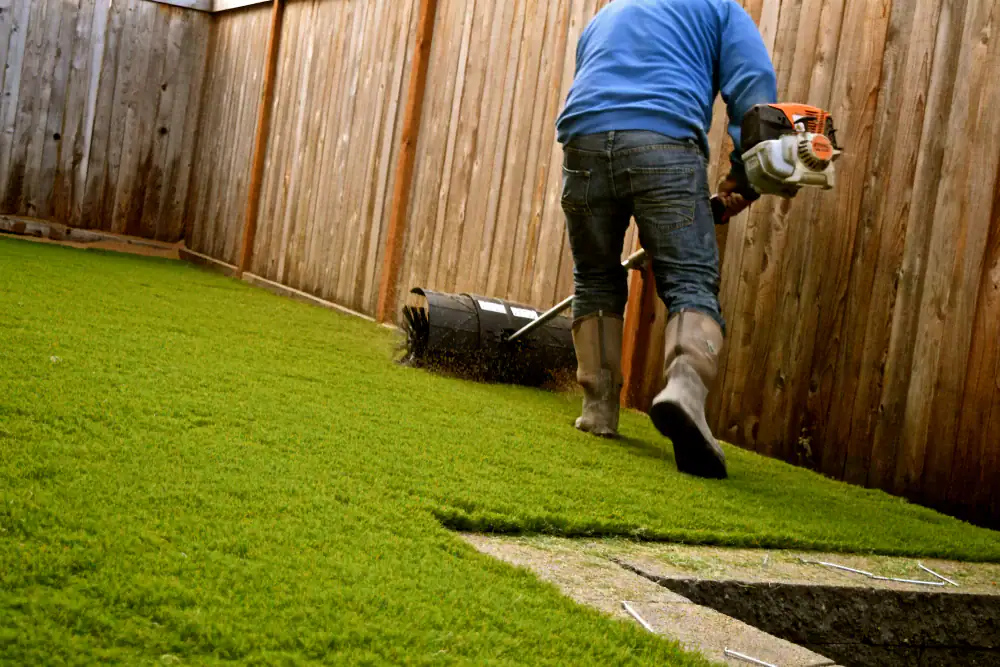
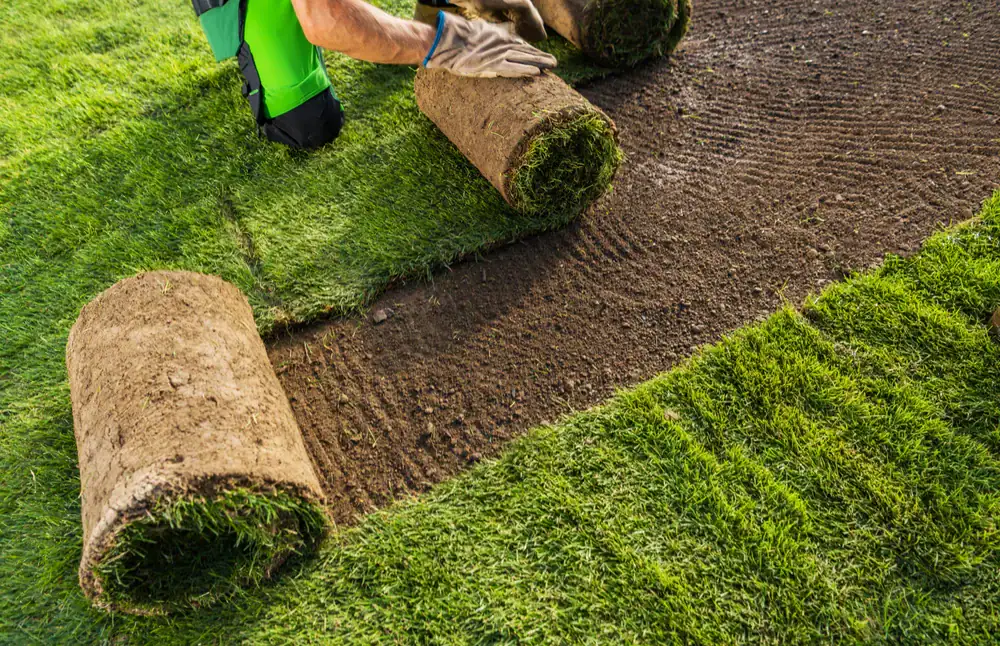
Once the ground is ready, we install the sod. We lay it tight, stagger the seams, and make sure edges are flush so you don’t end up with gaps or uneven sections. Then we roll it to ensure good contact with the soil underneath. After that, it’s on you to water it properly for the first few weeks while the roots establish. We’ll walk you through exactly what that looks like before we leave.
Ready to get started?
Site preparation is the foundation of everything. That includes grading to fix drainage, removing old vegetation, and making sure the soil is ready to support healthy root growth. In Thurman, NY, that often means dealing with rocky soil and slopes that need careful attention. We handle that with the right equipment and enough experience to know when something’s going to be a problem before it becomes one.
Sod installation itself is straightforward if it’s done right. We source sod that’s adapted to the Northeast climate—species that handle cold winters and humid summers without turning into a maintenance nightmare. Installation includes laying the sod, rolling it for proper soil contact, and trimming edges so everything fits cleanly around walkways, driveways, or landscape beds.
We also handle backyard lawn installation in Thurman, NY and front yard lawn installation in Thurman, NY, whether you’re working with flat terrain or slopes that need extra grading work. If you’re adding flower bed installation or tree planting service at the same time, we can coordinate that so you’re not tearing up new grass later to add landscaping. The goal is to get everything done in the right order so your yard is finished, not just started.
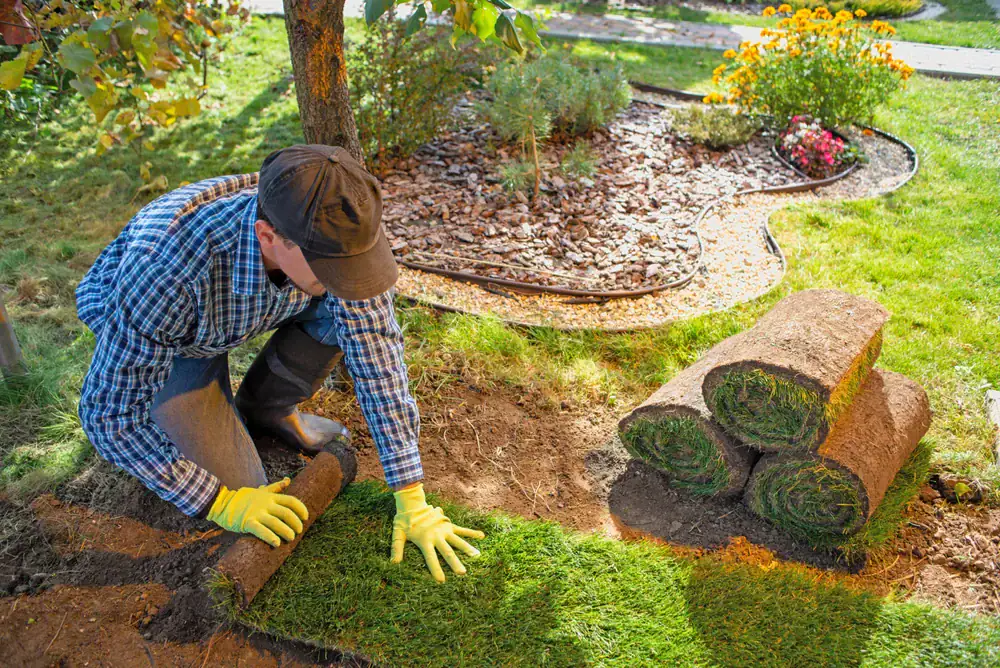
Spring and early fall are your best windows. Temperatures are cooler, rain is more consistent, and sod has time to establish roots before extreme weather hits. That usually means late April through early June, or September through mid-October in this area.
Summer installation is possible, but it requires more water and more attention. Sod laid in July or August needs consistent irrigation, sometimes twice a day, to keep it from drying out before roots take hold. If you skip a watering or we hit a hot streak, you’ll see brown patches that may not recover. It’s not impossible, but it’s harder to manage.
Winter is off the table. Frozen ground means roots can’t establish, and sod will just sit there until spring—if it survives at all. If you’re planning new construction or a landscape project, aim to have sod installed when the ground is workable and temperatures are moderate.
Roots typically establish in two to three weeks if you’re watering correctly. That means the sod is anchored into the soil below and can handle light foot traffic without shifting or pulling up. Full establishment takes a bit longer—usually four to six weeks—but you’ll see progress quickly.
During the first two weeks, you need to keep the sod consistently moist. That doesn’t mean soaking it to the point of standing water, but it does mean watering once or twice a day depending on temperature and rainfall. After the roots start to take hold, you can back off to less frequent, deeper watering.
You’ll know it’s rooted when you can’t easily lift a corner of the sod without resistance. At that point, you can mow it (set your mower high for the first cut) and start treating it like an established lawn. Just avoid heavy use—like setting up a trampoline or driving equipment over it—until it’s fully settled in.
Yes, because sod won’t fix a drainage problem. If water pools near your foundation, runs across your driveway, or turns part of your yard into a mud pit every time it rains, that’s a grading issue. Laying sod over it just means you’ll have a swampy lawn instead of swampy dirt.
We assess the property first to see where water is going and where it should be going. Then we regrade as needed to move water away from structures and prevent pooling in low spots. In Thurman, NY, that often means working with slopes and rocky soil that doesn’t drain the way you’d expect. Sometimes it’s a simple fix. Sometimes it requires more excavation work to get the grade right.
Once drainage is handled, sod has a much better chance of thriving. Roots don’t establish well in waterlogged soil, and grass that sits in standing water will develop disease and fungus. Fixing the problem up front saves you from replacing sod a year later because it never had a chance to succeed.
Yes, but slopes require more prep work. Sod installed on a steep grade needs to be pinned or staked so it doesn’t shift before roots establish. We also pay closer attention to soil amendments and erosion control, because water runs downhill fast and can wash out loose soil before grass has a chance to take hold.
If the slope is severe, we may recommend terracing or retaining walls to create more stable planting areas. That’s not always necessary, but it depends on the angle and how much erosion you’re already dealing with. Sod will help stabilize a slope once it’s rooted, but it can’t do that if the soil underneath is washing away.
Sloped yards in Thurman, NY are common, especially in areas closer to the Adirondack foothills. We’ve handled plenty of them. The key is making sure the base is solid and the sod is installed in a way that gives it time to establish before the next heavy rain tests it.
Cost depends on the size of the area, the condition of the existing soil, and how much grading or prep work is needed. Sod itself typically runs between $0.90 and $1.80 per square foot installed, but that doesn’t include excavation, drainage correction, or soil amendments. If your yard needs significant prep work, that adds to the total.
For an average residential lawn—say 5,000 to 10,000 square feet—you’re looking at a few thousand dollars for sod installation in Thurman, NY, assuming the site is relatively flat and doesn’t need major grading. If we’re clearing old grass, regrading for drainage, and amending soil, the cost goes up. But you’re also getting a yard that actually works instead of one that looks good for a season and then falls apart.
We give clear estimates up front. No surprises, no hidden fees. You’ll know what the job costs before we start, and if we run into something unexpected—like bedrock where it shouldn’t be—we’ll talk to you before adding to the scope. Transparency matters more than a low quote that doesn’t cover what actually needs to happen.
Sod gives you an established lawn immediately. Seeding gives you a project that takes months and may or may not work depending on weather, birds, and how well you keep up with watering. If you need a finished yard now—because you’re selling, because you’re tired of looking at dirt, or because erosion is becoming a problem—sod is the answer.
Seeding is cheaper up front, but it requires more time, more water, and more luck. You’re waiting for germination, then waiting for the grass to fill in, then dealing with weeds that sprout faster than the grass you actually planted. Sod skips all of that. It’s grown, it’s mature, and it’s ready to root as soon as it’s installed.
The other advantage is weed control. Sod is dense enough that weeds can’t easily take hold, especially in the first few months. Seeded lawns are wide open for weeds to move in while the grass is still establishing. If you’ve got limited time or you just want the job done right the first time, sod makes more sense for most residential properties in Thurman, NY.
Other Services we provide in Thurman