What happens during site prep determines whether your foundation holds up for decades — or starts causing problems within a few years. Here's what to know before you break ground.
Share:
Summary:
If you’re building a new home in Saratoga County, Warren County, or Washington County, you’ve probably spent a lot of time thinking about the foundation, the framing, the finishes. But the decisions that actually determine whether your foundation holds up for thirty years — or starts causing problems in five — happen earlier than most people expect. They happen during site preparation, before the foundation contractor ever shows up. Get that phase right and everything else builds on solid footing. Get it wrong, and you’re looking at repairs that can run into the tens of thousands of dollars to fix after the fact. Here’s what you actually need to know.
Civil engineering studies consistently point to poor water management as the root cause of roughly 60% of building foundation problems. Not the concrete mix. Not the foundation contractor. The grades, drainage patterns, and soil conditions established during site prep — weeks before the foundation is poured.
Foundation damage repairs run anywhere from $5,000 to $15,000. Basement waterproofing adds another $3,000 to $10,000. And beyond the direct repair costs, foundation issues can reduce a property’s value by 10 to 15 percent when they surface during a sale. These aren’t hypothetical numbers. They’re what homeowners pay when the excavating phase is treated as an afterthought.
By the time you notice the problem — water in the basement, doors that won’t close right, cracks working their way up a wall — the decisions that caused it are already locked in. Correcting drainage grades after a foundation is in place is invasive, expensive, and disruptive in ways that doing it right the first time simply isn’t.
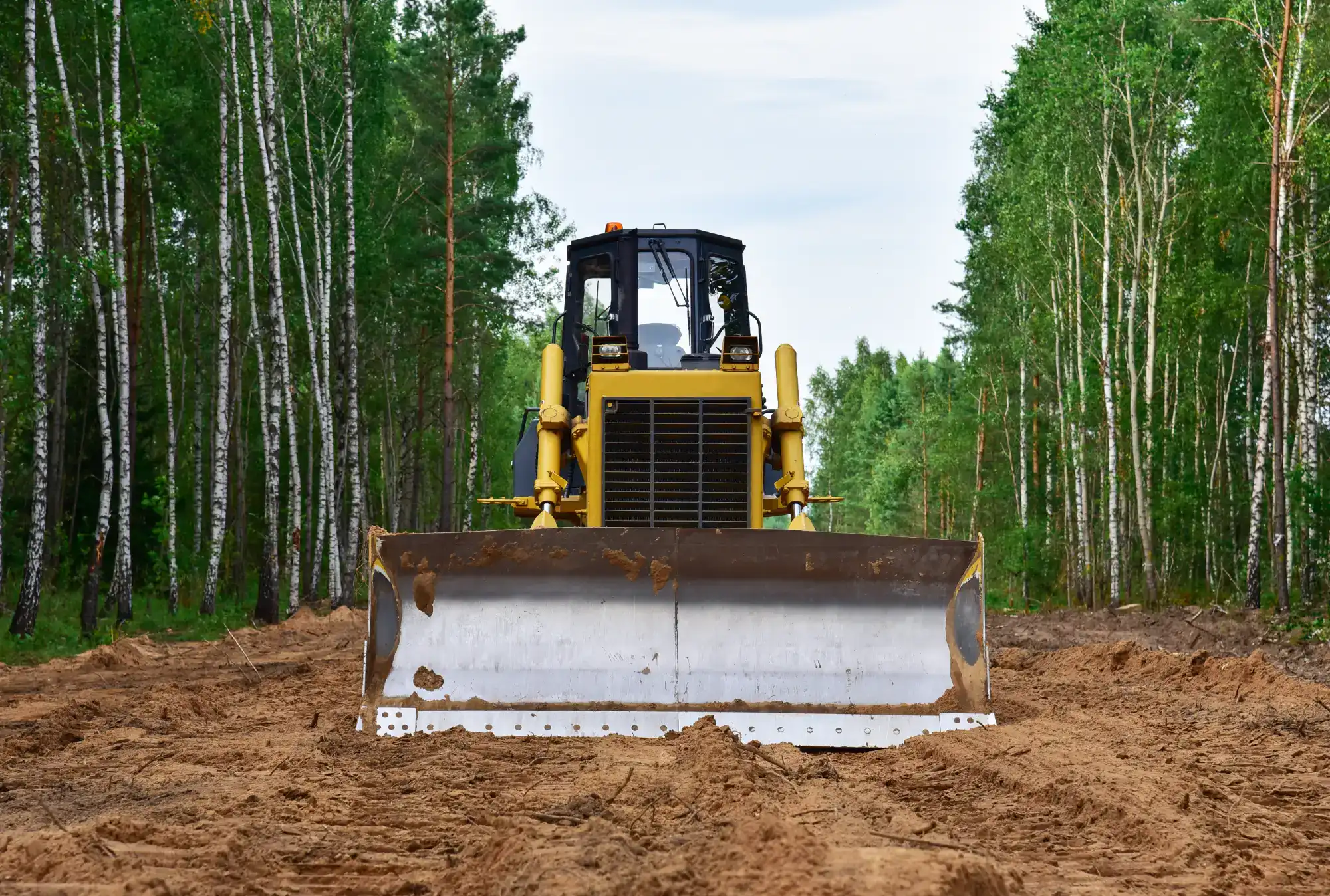
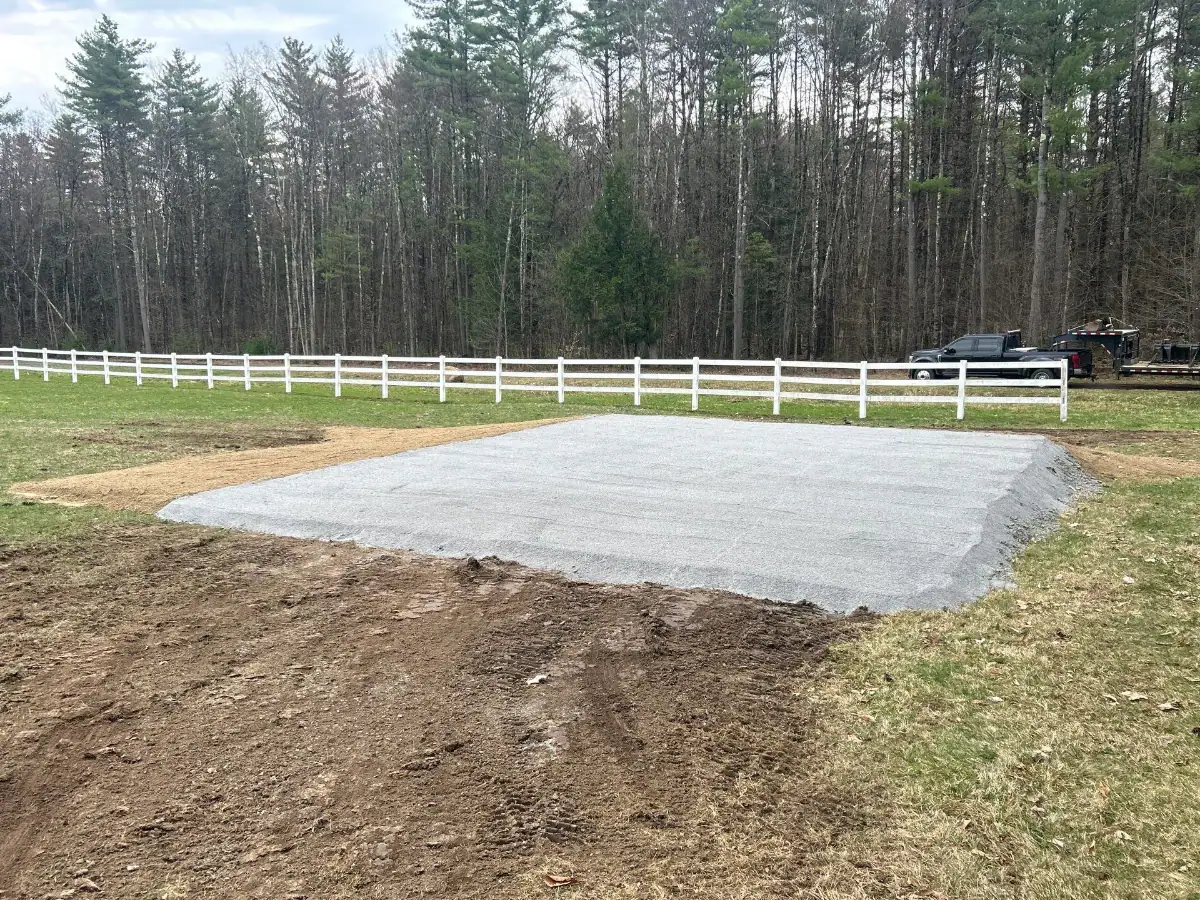
Drainage grading is the process of shaping the ground around your home so that water flows away from the foundation rather than toward it. The EPA’s standard requires the final grade to slope away from a foundation by at least half an inch per foot over a minimum of ten feet. For patios, walks, and driveways, that drops to a quarter inch per foot — still sloping away. These aren’t suggestions. They’re the baseline that separates a foundation that stays dry from one that’s constantly fighting moisture infiltration.
In practice, achieving these grades requires more than eyeballing a slope. It requires understanding how water moves across your specific lot, where it will pool if the grading is off by even a small margin, and how the soil beneath the surface will behave once it’s been disturbed and resettled. That last part is where local knowledge becomes genuinely important.
Soil compaction is the other half of the equation that often gets overlooked. When soil is moved during excavation and then replaced or regraded, it’s loose. If it isn’t compacted in layers before the final grade is set, it will settle unevenly over time — and when it does, the drainage grades you established shift with it. You end up with the same water management problems recurring within a season or two, even if the original grading looked right. Skipping compaction is one of the most common mistakes made during site prep, and it’s one of the hardest to diagnose after the fact because everything looks fine until it doesn’t.
We think about drainage before a single bucket of dirt moves. The plan for where water goes during a heavy rain in October should be built into every grading decision we make during site prep — not addressed as a correction after the fact.
Here’s where generic site prep advice starts to fall apart for homeowners in Saratoga County, Warren County, and Washington County. The soil in this region is not uniform, and it does not behave the way soil in milder climates does. What works in Georgia or the mid-Atlantic doesn’t necessarily translate to the Adirondack foothills or the Hudson River corridor.
Saratoga County’s soil composition varies dramatically depending on where you’re building. Clay-heavy zones — and there are plenty of them throughout the county — hold moisture and become nearly impossible to work with when wet. Clay soils also shift during freeze-thaw cycles, which in upstate New York means four to six months of repeated freezing and thawing every winter. A foundation sitting on improperly drained clay that holds water through the winter is subjected to that freeze-thaw movement every single year. Over time, that movement shows up as cracks, settling, and the kind of structural problems that are expensive to explain to a home inspector.
Move north into Warren County — toward the Glens Falls corridor, toward Lake George, into the Adirondack foothills — and you encounter rocky ledge that can appear just feet below the surface. That’s not something you discover with a shovel. It requires hydraulic hammers or, in some cases, controlled blasting, and a contractor who hasn’t worked this terrain before will hit it unprepared. The result is usually a change order that blows the project budget and a delay that pushes the construction timeline back by weeks.
Sandy areas near the Hudson River in eastern Saratoga County and Washington County drain well, but they require specific compaction techniques to prevent settling. The drainage problem there is almost the inverse — water moves through too quickly in some areas, and without proper compaction the soil won’t hold a stable grade long-term.
We’ve been working this land since 1997, starting as a logging operation before transitioning to full-time excavation. That’s not a line — it’s the reason we know where the rocky patches are in northern Saratoga County, where the clay zones hold water longest after a rain, and where sandy soils near the Hudson need extra compaction attention. That kind of terrain knowledge doesn’t come from a certification course. It comes from decades of hands-on work in these three counties.
Want live answers?
Connect with a Emerson Excavating and Trucking expert for fast, friendly support.
New York State does not require a statewide license for excavation contractors. Licensing is handled at the city or county level, which means there’s no state-issued credential you can verify to confirm a contractor is qualified. That puts the burden of vetting squarely on you — the homeowner — and it’s worth understanding what to actually look for.
The good news is that the markers of a trustworthy excavating contractor are pretty clear once you know what they are.
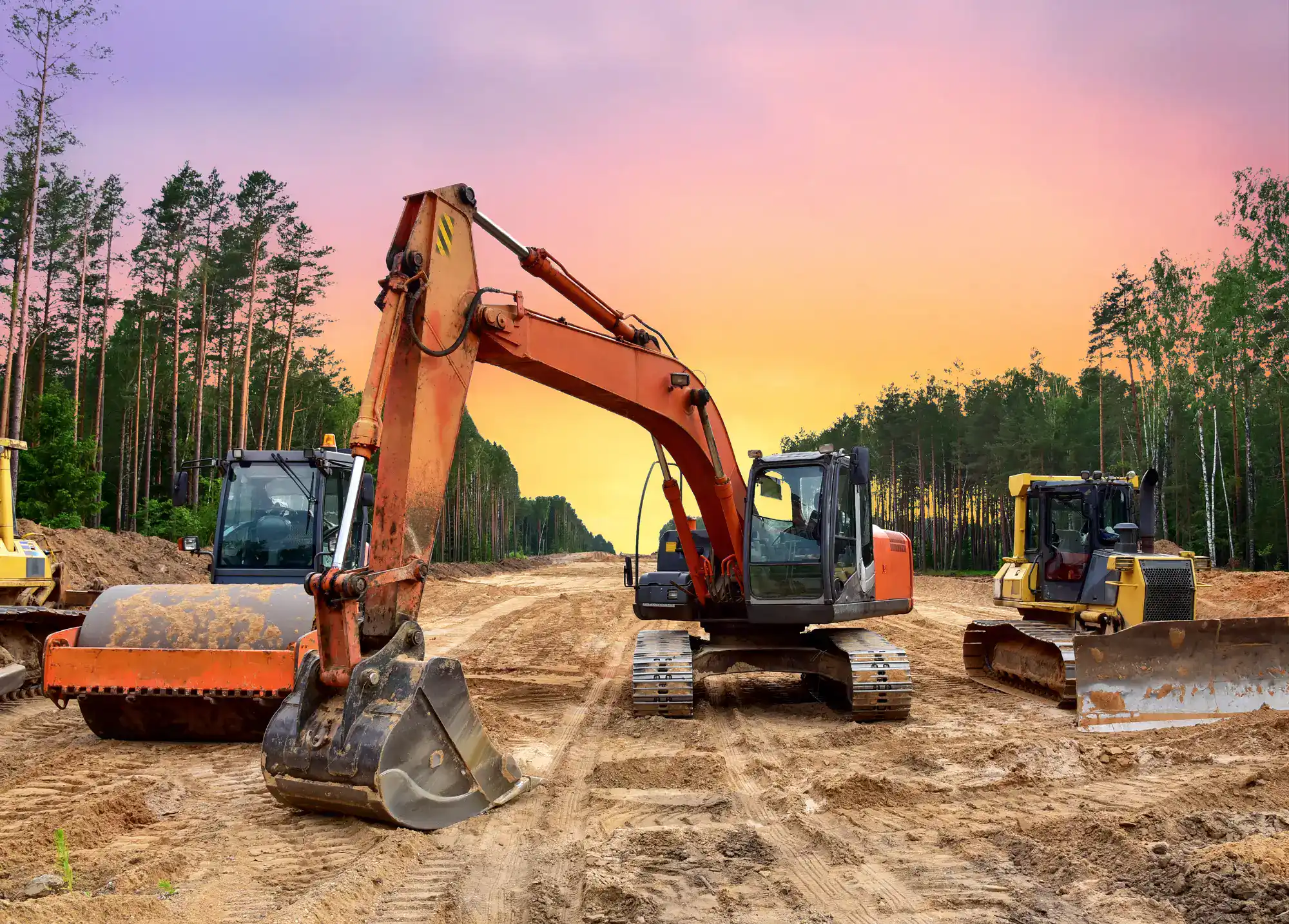
Start with the basics: Will the owner be on the job site, or will you be working with a crew you’ve never met? This matters more than it might seem. An owner who is present on every job is making judgment calls in real time — adjusting for unexpected soil conditions, making sure drainage grades are hit correctly, catching problems before they become expensive. A crew without direct ownership oversight doesn’t have the same accountability, and in a phase of construction where the mistakes are invisible until they compound, that accountability gap is significant.
Ask whether they own their equipment or rent it. A contractor who owns their machinery controls their own schedule. They’re not waiting on a rental company to free up a piece of equipment, and they’re not coordinating with subcontractors who are booked on another site. When soil conditions change mid-job — and in Saratoga County and Warren County, they often do — an owner-operator with their own equipment can adapt. A contractor who depends on rented machinery or subs often can’t.
Ask how they handle permits and regulatory compliance. In Saratoga County, Warren County, and Washington County, excavation work for new home construction typically requires permits, and the timelines involved can affect your overall construction schedule if they’re not factored in from the start. A contractor who handles permitting as part of the scope is one less thing you have to manage during an already complex process.
Ask for a clear, written estimate that covers the full scope of work. The excavation industry has a well-earned reputation for low bids that expand once work begins. An upfront estimate that accounts for the actual conditions on your lot — not a generic number that doesn’t reflect the terrain — is the difference between a project that comes in on budget and one that doesn’t.
Finally, ask whether they’ve worked on lots in your specific area. Not just “Saratoga County” in general — but whether they know the soil conditions in your part of the county. A contractor who has worked in Malta and Clifton Park has different on-the-ground experience than one who primarily works in Hadley or Corinth, where the terrain shifts toward the Adirondack foothills and rocky ledge becomes a real factor.
This is probably the most common question homeowners ask after they’ve received multiple bids with significant price variation. The honest answer: rarely. And in upstate New York, where soil conditions create more variables than most markets, almost never.
The cost difference between a careful excavating contractor and a cheaper one who cuts corners on drainage grading or skips proper compaction is almost always recovered — and then some — in the repairs that follow. Foundation damage runs $5,000 to $15,000. Retroactive drainage corrections after a foundation is in place are invasive and expensive. A failed septic installation means digging everything back up. These are not edge cases. They’re what happens when site prep is treated as the place to save money on a build.
There’s also a timeline cost that doesn’t show up in any bid. For new home construction, the excavating contractor is typically the first trade on site. Any delay in clearing, grading, or site preparation cascades through every subsequent phase — framing, mechanical rough-ins, inspections. In a compressed construction season like upstate New York’s, where the working window runs roughly April through November, a delay in early spring can push a project into the following year. The cost of that delay, in carrying costs, contractor rebooking, and extended rental or living arrangements, often dwarfs whatever was saved on the original excavation bid.
Saratoga County is in the middle of its biggest new home construction boom in twenty years — 813 single-family building permits approved in 2025, the most since 2005. Warren County approved 194 permits the same year, the highest since 2007. Quality excavating contractors are in demand. The ones who will show up on time, do the job right, and communicate clearly throughout are not the ones offering the lowest number on a bid sheet.
We started this business because too many homeowners in this region were getting burned by contractors who overpromised and underdelivered — botched drainage, incomplete grading, projects left half-finished. The work we do now is built around a simple idea: do it right the first time, because the cost of doing it wrong falls entirely on the homeowner.
Site preparation isn’t glamorous. It doesn’t show up in the design renderings or the finished photos. But it is the phase that determines whether everything built on top of it holds up the way it should — and in a region with the soil variability, freeze-thaw cycles, and terrain complexity of upstate New York, it deserves more attention than most homeowners give it before they hire.
Get the drainage grading right, don’t skip compaction, make sure your contractor knows this specific land and not just excavation in general, and ask the right questions before you sign anything.
If you’re planning a new build or land clearing project in Saratoga County, Warren County, or Washington County and want to talk through what your site actually needs, reach out to Emerson Excavating and Trucking. A quick call or text is the fastest way to get a straight answer.
Article details:
Share:
Continue learning: