Standing water near your foundation isn't just an eyesore — it's a warning sign. Here's what proper French drain installation actually involves.
Share:
Summary:
Every spring in Warren County, the same problem shows up. The snow melts, the rain comes, and suddenly there’s water sitting against the foundation — or the yard turns into something you can’t walk through without sinking. It’s not a fluke. It’s drainage, and it’s fixable.
A French drain is one of the most reliable long-term solutions for redirecting water away from your home. But the way it’s installed makes all the difference between a system that protects your foundation for decades and one that quietly fails in a few years. Here’s what the process actually looks like — and what you need to know before anyone picks up a shovel.
At its core, a French drain is a gravel-filled trench with a perforated pipe running through it. Water enters the trench, moves through the gravel, flows into the pipe, and gets carried away from the house to a safe discharge point. Simple in concept — but the execution has a lot of moving parts that determine whether it actually works.
Before any digging starts, the site needs to be assessed after a rain event so you can see exactly where water is moving and where it’s pooling. From there, the drain path gets planned with a consistent downward slope — at minimum, one inch of drop for every eight to ten feet of pipe run. Without that slope, gravity can’t do its job, and the system backs up.
Once the path is mapped out, the first legal step is calling 811 — New York’s Dig Safe line. This is required by state law before any excavation. Underground utilities get marked, and then the trench work begins.
For a foundation-specific French drain, the trench typically needs to reach footing depth — somewhere between six and eight feet down — and should be positioned at least two feet away from the foundation wall. Getting too close can actually increase pressure against the wall rather than relieve it, which is the opposite of what you’re trying to accomplish. The trench is usually twelve to eighteen inches wide to allow for proper gravel volume around the pipe.
Once the trench is open, a layer of non-woven geotextile fabric goes in first, draped up both sides with enough overlap to fold back over the top later. This fabric is what keeps soil and fine particles from migrating into the gravel and eventually clogging the system. Cheap landscape fabric degrades over time — the right material matters here more than most people realize.
A two-to-three inch bed of clean stone goes in next, followed by the perforated pipe. The pipe should be four to six inches in diameter, and the holes face downward — not up. This is one of the most common installation mistakes, and it means the system never drains efficiently from the start. The pipe gets covered with at least twelve inches of clean 1.5-inch round-washed rock. Not pea gravel, which drains too slowly. Not crushed stone, which packs together and blocks the pipe inlets over time.
The fabric then folds over the top of the gravel before the trench is backfilled. This wrapping is what keeps the gravel clean for the long term. After backfill, the grade gets restored, and the discharge point — ideally a pop-up emitter positioned at least twenty-five feet from the house — gets verified with a garden hose before the job is considered done.
There’s a common point of confusion worth clearing up. When people search for a French drain under the house, they’re often thinking about two different things — and they’re actually quite different systems handled by different types of contractors.
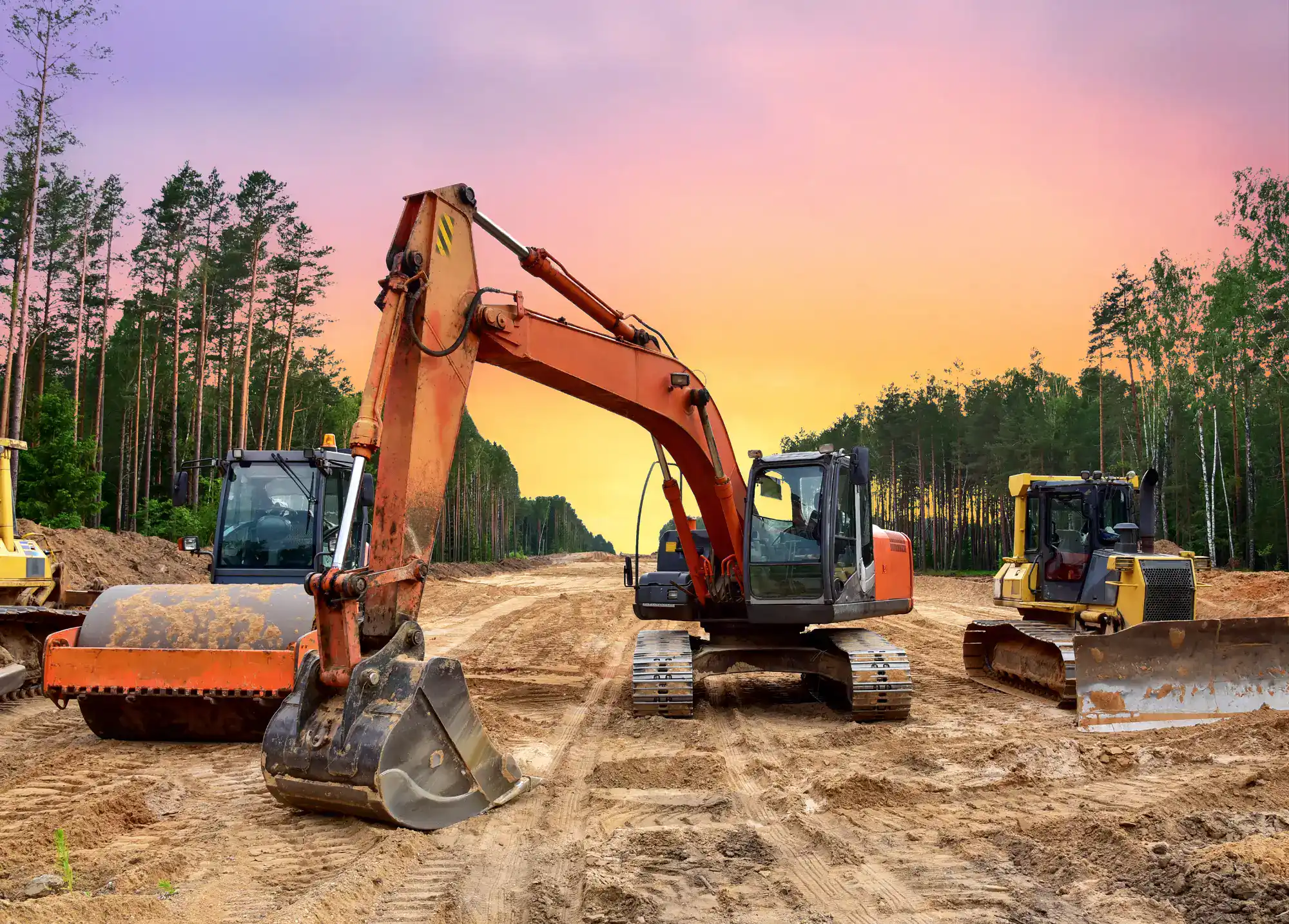
An exterior French drain goes around the perimeter of your home, intercepting water before it ever reaches the foundation wall. This is excavation work. It requires equipment capable of reaching footing depth, proper grading, and a clear discharge path. It’s the most effective long-term solution for homes where surface runoff and groundwater pressure are the primary problems.
An interior drainage system — the kind that goes under the basement floor slab — is a different product entirely. Waterproofing companies like Adirondack Basement Systems, which serves Warren County, specialize in interior systems like WaterGuard® that collect water after it’s already entered the basement and route it to a sump pump. These systems solve a different problem: water that’s already getting through the foundation wall or floor.
Neither is universally better. In many cases, a home with a chronic moisture problem benefits from both — an exterior drain to reduce the volume of water pressing against the foundation, and an interior system to manage what still gets through. But if you’re trying to stop water from reaching the foundation in the first place, the exterior approach is where you start. That’s where we come in, and it’s the kind of work that requires the right equipment and a solid understanding of how water moves across your specific property.
Want live answers?
Connect with a Emerson Excavating and Trucking expert for fast, friendly support.
Generic installation guides are useful up to a point. But Warren County has specific conditions that change how this work gets done — and skipping over those details is how projects end up failing or going over budget.
The county sits in the southeastern Adirondacks, a region with over twenty-five lakes, dozens of streams, and more than fifty miles of the Hudson River running through it. Water is everywhere here. And the soil, depending on where you are in the county, behaves very differently than what most guides assume.
Near Lake George and the lower elevations, soil tends toward sandy loam — more forgiving for drainage work. Move into the Adirondack foothills, through Warrensburg, Thurman, Stony Creek, or Johnsburg, and you’re dealing with heavy clay. Clay holds water instead of letting it pass through, which means a French drain in those areas needs to be designed with that resistance in mind. Depth, gravel volume, and pipe sizing all need to account for slower percolation.
Then there’s ledge. Rocky outcroppings are common throughout the foothills, and they can stop a trench well short of footing depth if you don’t have the right equipment or know how to read the terrain before you start. We’ve been working this land since 1997 — first as a logging operation, then as a full excavation contractor — and knowing the difference between workable rock and a genuine obstacle has saved more than a few projects from going sideways.
The freeze-thaw cycle adds another layer of complexity that most guides don’t address. Warren County winters are hard. The ground freezes deep, and when it thaws in March and April, the frozen subsoil doesn’t drain. Surface snowmelt and spring rain have nowhere to go. That’s the highest-risk window for foundation water intrusion in this region, and a French drain designed without that seasonal reality in mind won’t perform when it matters most. Timing installation in the fall — before the ground freezes — or in late spring after the thaw is complete gives the system the best start.
The July 2023 flooding that caused road closures and bridge washouts across the Adirondacks wasn’t a once-in-a-generation event anymore. It’s a reminder that extreme precipitation is part of the forecast here now, and properties without proper drainage infrastructure are increasingly exposed.
Most residential French drain installations don’t require a permit. But Warren County has some specific regulatory layers that can apply depending on where your property sits, and it’s worth understanding them before work starts rather than after.
Parts of Warren County fall within the Adirondack Park boundary, which means projects near wetlands, streams, or certain land classifications may require review from the Adirondack Park Agency. The APA has jurisdiction over land use in those areas, and drainage work that affects water flow near protected resources can trigger a permit requirement. Similarly, the New York State Department of Environmental Conservation has setback rules for excavation near wetlands and streams — relevant in a county where water features are everywhere.
The Warren County Soil and Water Conservation District manages the county’s Hazard Mitigation Program, which specifically addresses flood risk. That program exists because flooding is a documented, recurring problem here — not a theoretical one. It’s worth knowing about if you’re dealing with a property that sits near a floodplain or in a low-lying area.
For most standard residential projects in Queensbury, Bolton Landing, or Warrensburg, none of this will apply. But it’s not something to assume. Part of our process is researching permit requirements before we ever break ground, so you’re not caught off guard mid-project. We also call 811 before every dig — no exceptions — because striking a utility line is dangerous, expensive, and entirely avoidable.
A properly installed French drain lasts thirty to forty years. That’s decades of protection against the kind of water damage that costs tens of thousands of dollars to repair — foundation cracks, mold, structural compromise. The investment is modest compared to what you’re protecting.
But it only works that way if it’s built right. Wrong slope, wrong materials, wrong placement — any one of those mistakes means the system underperforms or fails entirely. In Warren County, where the soil, the terrain, and the seasonal conditions all add complexity, that’s not a job to hand off to whoever quotes the lowest number.
If you’re dealing with water pooling near your foundation, a soggy yard that won’t dry out, or a basement that gets damp every spring, we’re worth a conversation. We’ve been working this land since 1997, and we’re on almost every job personally. Call or text us directly — we’ll give you a straight answer on what your property actually needs.
Article details:
Share:
Continue learning: