What does land clearing really cost in upstate New York? Here is what drives the price, plus what most contractors will not tell you upfront.
Share:
Summary:
You have likely already found the national price guides. They claim land clearing costs somewhere between $1,200 and $8,000 per acre, leaving you to figure out where your specific lot fits in that spectrum. That is not particularly helpful when standing on a wooded hillside in Queensbury or a heavily treed parcel in Fort Ann while trying to build a budget.
The reality is simple: land clearing in Saratoga County, Warren County, and Washington County comes with its own set of variables. Terrain, soil quality, tree density, site access, and your exact definition of a “cleared” site all dictate final pricing. Let’s work through the real factors so you can move forward with complete clarity.
Nationally, most homeowners spend somewhere between $1,266 and $3,900 on a land clearing project, with dense mature woodland pushing costs to $5,000 per acre or more. Those numbers are not wrong, but they are far from useful for someone clearing a rocky, wooded lot in the Adirondack foothills.
In Saratoga County, Warren County, and Washington County, local terrain is the single biggest cost driver that generic online guides ignore. A flat half-acre lot in Clifton Park with light brush clears very differently than a sloped, heavily wooded parcel in Warrensburg where subsurface ledge rock is a constant possibility. Equipment selection, total labor time, and clearing methodology all shift based on what sits on and under the ground.
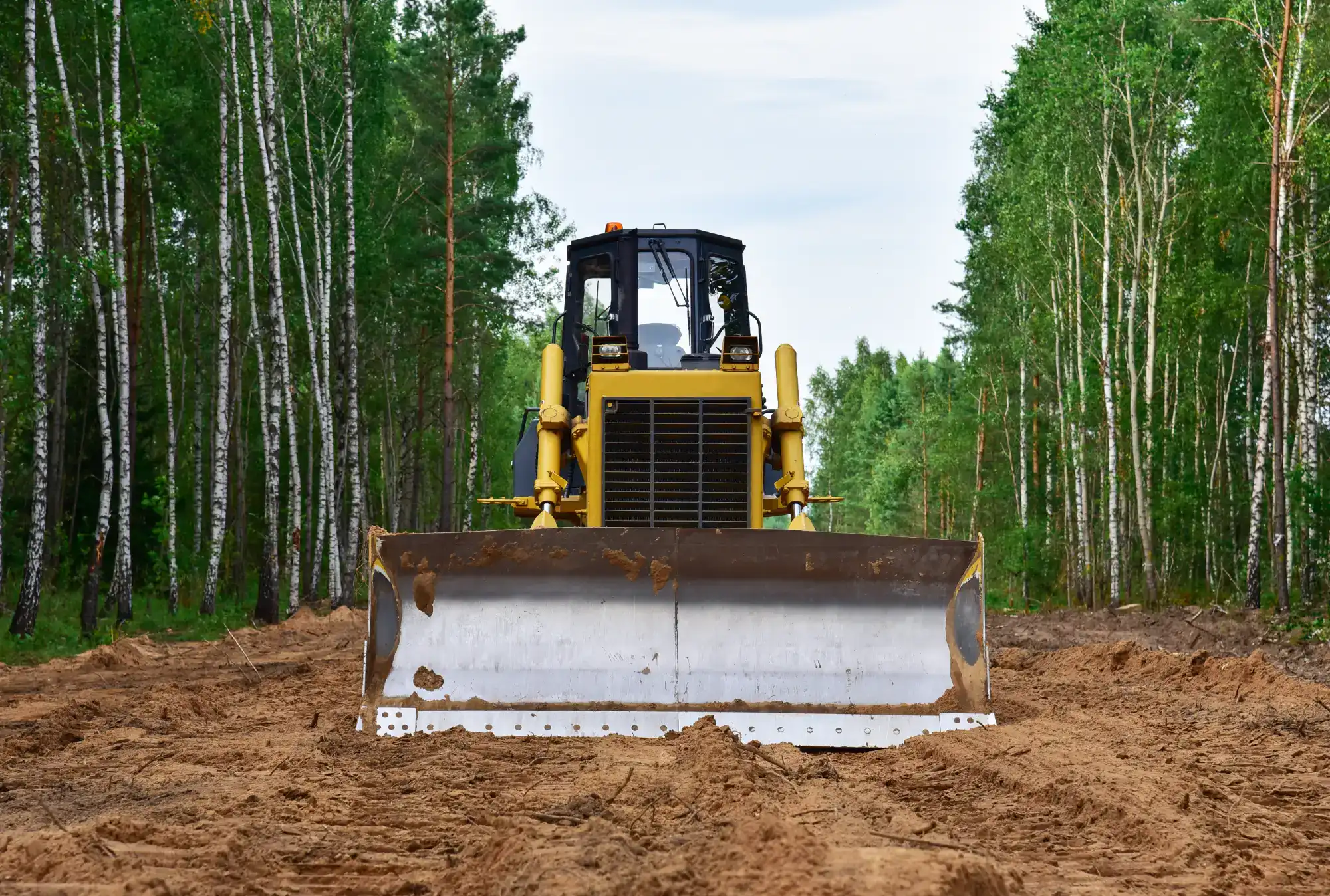
The Adirondack foothills running through Warren County and northern Saratoga County bear little resemblance to suburban land in the Capital District. Ledge rock sits closer to the surface, hardwood density is higher, and ground slopes are significantly steeper.
These conditions are no cause for panic, but they do explain why an inexperienced contractor can severely underestimate a job and later hit you with expensive change orders. We have evaluated this specific terrain for over two decades, allowing us to pinpoint your exact job requirements before a single piece of equipment unloads.
Clay-heavy soils, widespread across Saratoga County, add another technical layer. Clay holds onto water. If a contractor clears your lot without accounting for drainage, you can easily end up with a soggy, compacted site that creates severe issues when your builder arrives to pour the foundation. Clearing extends far beyond felling trees; it is about preparing the land for everything that follows.
Washington County parcels bring distinct considerations as well. The terrain there tends to be flatter and more agricultural, which often streamlines clearing operations. However, low-lying areas near streams and wetlands are common, and select parcels fall near DEC-regulated buffer zones that govern site activity. Identifying those details before the first tree comes down saves significant time and money.
Smaller lots carry a base operational cost that often surprises buyers. Because equipment transport represents a fixed expense regardless of project size, lots under a quarter-acre typically carry a job minimum around $1,000. This is not because the work takes longer, but because mobilising heavy equipment to your site requires a base level of investment.
Forestry mulching represents an efficient alternative worth considering. Rather than cutting, hauling, and disposing of debris off-site, a specialized mulcher grinds everything (trees, brush, and stumps) into organic mulch that remains on-site. This method costs significantly less per acre than traditional land clearing with haul-away, making it ideal for buyers who want vegetation cleared without stripping the topsoil completely bare. If your build plan does not demand a completely scraped surface, it is a great approach to ask about.
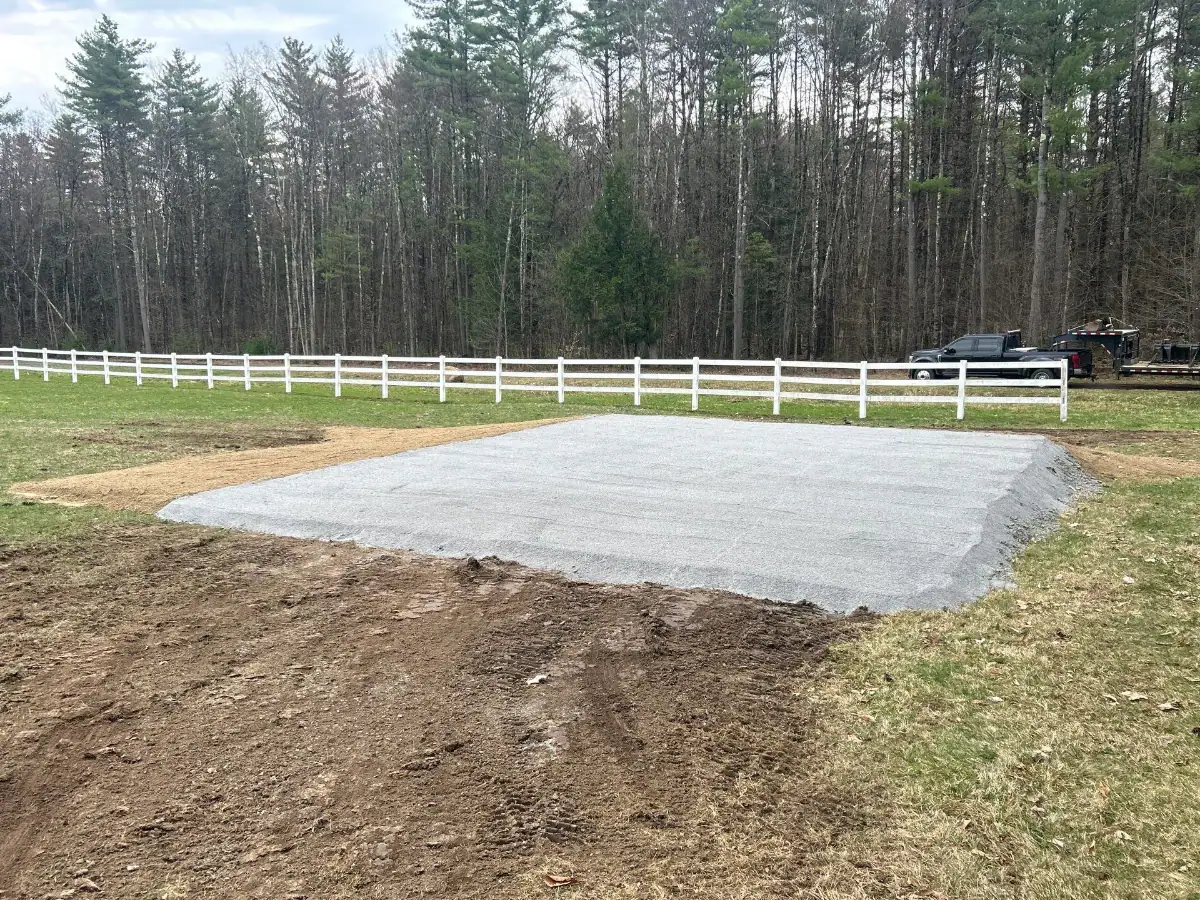
This distinction represents the most common misunderstanding in land development, and it often costs buyers the most money in the end. Land clearing and site preparation are completely different services. Clearing simply removes surface elements: trees, brush, and stumps. Site preparation transforms raw land into a construction-ready pad, which requires grading for proper drainage, soil compaction, topsoil management, and leaving a stable surface where your builder can immediately start foundation work.
A contractor who quotes you for basic clearing and only removes trees has fulfilled their contract. However, if your lot lacks proper grading and drainage, your builder may refuse to start. That oversight forces a second mobilization, a second contractor, and a second invoice. We have seen this exact scenario play out countless times.
When gathering quotes, ask direct questions. Does this price include final grading? Are stump removal and debris hauling included, or listed as separate add-ons? What condition will the site be in on completion day? Detailed, straightforward answers to these questions quickly reveal who you are dealing with.
This process is especially critical in Saratoga County’s active residential construction market. With over 1,100 building permits issued in the county in 2024 alone, builders maintain packed schedules. If your site preparation is executed incorrectly, the resulting delay can push your entire home build back by weeks. Coordinating clearing and grading with one experienced crew keeps your project efficient and cost-effective.
Stump removal is another crucial line item frequently omitted from budget bids. Some operators push stumps to the back of the lot or bury them underground instead of removing them completely. That creates a major liability for you down the road. Buried stumps eventually rot and collapse into dangerous sinkholes, or builders refuse to proceed until they are extracted. Always clarify stump handling before signing a contract.
Want live answers?
Connect with a Emerson Excavating and Trucking expert for fast, friendly support.
Property owners in this region ask many of the same core questions, yet rarely receive direct answers until work is already underway. Here are the facts you need to know from the start.
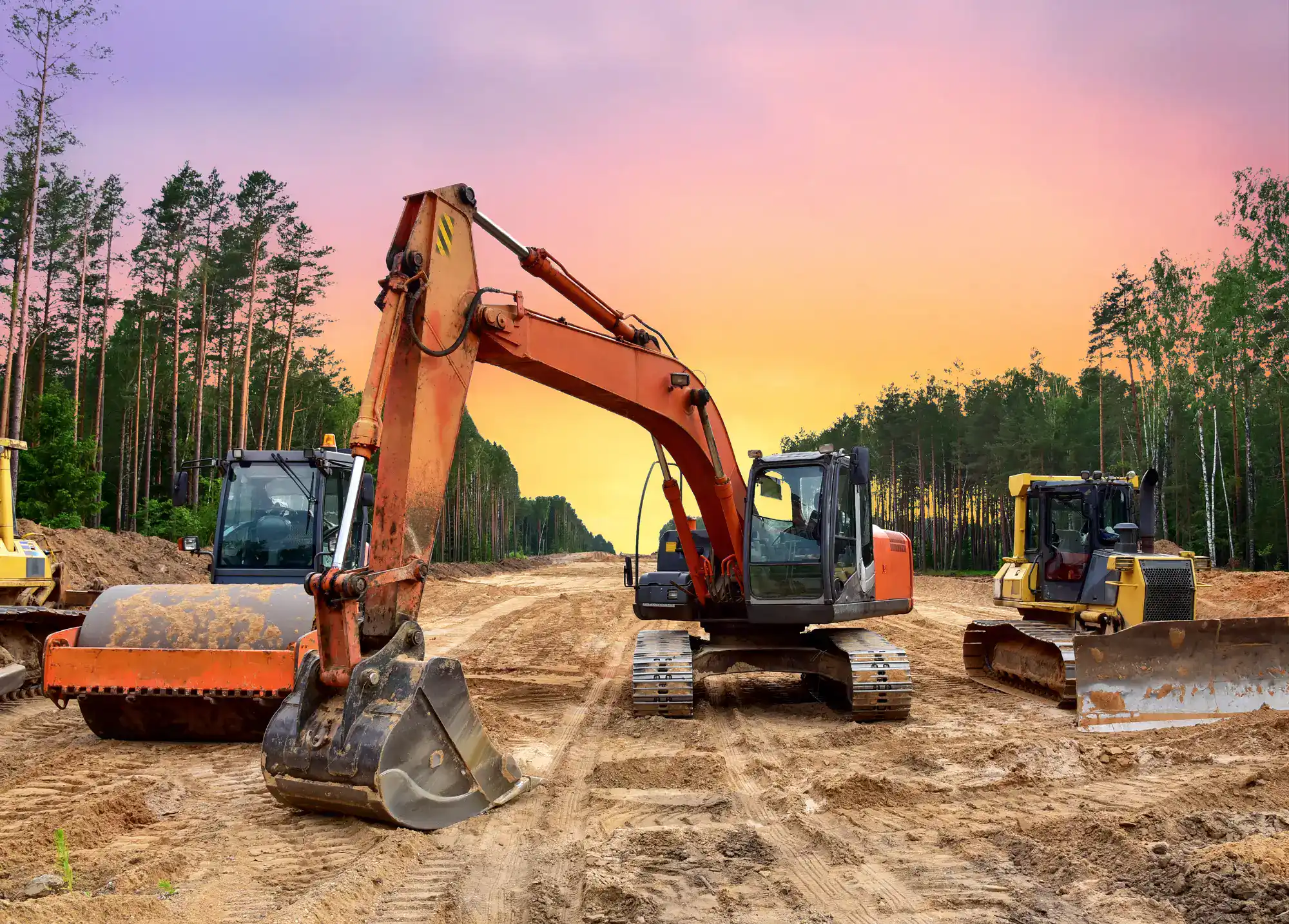
The necessity of a permit depends on the overall footprint of soil disturbance. Projects disturbing one acre or more of soil must register with the NYS DEC under the SPDES Construction General Permit prior to breaking ground. For projects disturbing under one acre, state coverage is generally not required, though your local municipality may still mandate a site-specific grading or land disturbance permit.
Local regulations vary by town. Municipalities like Malta, Queensbury, Clifton Park, and Fort Ann each enforce their own specific building rules, making a quick call to your local town hall smart practice before work begins. We handle complete permit coordination on behalf of our clients, removing the administrative hassle and keeping your build schedule moving smoothly.
Project duration is always a top priority for property owners, especially when a home builder is standing by. Turnaround time depends entirely on lot specifications: total acreage, slope, vegetation density, and site access all influence the schedule. A lightly wooded half-acre in Ballston Spa can be cleared in a single day, whereas a heavily timbered, rocky three-acre parcel in the Warren County foothills requires a multi-day operation.
Equally important to the work duration is your contractor’s booking window. Upstate New York’s primary construction season spans from late March through November. Spring represents the peak season by a wide margin, as property owners finishing winter planning all aim to break ground in April or May. If you are targeting a spring start, initiating conversations in February or early March provides the best chance of securing a prime spot on the schedule.
Fall serves as the second busiest period. Landowners looking to get a jump on spring construction frequently clear their sites in September and October, ensuring the lot is open and ready the moment the ground thaws. For autumn projects, early planning provides maximum scheduling flexibility.
Winter clearing remains possible in upstate New York, though frozen ground, heavy snow accumulation, and reduced equipment efficiency make operations slower. Most residential builds run smoother when scheduled during non-frozen months unless strict project deadlines require winter work.
In Warren County, spring thaw introduces soft, saturated ground conditions that can prove challenging for heavy equipment. Experienced operators who understand seasonal soil conditions use site-appropriate machinery, preventing the deep rutting and topsoil damage that less experienced crews leave behind. Protecting your ground integrity matters when that lot doubles as your future yard.
Comparing bids makes focusing on the lowest price tempting. Land clearing is a notable investment, and keeping costs low feels like a win. However, clearing estimates rarely cover the exact same scope of work. The difference between a $3,500 bid and a $6,000 bid usually comes down to essential services left off the low-cost quote.
Stump extraction, debris removal, final site grading, and permit support can easily be stripped from low bids without a buyer realizing it. You receive a cleared lot, only to discover stumps remain embedded, debris piles border your property, and the ground lacks proper drainage grading. Hiring a second crew to resolve those unfinished details causes your bargain price to quickly exceed the cost of the thorough quote.
Protecting your budget is simple: require a detailed written scope of work specifying every included and excluded service. A contractor unwilling or unable to provide explicit written terms is signaling how they manage their projects.
We founded Emerson Excavating and Trucking after witnessing neighbor landowners suffer through poor contracting practices: operators who overpromised, underdelivered, and left clients with costly site issues. That history is why we provide detailed, written contracts before any machinery starts up. It offers complete protection for your investment and keeps our team fully accountable.
Our deep background in land work sets us apart. We launched as a timber logging operation in 1997, working this exact regional terrain for over two decades before expanding into full excavation and land grading services. When we evaluate a wooded property in Glens Falls or Greenwich, we understand subsurface conditions and spring water movement instinctively. That long-term experience enables us to deliver accurate quotes built for real-world conditions rather than estimates that collapse once work begins.
Article details:
Share:
Continue learning: