Learn how Saratoga's heavy equipment hauling experts use specialized trailers, safety protocols, and local expertise to deliver cranes and excavators safely and on time.
Share:
Summary:
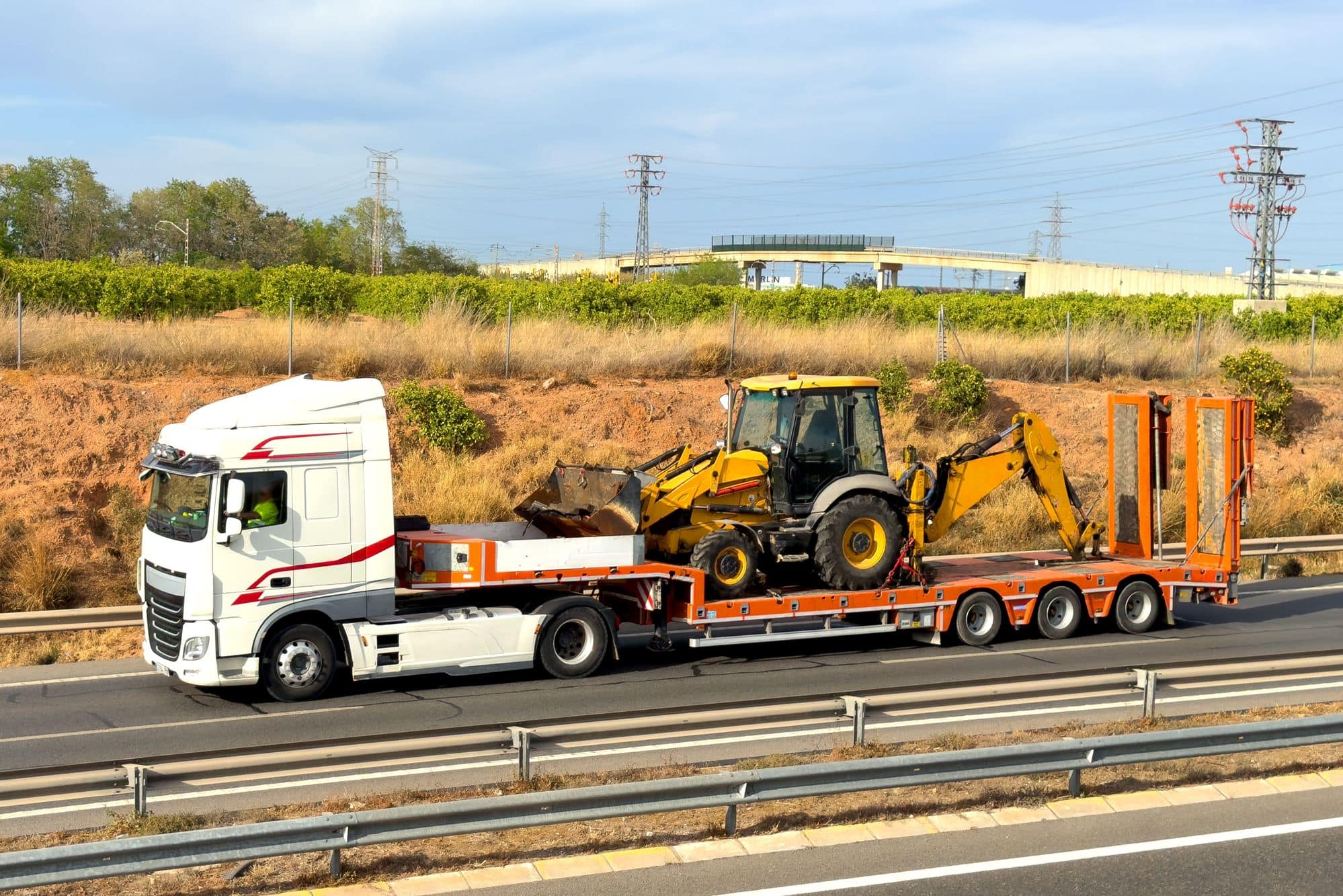
Heavy equipment hauling operates in a completely different realm than standard freight transport. Equipment such as cranes and excavators often surpass conventional size and weight limits, making it imperative to employ specialized trailers and trucks equipped to handle these massive loads. The stakes are higher, the margins for error smaller, and the expertise required far more specialized.
According to New York law, any load exceeding legal width limits of 8’6″ requires specialized permits to be moved on public roads. Most construction equipment falls well outside these parameters. Understanding the unique requirements of each type of equipment is paramount—transporting a crane may necessitate disassembly to fit within legal size limits, whereas an excavator might need securement enhancements due to its uneven weight distribution.
The complexity extends beyond just size and weight. Saratoga Springs presents challenges with diverse terrains, hilly areas, and winding roads requiring skilled drivers familiar with local conditions and experienced in handling heavy loads.
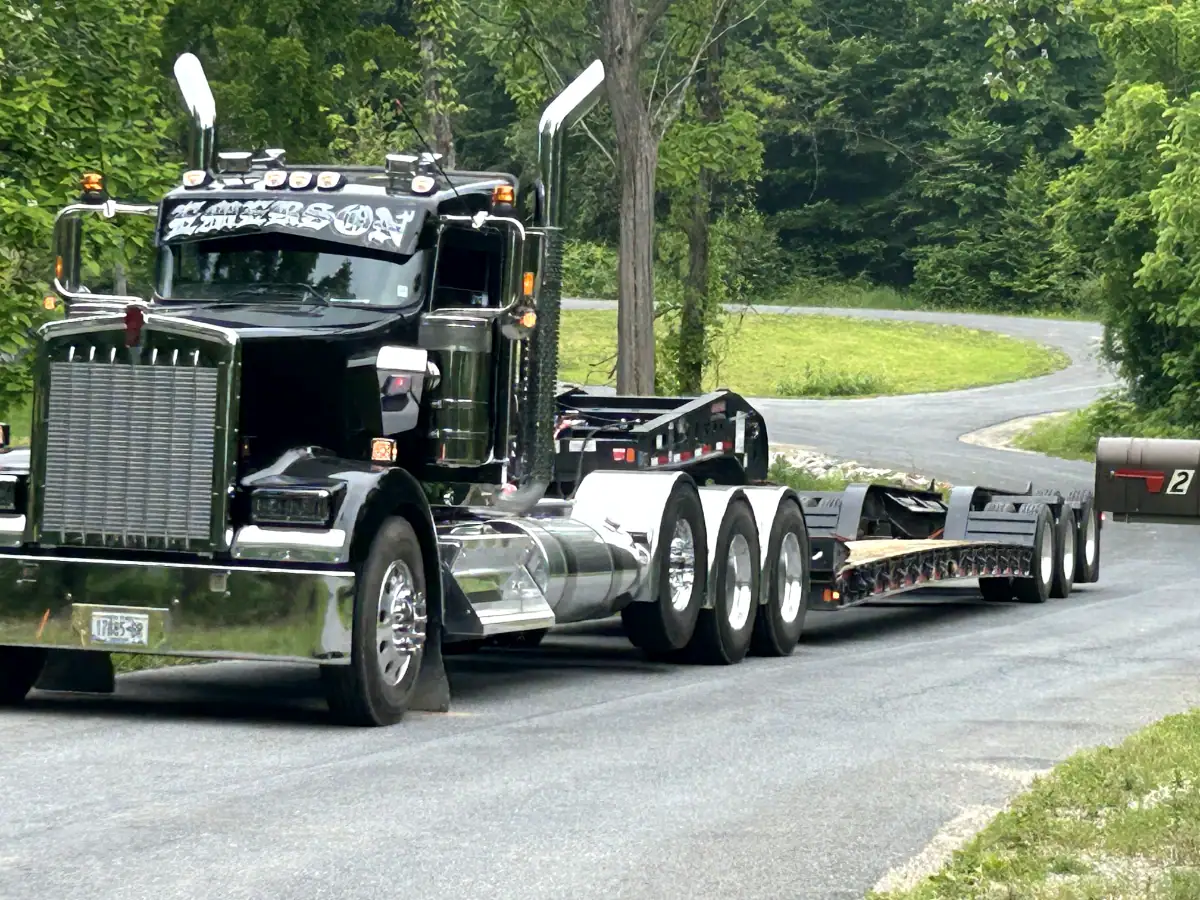
The foundation of safe heavy equipment transport lies in matching the right trailer to the specific machinery being moved. Lowboy trailers are specialized trailers engineered for transportation of heavy equipment with low deck height, facilitating easy loading and unloading of tall and heavy equipment essential for transporting machinery such as bulldozers and cranes.
Different equipment types demand different hauling solutions. Drop-deck trailers are typically used to transport medium-sized construction equipment that is too tall for a standard flatbed trailer, including excavators and tractors, with lower deck allowing taller items to be transported without exceeding height restrictions. Gooseneck trailers are commonly used for heavy construction equipment as their design provides more stability, making them ideal for hauling heavy loads.
The trailer selection process requires deep technical understanding. Lowboy trailers are ideal for tall equipment offering low center of gravity for stability, while step deck models provide versatility for mid-height loads, with both configurations engineered to handle varying size and weight requirements. Lowboys support up to 80,000 lbs while step deck options accommodate heavier loads up to 160,000 lbs, each trailer built with high-strength materials ensuring durability under demanding conditions.
For the most challenging hauls, extendable trailers offer unmatched flexibility, adjusting to accommodate longer equipment making them perfect for complex hauling missions. While flatbeds and lowboys are standard, specialized loads may require extendable trailers, multi-axle configurations, or blade trailers for wind components, as using the wrong trailer can lead to uneven weight distribution, overhang, or even fines.
The investment in proper equipment pays dividends in safety and efficiency. We maintain fleets specifically designed for heavy equipment transport rather than trying to adapt standard freight trailers for oversized loads.
Navigating New York’s permit system represents one of the most complex aspects of heavy equipment hauling. All loads wider than 8’6″ require an oversized permit issued by the New York Department of Transportation, but the requirements extend far beyond simple width measurements.
New York enforces maximum truck weight laws with steering axle limits of 22,400 pounds, single axle limits of 25,000 pounds, tandem group limits of 47,000 pounds, and maximum gross vehicle weight of 102,000 pounds. Legal limits before permits are required include length of 65 feet, width of 8’6 feet, height of 13’6 feet, and weight of 80,000 lbs GVW.
The permit process involves multiple considerations. New York oversize permits are valid for five travel days, New York City permits are good for one several hour period either day or night depending on dimensions and routes, and New York Thruway permits usually last one to three days. Single trip permits cost $40 plus $10 amendment fee with maximum permitted dimensions of length 100 feet, width 14 feet, height 13’11 feet, and weight up to 110,000 lbs for 5 axles or 132,000 lbs for 6 axles.
Special considerations apply to different regions within New York. Loads going into or through New York City require a permit and one escort if overall length exceeds 65 feet, which also applies when trailer is empty after dropping a load in NYC area. NYC permits are issued for one period either day or night with loads over 10′ wide requiring night moves, and over 80,000 pounds gross weight requiring night moves with route survey required.
Oversized loads require state and federal permits which vary based on size, weight, and route, with proper documentation ensuring compliance and route surveys identifying potential obstacles like low bridges or narrow roads. We handle this complex permitting process, ensuring compliance while minimizing delays and costs for our clients.
Want live answers?
Connect with a Emerson Excavating and Trucking expert for fast, friendly support.
Safety in heavy equipment hauling extends far beyond simply strapping down a load and hoping for the best. Ensuring safe transport of heavy machinery requires utilizing equipment effectively, with equipment trailers engineered with safety features and protocols that greatly minimize risks when used properly. The complexity of moving 20-80 ton pieces of machinery through populated areas demands systematic approaches to risk management.
Transporting heavy equipment requires thorough planning and adherence to safety protocols, with proper hauling leading to smoother operations, reduced downtime, and enhanced safety. Starting a heavy haul transport journey puts safety first every step of the way, beginning long before the equipment ever touches the trailer.
Our safety protocols start with comprehensive assessment and planning phases that identify potential risks before they become real problems.
Proper load securement represents the critical foundation of safe heavy equipment transport. The Federal Motor Carrier Safety Administration (FMCSA) sets specific securement requirements to ensure loads do not shift or fall during transit, including using the right number of tie-downs based on weight and size of equipment. These aren’t suggestions—they’re legally mandated safety requirements with serious consequences for non-compliance.
Essential features include tie-down points and locking mechanisms critical for securing machinery to trailers, ensuring equipment remains secure during rigorous road transport and preventing both horizontal and vertical shifting crucial for safety of load and other drivers. At least four chains should be in use, with two connecting to trailer’s front corners and two to back corners, with tension from these opposing forces keeping equipment in place.
The securement process requires technical expertise and quality equipment. Securing heavy equipment requires expertise and specialized tools, using high-strength chains, wheel chocks, and load sensors to maintain stability with NATO-standard tie-down configurations ensuring even weight distribution. We maintain well-maintained vehicles and trailers specifically designed for heavy haul operations and invest in high-quality securement equipment like straps, chains, binders, and shoring bars with capacities exceeding the load’s weight.
Low-loader trailers with low center of gravity significantly reduce risk of toppling during sharp turns or uneven terrains, with many trailers equipped with hydraulic ramps for safe loading and unloading preventing machinery from tipping over. Equally important is ensuring load is correctly balanced on the trailer, which requires understanding weight distribution principles and how they affect vehicle handling characteristics.
Quality securement extends beyond initial loading. Regular inspections en route are vital, with periodic stops to check that all securements remain intact and tight. We build these inspection protocols into our standard operating procedures rather than leaving them to driver discretion.
The human element represents both the greatest strength and potential weakness in heavy equipment transport operations. Our operators receive specialized training covering a wide range of safety topics from load balancing to emergency response, ensuring proficiency in technical aspects while maintaining awareness of safety protocols, with adherence to national and international regulations setting industry safety standards.
Specialized training for drivers extends beyond standard commercial driver’s license (CDL), focusing on operating heavy haul vehicles, maneuvering oversized loads, handling emergencies, and complying with industry regulations. Experience matters as we seek drivers with heavy haul transport experience, allowing drivers to anticipate challenges, react calmly in difficult situations, and make sound decisions on the road.
The training requirements reflect the complexity of the work. Qualified drivers need specialized training in heavy haul transport covering safe operation of heavy haul vehicles, maneuvering oversized loads, handling emergencies, and following industry regulations. We provide comprehensive training for all employees involved in heavy machinery transport process including drivers, loaders, and those securing equipment ensuring everyone understands their roles and responsibilities.
Ongoing education ensures continued competency. Safety protocols and regulations evolve, so we ensure drivers stay updated through ongoing safety seminars and training programs. Regular safety training is essential especially for securing specialized equipment, understanding new road rules, and learning new vehicle systems, with ongoing education and certification support ensuring drivers meet and exceed industry standards.
The operational safety framework extends beyond individual driver skills. Preventative maintenance of hauling vehicles and trailers is crucial including inspections of brakes, tires, suspension systems, and all lifting and securing equipment, with drivers conducting thorough pre-trip inspections checking for damage, leaks, or malfunctioning equipment. Vehicle inspections include checking tires for wear and proper inflation, ensuring brakes are functional with adequate stopping power, and verifying all lights and reflectors work properly.
We implement systematic approaches to driver management that prioritize safety over speed or convenience. This includes addressing driver fatigue as a leading cause of hauling incidents, using tools like biometric wearables and fatigue detection software, with clear hours-of-service scheduling and driver rest areas being vital.
Heavy equipment hauling success comes down to partnering with professionals who understand that moving oversized machinery isn’t just about having big trucks—it requires specialized knowledge, proper equipment, and systematic safety protocols. Successfully transporting heavy equipment ensures safety for everyone on the road, with staying compliant with DOT and FMCSA regulations helping prevent accidents, reduce liability, and keep business operations running smoothly.
The difference between a smooth transport and a costly disaster often lies in the details that experienced hauling companies manage automatically. From permit coordination and route planning to load securement and regulatory compliance, professional heavy equipment hauling requires expertise that develops over years of specialized focus. Heavy hauling can be complicated, which is why it’s essential to trust a team with experience and expertise needed, with companies specializing in Over-Dimensional and Over-Weight Shipment deliveries.
When your project timeline depends on getting heavy equipment delivered safely and on schedule, Emerson Excavating and Trucking brings the local knowledge and professional standards that make the difference between success and setbacks.
Article details:
Share:
Continue learning: