Clearing land in Saratoga, Warren, and Washington Counties isn't just about removing trees. Here's what eco-friendly site prep actually looks like in the Adirondack region.
Share:
Summary:
You found the land. Maybe it’s a wooded lot off a county road in Warren County, a rural parcel in Washington County, or a new home site tucked into the Adirondack foothills in northern Saratoga County. Whatever brought you here, you’re now facing the same question most first-time land buyers face: how do you clear this property without destroying what made you want to build here in the first place? That tension — between development and preservation — is exactly what eco-friendly land clearing is designed to address. And in this part of upstate New York, getting it right matters more than most people realize.
Sustainable land clearing isn’t about leaving everything untouched. It’s about clearing what needs to be cleared — and doing it in a way that protects the soil, manages drainage properly, and preserves the natural character of the land you’re building on. That looks different on a rocky Adirondack hillside than it does on a flat suburban lot, and the methods that work in one place don’t always translate to another.
In Saratoga, Warren, and Washington Counties, the terrain itself shapes the approach. You’re dealing with glacially deposited soils that shift dramatically from one property to the next — sandy near the Hudson River corridor, clay-heavy in upland zones, with rocky ledge that can appear just a few feet below the surface in the Adirondack foothills. A clearing contractor who hasn’t worked in this specific region will encounter those conditions mid-job. One who has been operating here for decades won’t be surprised by them.
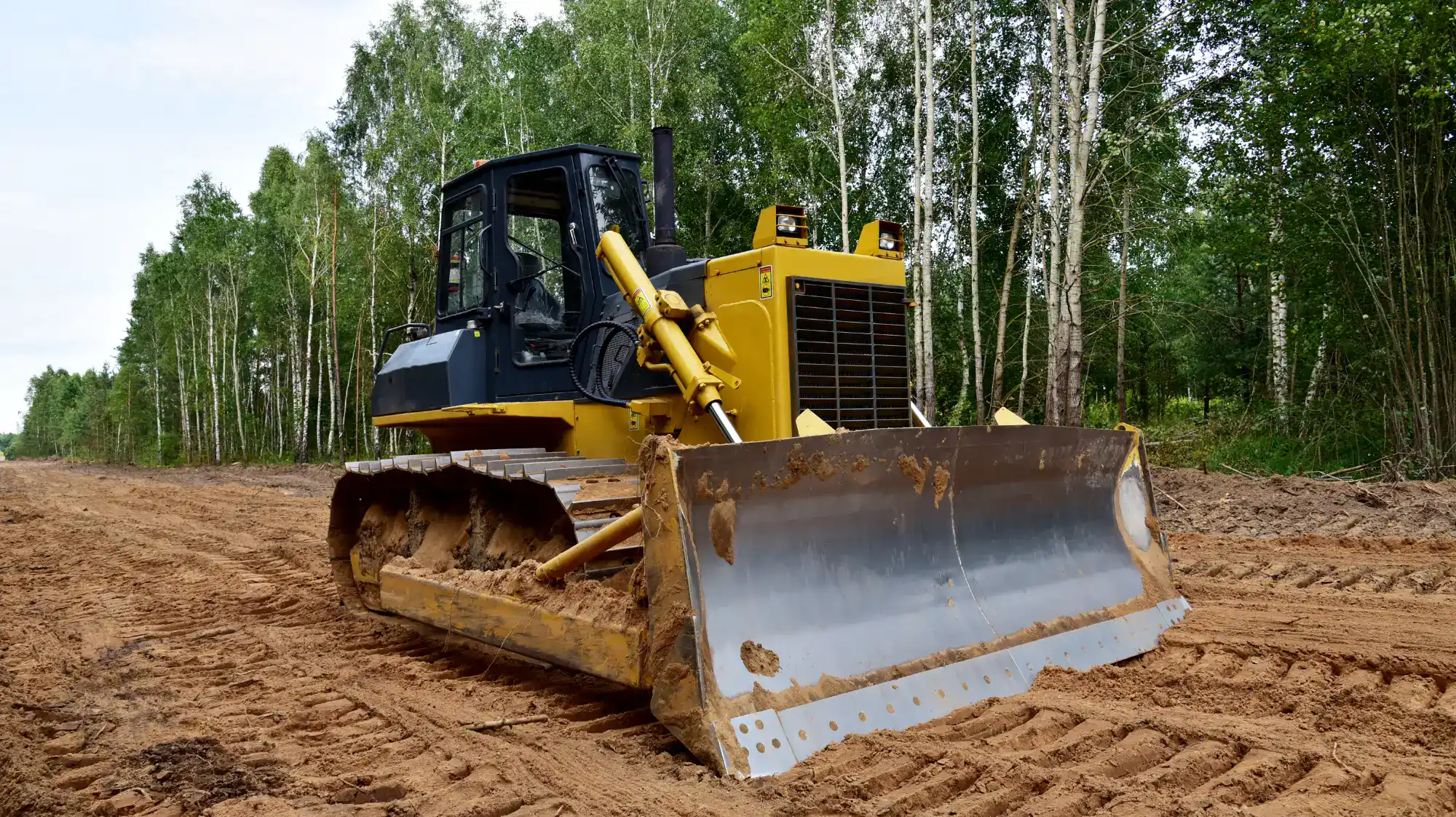
Forestry mulching has become the go-to method for eco-conscious land clearing, and for good reason. Instead of cutting trees and hauling debris off-site, a forestry mulcher grinds everything — trees, brush, stumps — directly into mulch and spreads it back across the ground. The organic material returns to the soil, erosion is reduced, and you avoid the cost and fuel burn of hauling loads of debris. The EPA recognizes forestry mulching as one of the better approaches for new development projects precisely because of this minimal-disturbance profile.
That said, forestry mulching isn’t the right answer for every property in this region. On heavily wooded lots in the Adirondack foothills — the kind with dense hardwood stands and significant tree diameter — the method works well for brush and smaller trees, but larger timber may require a different approach. Rocky ledge near the surface can also limit what a mulching head can do efficiently. The honest answer is that the right method depends on your specific site, and anyone who tells you otherwise before they’ve walked your property isn’t giving you a straight answer.
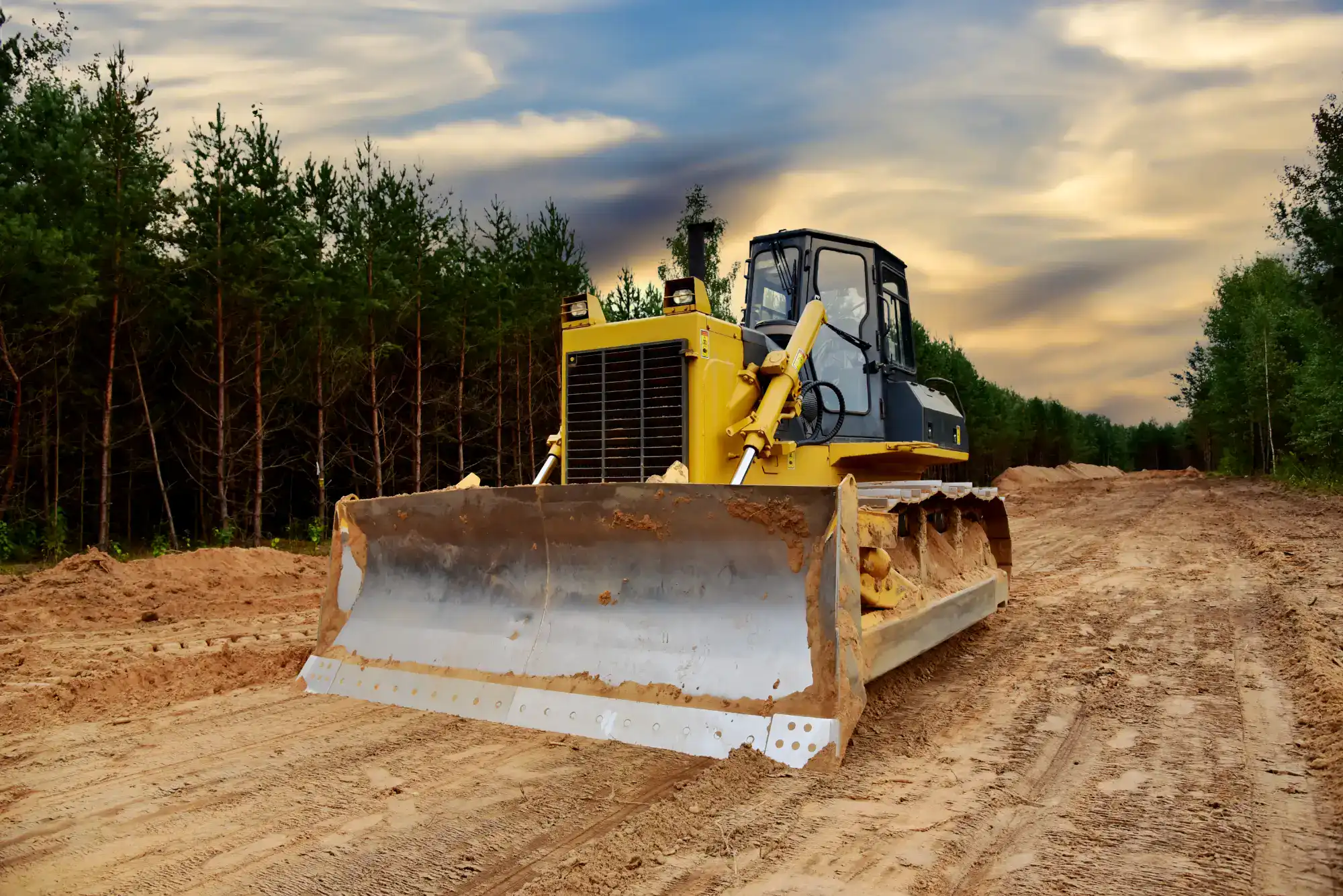
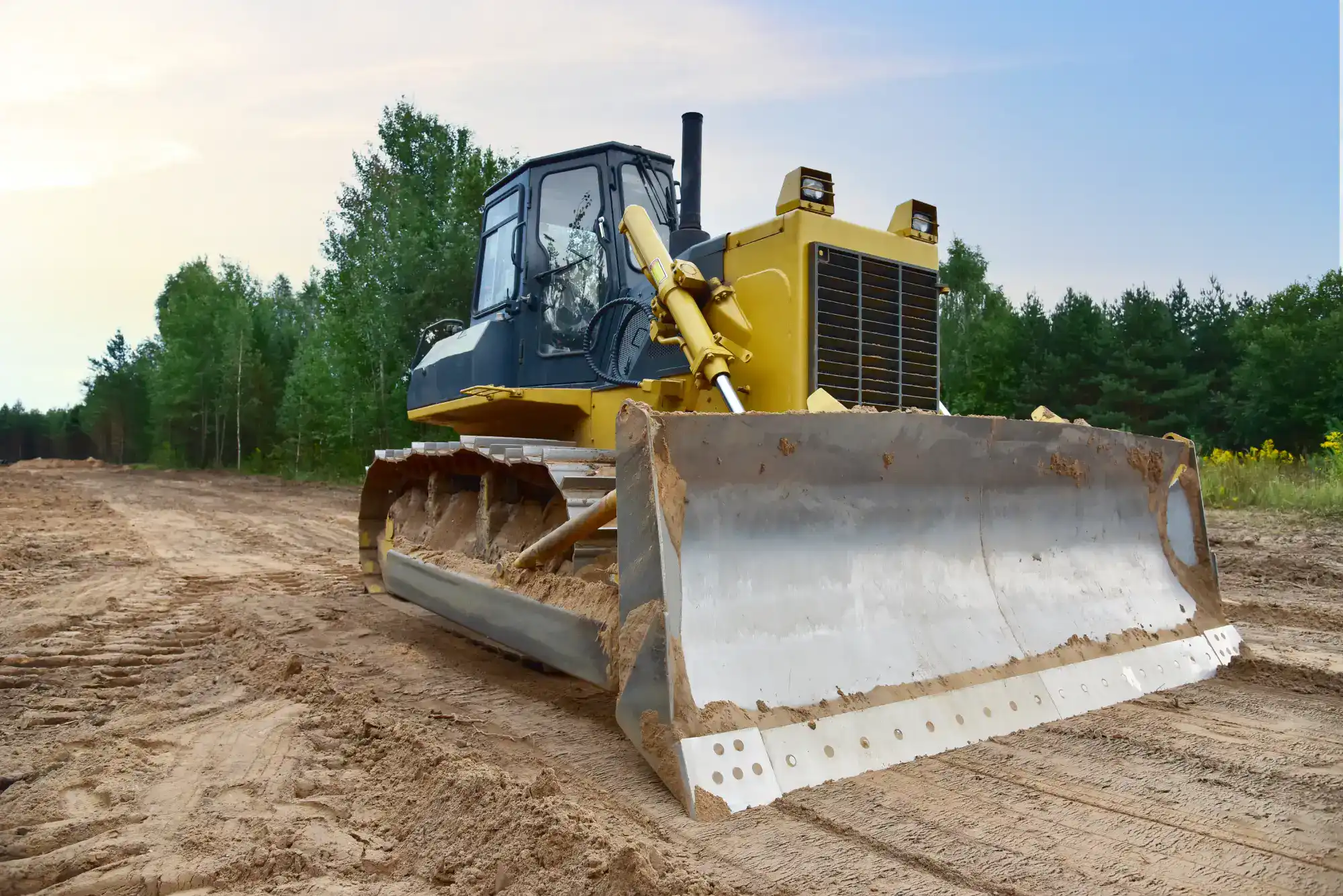
Traditional clearing — using excavators, bulldozers, and haul trucks — gives you more control over the finished grade and is often necessary when the site prep needs to move directly into foundation excavation or septic installation. The downside is more soil disturbance and the need to manage debris disposal. When done well, though, traditional clearing on a wooded lot can still be environmentally responsible: it’s about minimizing unnecessary disturbance, protecting trees you want to keep, and establishing proper drainage from the start rather than trying to fix it later.
The most sustainable approach for most properties across Saratoga, Warren, and Washington Counties is often a combination — selective clearing that preserves mature trees where possible, mulching for brush and smaller material, and precision grading that directs stormwater where it should go. Getting that balance right requires someone who understands the land, not just the equipment.
One of the more meaningful shifts in land clearing over the past decade is the adoption of GPS construction guidance technology. Instead of relying on visual estimates and manual grade checks, the equipment operator knows their exact position on the site at all times and can achieve grades to a fraction of an inch.
For eco-friendly site prep, this matters more than most people realize. Over-clearing — removing more trees and topsoil than the project actually requires — is one of the most common sources of unnecessary site disturbance. It happens when operators are working from rough estimates rather than a precise digital model of the site. GPS guidance eliminates that guesswork. The clearing and grading follow the plan exactly, which means less soil displacement, less erosion risk, and a finished site that drains the way it’s supposed to from day one.
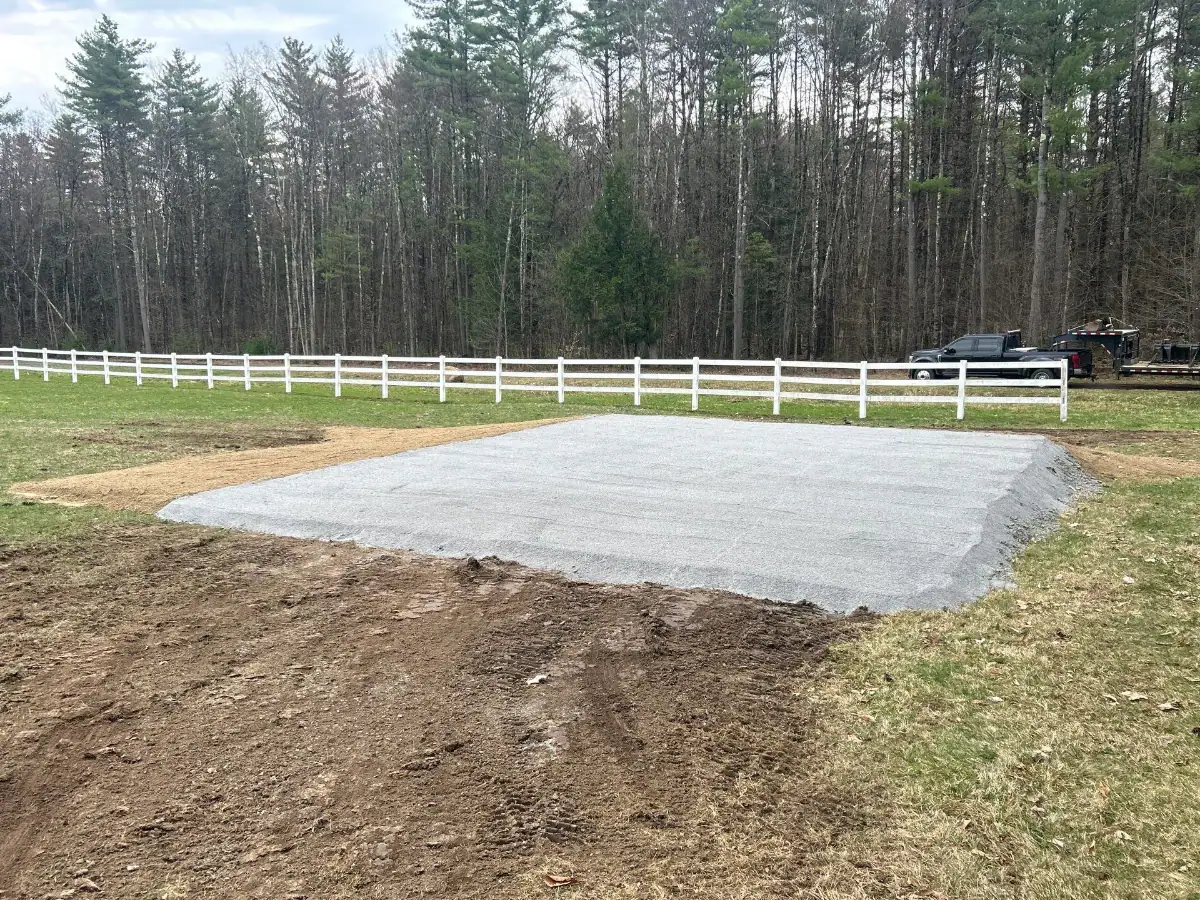
We use this technology on our projects because it produces better results — not just environmentally, but structurally. Proper drainage established during clearing and grading protects the foundation, the septic system, and the long-term integrity of everything built on that site. You can’t retrofit drainage after the fact without significant cost. Getting it right the first time is the only approach that actually makes sense, and GPS guidance is a big part of how we do that consistently.
It’s also worth noting that this level of precision isn’t standard across the industry. Many smaller operators work from experience and eyeballing, which works until it doesn’t. On a wooded lot with variable soil conditions — which describes most properties in Saratoga, Warren, and Washington Counties — the margin for error is narrower than it looks.
Want live answers?
Connect with a Emerson Excavating and Trucking expert for fast, friendly support.
This is the part most property owners don’t find out until it’s too late. In Saratoga, Warren, and Washington Counties, land clearing isn’t just a matter of hiring a contractor and getting to work. Depending on where your property sits, you may be dealing with multiple layers of regulatory oversight — and skipping any one of them can result in a stop-work order, fines, or forced restoration of cleared land.
The permit picture here is more complex than in most markets, and it’s worth understanding before you sign anything or break ground.
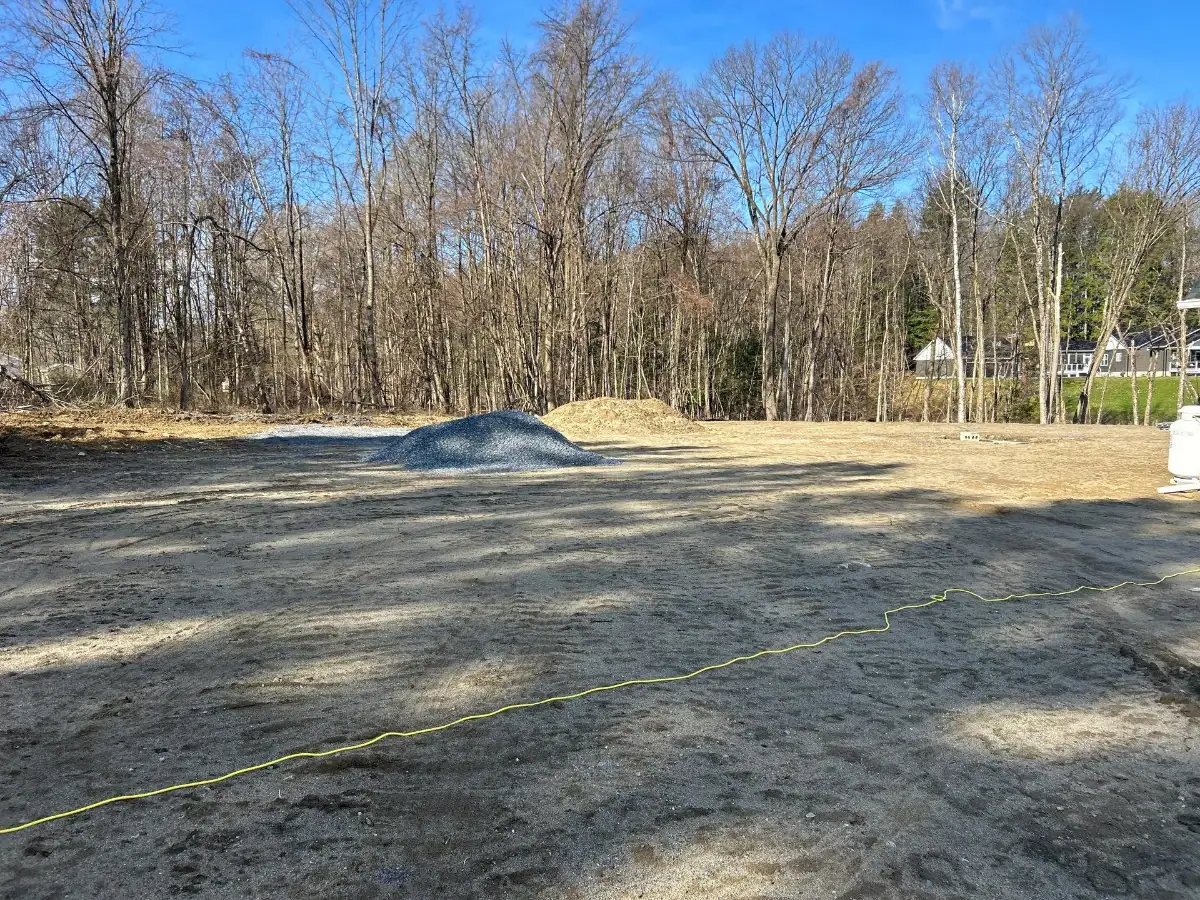
Warren County sits at the southern gateway to the Adirondack Park, and portions of the county fall within the Adirondack Park boundary. If your property is in one of those areas, the Adirondack Park Agency has its own permitting requirements for land development — requirements that exist entirely separately from what the DEC or your local building department requires. APA permits must be recorded with the Warren County Clerk’s Office within 60 days of issuance, and work cannot proceed without them.
This is the layer that out-of-area contractors most commonly miss. A company based in Albany or the Capital District may be perfectly competent at land clearing, but if they haven’t worked extensively in Warren County, they may not flag the APA requirement until after clearing has already started. That’s not a small oversight — it can stop a project cold and create legal complications that take months to resolve.
We’ve worked throughout Warren County long enough to know which properties trigger APA jurisdiction and how to factor permit timelines into the project schedule from the beginning. That knowledge isn’t something you can look up in a day — it comes from years of operating in this specific region, and it’s one of the most practical reasons to work with a contractor who actually knows this terrain.
Beyond the APA, the New York State Department of Environmental Conservation has its own jurisdiction over freshwater wetlands. If your property is near a mapped wetland — or if the wetland is 12.4 acres or greater — a DEC permit is required before any clearing, grading, or construction activity in or near that area can begin. The United States Army Corps of Engineers also has independent jurisdiction over wetlands, meaning a Corps permit may be required whether or not the DEC requires one.
In practical terms, this affects a significant number of properties across all three counties. The Adirondack region and the Hudson River corridor in Washington County both have substantial wetland presence. Riverfront properties along the Hudson near Fort Edward and Hudson Falls in Washington County are especially likely to trigger DEC review. Lakefront and near-water properties in Warren County — including the Lake George corridor — face similar considerations. Properties in northern Saratoga County near water features also require careful wetland assessment before any work begins.
The eco-friendly angle here isn’t just about values. In this region, sustainable clearing practices and regulatory compliance are often the same thing. Minimizing soil disturbance near wetland buffers, using low-impact equipment techniques, and establishing proper drainage before construction begins are all practices the DEC looks for — and they’re also the practices that produce a better-built site.
We handle permit research and regulatory compliance as part of the project process. If your property has wetland considerations, we identify them before work begins, not after. That means your project timeline stays intact and you’re not facing surprises mid-job when the stakes are highest. For properties in northern Saratoga County, Warren County, or rural Washington County, that kind of permit knowledge isn’t a nice-to-have — it’s essential.
Eco-friendly land clearing in this part of upstate New York comes down to three things: the right methods for your specific site, the permit knowledge to keep your project legal and on schedule, and an operator who makes good decisions on the ground — not just on paper.
We started in the woods in 1997 as a logging company. That background shapes how we approach every clearing project: we understand wooded terrain, we know how to read a site before the first tree comes down, and we’ve been working in Saratoga, Warren, and Washington Counties long enough to know what this land actually demands.
If you’re preparing a lot for a new home and want a straight conversation about what your property needs, reach out to Emerson Excavating and Trucking. A call or text is the fastest way to get there.
Article details:
Share:
Continue learning: