Permits, utility notifications, APA rules: excavation in Warren and Washington County involves more steps than most people expect. Here is what you need to know before work begins.
Share:
Summary:
Most people assume the hard part of building a new home is finding a contractor. Yet if you are working with raw or wooded land in Warren County or Washington County, the permit process alone can catch you completely off guard. There are multiple agencies involved, legal notification requirements before any digging begins, and, depending on where your property sits, a layer of state-level review that most people don’t find out about until it’s already causing delays.
We put this guide together because we field these questions constantly, and the answers matter. Getting this right early saves you time, money, and a lot of frustration.
The short answer is: it depends on what you are doing, but more often than not, yes. In both Warren and Washington Counties, most excavation work tied to new construction requires at least a local building permit. That includes foundation excavation for a new home, septic system installation, and in many cases, even a new driveway if it connects to a town road.
What surprises a lot of people is that the permit requirement does not start and end with the local building department. Depending on your property’s location and the nature of the work, you may need to coordinate with multiple agencies before a single machine touches your land. Understanding that upfront is what separates a smooth project from one that stalls out for weeks.
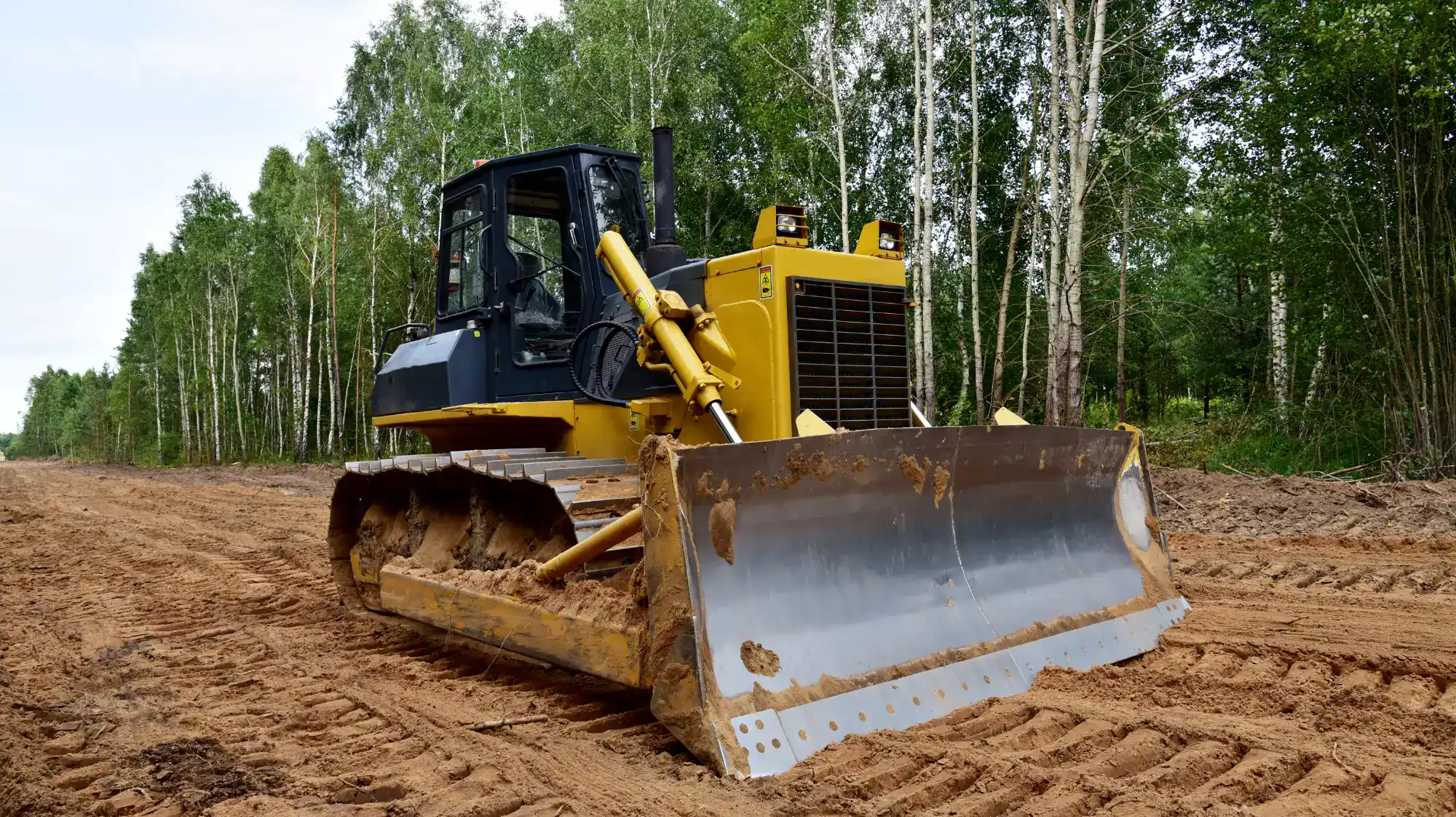
Before any excavation work begins in New York State, regardless of county or property type, you are legally required to notify Dig Safely New York. This is not optional, and it is not something your contractor should handle as an afterthought. The law requires at least 48 hours of advance notice before digging starts, giving utility owners time to mark the locations of underground lines on your property.
The reason this rule exists is simple: underground utility maps are not always accurate, and depths can shift over time. A gas line, water main, or buried electric feed that looks fine on paper can be in a completely different location by the time you break ground. Hitting one of those lines is not just a project delay; it is a serious safety and liability event.
We call Dig Safely New York on every job, without exception. It is part of our standard process before any equipment goes to work. If you are talking to a contractor who treats this as optional or seems unfamiliar with the requirement, that is a warning sign worth paying attention to. Dig Safely New York can be reached at 1-800-962-7962, and the notification needs to happen at least two full business days before excavation begins.
For homeowners planning their first build on a wooded or undeveloped lot in Warren or Washington County, this is often one of the first concrete steps in the site prep process, and it must happen before anything else moves forward.
This requirement catches people off guard more than almost anything else. A lot of homeowners, and even some contractors who do not work in this region regularly, assume the Adirondack Park Agency only regulates state-owned land. That is not how it works. The APA holds authority over private land within the Adirondack Park boundary, and significant portions of both Warren County and Washington County fall within that boundary.
If your parcel is inside the Park, you may need APA review and approval before any land clearing, grading, or excavation begins. The scope of that review depends on the size of the project, the classification of your land, and what you propose to do. Some projects require a full APA permit, while others may qualify for a simpler notification process. You need to know which category you fall into before work starts, not after.
The practical implication is that your project timeline needs to account for APA review when it applies. This is not a same-week turnaround. If you plan to break ground in the spring, you should look into this in the fall or winter, not in March when you are ready to go.
We have worked in this region long enough to know when APA jurisdiction is likely to come into play, and we factor that into the planning conversation early. It is not a reason to panic; it is simply a reality of building in this part of New York, and it is one of the reasons local experience matters when choosing an excavating contractor.
Want live answers?
Connect with a Emerson Excavating and Trucking expert for fast, friendly support.
Beyond the APA question, a handful of issues come up on nearly every project we work on in Warren and Washington County. Some are straightforward. Others have answers that depend heavily on where your property is located and what features sit on the land. Either way, these are the questions worth asking before you sign anything or schedule equipment.
We have pulled together the questions we hear most often: not to cover every hypothetical scenario, but to give you a clear picture of what the process of real-world execution looks like in this specific region.
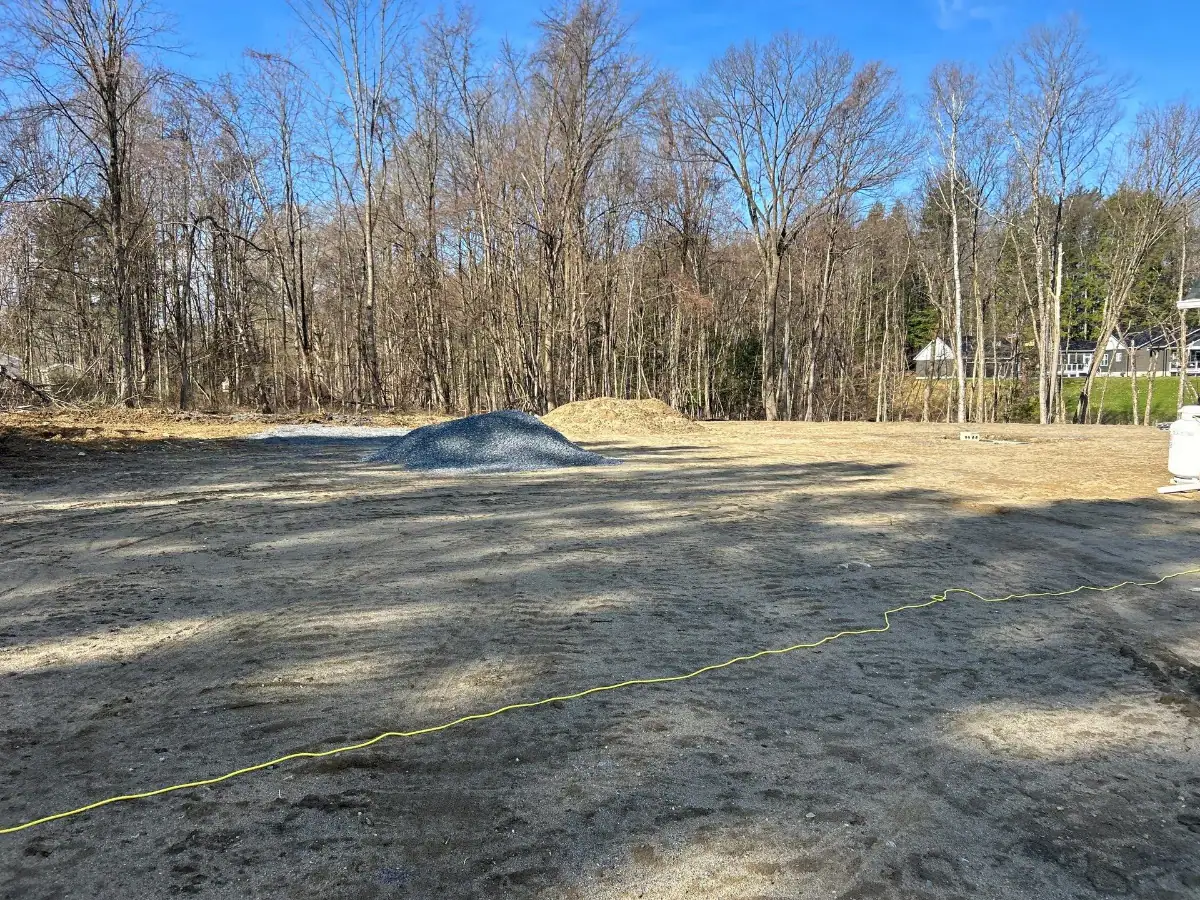
If your land has a stream, wetland, or pond, or sits near a river, there is a strong possibility that the New York State Department of Environmental Conservation will need to be part of the conversation. The DEC’s Warrensburg office serves Warren, Washington, Fulton, and Saratoga Counties; for all three counties in our primary service area, the same office handles these reviews.
DEC permits can be required for excavation or grading work that affects wetlands or waterways. The threshold is not always obvious from a basic property map. What looks like a dry depression on your lot might qualify as a regulated wetland under state definitions. If there is any question about whether water features on your property fall under DEC jurisdiction, a call to the Warrensburg office before committing to a start date is the smartest path forward.
This issue is especially relevant in Warren County, where properties near Lake George, the Hudson River corridor, and the many streams feeding into the Adirondack watershed are common. Washington County has similar considerations along the Hudson and extending into the Lake Champlain drainage area. These are not rare edge cases; they come up regularly on the kinds of wooded, rural lots people are building on in this region today.
The good news is that DEC review, when required, is a manageable process if you plan for it properly. Problems arise when it shows up as a surprise after equipment is already on-site. Getting ahead of it, ideally during the winter before your spring build, is the right move.
In this part of New York, the active construction season runs roughly from April through November. Frozen ground, frost depths that can reach 36 to 48 inches or more in Warren and Washington Counties, and the general reality of upstate winters mean the window for site prep work is compressed. If you want to be ready to build in the spring, the permit process needs to start well before the ground thaws.
For a typical new home site prep project involving land clearing, rough grading, foundation excavation, and septic installation, you are looking at multiple permit applications, potentially across multiple agencies. Local building permits, Dig Safely New York notification, potential APA review, and possible DEC involvement do not all happen in parallel on the same timeline. Some of these steps must happen in a strict sequence.
A solid rule of thumb for a project in Warren or Washington County: if you want to break ground in April or May, start your permit research in the fall. That timeline gives you room to identify which agencies are involved, submit applications before winter, and resolve questions before the season opens. Waiting until March to figure out what permits you need is a reliable way to lose weeks of your build window.
We have worked alongside the building departments in this region for years. We know the local requirements, we understand the inspection process, and when we take on a project, we factor permit timelines into the schedule from day one. That is not an extra perk; it is simply how a project in this region needs to be managed to stay on track.
The permit landscape for excavation work in Warren and Washington County is not impossible to navigate, but it is genuinely more layered than most homeowners expect going in. Between local building departments, Dig Safely New York, potential APA review, and possible DEC involvement, real steps have to happen in the correct order before any land clearing or grading begins.
What makes all the difference is working with someone who already knows this terrain: not just the rocky, wooded ground conditions common across this region, but the regulatory environment that comes with building here. We have been working in Saratoga, Warren, and Washington Counties since 1997, and this is the exact process we walk through on every job.
If you are in the planning stages for a new home, driveway, septic installation, or any site prep work in this area, Emerson Excavating and Trucking is happy to talk through what your specific project will involve. Give us a call or send a text; an honest answer costs nothing.
Article details:
Share:
Continue learning: