Seven drainage yard problems that Warren County homeowners run into most often — what causes them, how serious they are, and what actually fixes them.
Share:
Summary:
You don’t need a flooding emergency to have a drainage problem. Sometimes it’s a low corner of the yard that stays wet for days after rain. Sometimes it’s a strip of dead grass that won’t recover no matter what you seed or fertilize. Sometimes it’s a faint musty smell in the basement that only shows up in spring.
These are the early signs — and in Warren County, they tend to get worse fast. Between the clay-heavy soil, the aggressive freeze-thaw cycles, and the spring snowmelt that hits all at once, drainage issues here don’t stay small for long. Here’s what to look for, what it means, and what actually fixes it.
Warren County’s soil is a big part of why drainage problems here are more persistent than in other parts of New York. Clay-heavy soil absorbs water slowly and holds it for a long time after saturation. Unlike sandy or loamy soil that lets water pass through relatively quickly, clay creates a kind of slow-draining basin beneath your yard — water sits on top, or just barely beneath the surface, with nowhere to go fast.
Layer that with what happens every winter. Freeze-thaw cycles run through the Adirondack foothills dozens of times each year. Water seeps into cracks and low points in the fall, freezes and expands through winter, then thaws in spring — leaving soil shifted, slopes subtly altered, and drainage systems that worked fine last year suddenly struggling. Add the spring snowmelt from 70 to 100 inches of annual snowfall in some parts of the county, and you’ve got a drainage stress event that builds for months before it hits all at once.
This is the most common complaint we hear, and it’s also the clearest signal that something is structurally wrong with how your yard drains. A puddle that disappears within a day is normal. A puddle that’s still sitting there two days after the rain stopped is not.
The cause is almost always one of three things: a low spot in the yard that has no natural outlet, soil so compacted that water can’t infiltrate, or a grading problem where the slope is directing water toward a collection point rather than away from the property. In Warren County, compacted soil is especially common on newer construction lots — heavy machinery during the build compresses the top layer of soil, and the clay underneath does the rest.
What makes this problem worth taking seriously beyond the obvious inconvenience is what it attracts and what it threatens. Standing water becomes a mosquito breeding ground within days. It suffocates grass roots, killing off patches of lawn that no amount of reseeding will fix until the drainage is corrected. And if that low spot is anywhere near your foundation, you’re putting consistent hydrostatic pressure on your basement walls with every rain event.
Puddles that won’t go away after 48 hours are worth a professional look. The fix might be as straightforward as regrading a low area and adding topsoil with proper compaction, or it might require a catch basin or French drain depending on where the water is coming from. Either way, it doesn’t get better on its own — it just keeps happening, and the soil damage compounds over time.
If you’ve got a section of lawn that yellows out every spring, stays soft and spongy underfoot, and refuses to recover no matter what you do, drainage problems in your yard are almost certainly the cause. Waterlogged soil suffocates grass roots by cutting off the oxygen they need. The grass doesn’t drown exactly — it starves. And because the underlying drainage issue remains, reseeding the same area just repeats the cycle.
A lot of homeowners spend two or three seasons throwing fertilizer and grass seed at a patch before someone finally tells them the soil beneath it is saturated for weeks at a time. Once you know that, the solution becomes obvious — but getting there costs time and money that didn’t need to be spent.
The soggy-grass problem also shows up in a specific pattern that’s worth paying attention to: it tends to follow the same shape year after year. That shape tells you something about where the water is collecting and why. A long strip along a fence line often points to runoff channeling from a neighbor’s property or a downspout that’s discharging too close to the surface. A circular patch in the middle of the yard usually points to a low point created by settling or compaction. A wide swath near the house almost always connects back to grading that slopes toward the foundation rather than away from it.
These patterns are readable if you know what to look for, and they make diagnosis faster. The fix depends on what the pattern reveals — regrading, a French drain, downspout extensions, or some combination — but the first step is recognizing that the grass isn’t the problem. The drainage is.
Want live answers?
Connect with a Emerson Excavating and Trucking expert for fast, friendly support.
Yard drainage problems and foundation problems are more connected than most homeowners realize. Water that pools against or near your foundation doesn’t just sit there — it exerts pressure on the wall, seeps through hairline cracks, and over time causes the kind of structural damage that costs far more to fix than the drainage work that would have prevented it.
Foundation crack repair runs anywhere from $500 to over $10,000 depending on severity. Full basement waterproofing systems can reach $30,000 or more. Proper yard drainage — regrading, a French drain, or both — is a fraction of that cost and addresses the source of the problem rather than the symptom.
The clearest sign that your yard drainage problem has crossed into foundation territory is water that consistently reaches your foundation wall after every rain event. Not just occasional dampness — consistent pooling, every storm, in the same spot. That pattern means your yard’s current grading is directing water toward the house rather than away from it, and your foundation is absorbing the result.
Inside the house, you’ll often see this as moisture on basement walls, white mineral deposits (efflorescence) on concrete, or a musty smell that appears after rain and fades as things dry out. These are the early warning signs. The later ones — bowing walls, visible cracks, water actively entering the basement — are significantly more expensive to deal with.
In Warren County, the freeze-thaw cycle makes this worse in a specific way. Water that infiltrates the soil near your foundation in the fall freezes and expands in winter. That expansion puts lateral pressure on foundation walls from the outside. Year after year, it widens small cracks and shifts the soil in ways that compound the drainage problem. By the time a homeowner notices visible damage, the cycle has often been running for several winters.
The fix at the yard level typically involves regrading the area around the foundation to create a positive slope — meaning the ground falls away from the house at a rate of at least one inch per foot for the first several feet. In some cases, a French drain installed along the foundation perimeter is needed to intercept subsurface water before it reaches the wall. Neither fix is complicated when it’s caught early. Both become more involved when the problem has been running for years.
There’s no shortage of advice online about fixing yard drainage problems yourself. Dig a trench. Lay some pipe. Add topsoil. Extend the downspouts. Some of that advice is directionally correct. Most of it misses the part that makes the difference between a fix that lasts and one that fails within a season or two.
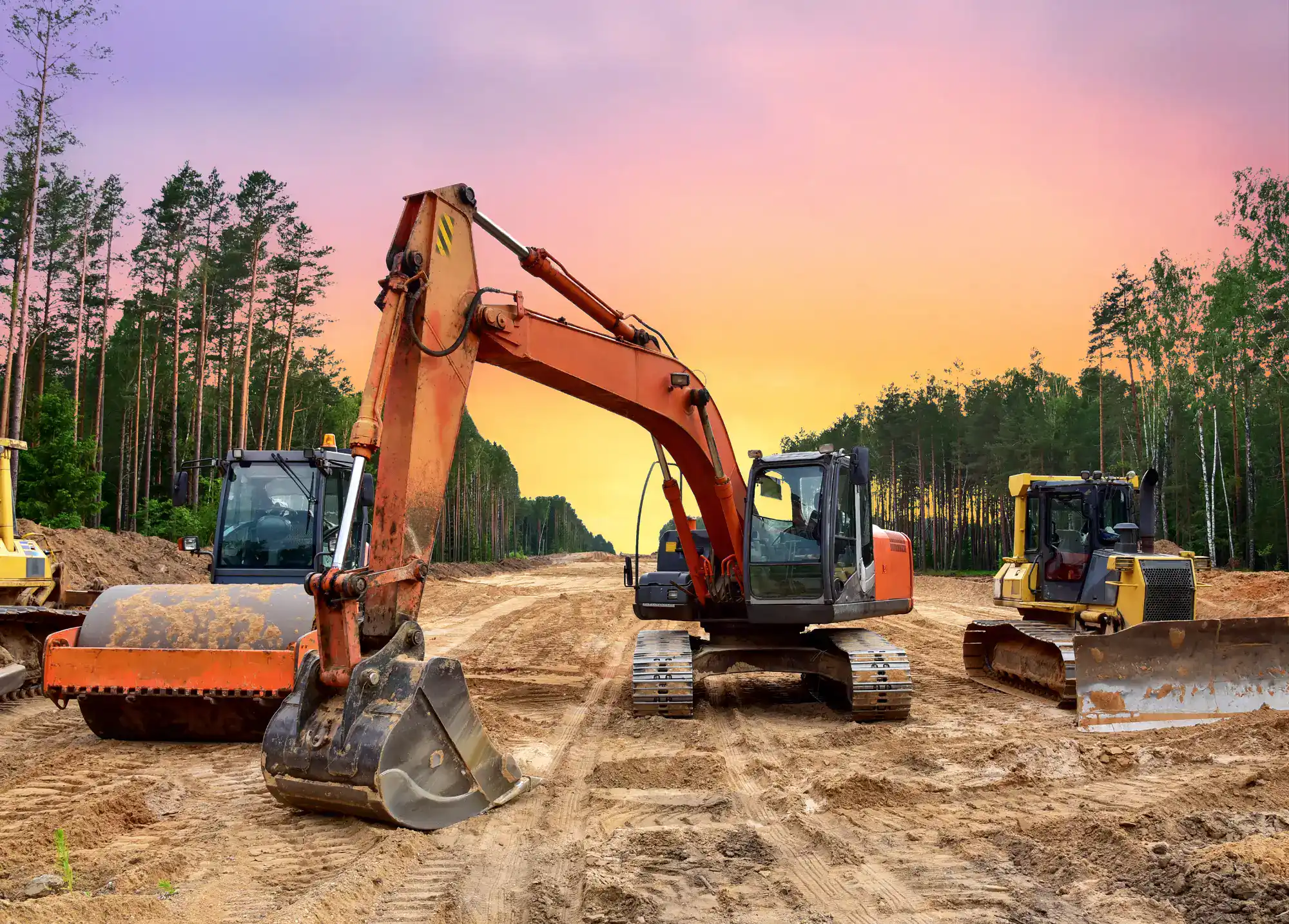
The reason DIY drainage attempts so often fall short isn’t effort — it’s equipment. Proper slope in a French drain requires precise measurement and consistent fall toward a discharge point. Regraded soil needs to be compacted correctly, or it settles unevenly and creates new low spots. Without the right machinery to achieve compaction and grade accurately, you can spend a weekend on drainage work and end up with a yard that drains worse than it did before, because now the water has a new path you didn’t intend to create.
Yard flooding solutions that work share a few common traits. They start with a real diagnosis — understanding where the water is coming from, where it’s going, and why the current system isn’t handling it. They account for the full picture: surface water, subsurface water, gutter discharge, and the relationship between your yard’s slope and your foundation. And they use the right solution for the specific problem, which isn’t always a French drain. Sometimes it’s a swale — a shallow, graded channel that redirects surface water to a lower area of the property. Sometimes it’s a catch basin connected to an outlet pipe. Sometimes it’s purely a regrading job. Often it’s a combination.
In Warren County specifically, any drainage solution also needs to account for what happens in winter. A French drain that isn’t installed below the frost line can heave and shift. A discharge point that works fine in summer can ice over in January and back up through the system. These are the details that separate drainage work done by someone who’s worked through Warren County winters from work done by someone who hasn’t.
If water is pooling near your foundation after every storm, your basement is showing moisture, or you’ve got erosion actively moving soil off your property — don’t wait. Those problems don’t stabilize on their own, especially heading into another freeze-thaw season.
For the less urgent stuff — soggy patches, slow-draining low spots, grass that won’t recover — the right move is still a professional assessment before you spend money on fixes that won’t hold. A proper diagnosis costs you nothing up front and saves you from chasing the same problem year after year.
We’ve been working in Warren County long enough to know how the soil behaves, where water wants to go after a heavy storm, and what solutions actually hold up through an Adirondack winter. Josh is present on almost every job — not a crew sent out without oversight, but the owner, on-site, making sure the work is done right. If you’re dealing with drainage yard problems and want a straight answer about what’s causing them, reach out to us directly by call or text. No runaround, no pressure — just an honest look at what’s going on with your property.
Article details:
Share:
Continue learning: