Most lawn treatment failures come down to the same handful of mistakes. Here's what's actually killing your grass — and what to do instead.
Share:
Summary:
You did everything the bag said. You fertilized in spring, pulled weeds, maybe even hired someone to spray. And somehow, by August, your lawn still looks patchy, thin, or just plain dead in spots. It’s not bad luck. Most lawn problems trace back to the same handful of mistakes — things that happen before the first bag of fertilizer is ever opened. Understanding what those mistakes are, and why they happen, is the difference between a lawn that actually recovers and one you keep pouring money into every season.
A lot of lawn treatment advice is written for Georgia or the Carolinas — warm-season climates with completely different grasses, soil types, and growing windows. Warren County is not that. You’re dealing with a short frost-free season, clay-heavy soils in the lower county, rocky ledge as you move toward the Adirondacks, and a freeze-thaw cycle every spring that compacts the ground before a single blade of grass has greened up. Generic lawn advice fails here because the conditions are genuinely different.
The five mistakes below aren’t theoretical. They’re the patterns that show up over and over in upstate New York yards — and most of them have nothing to do with which fertilizer brand you buy.
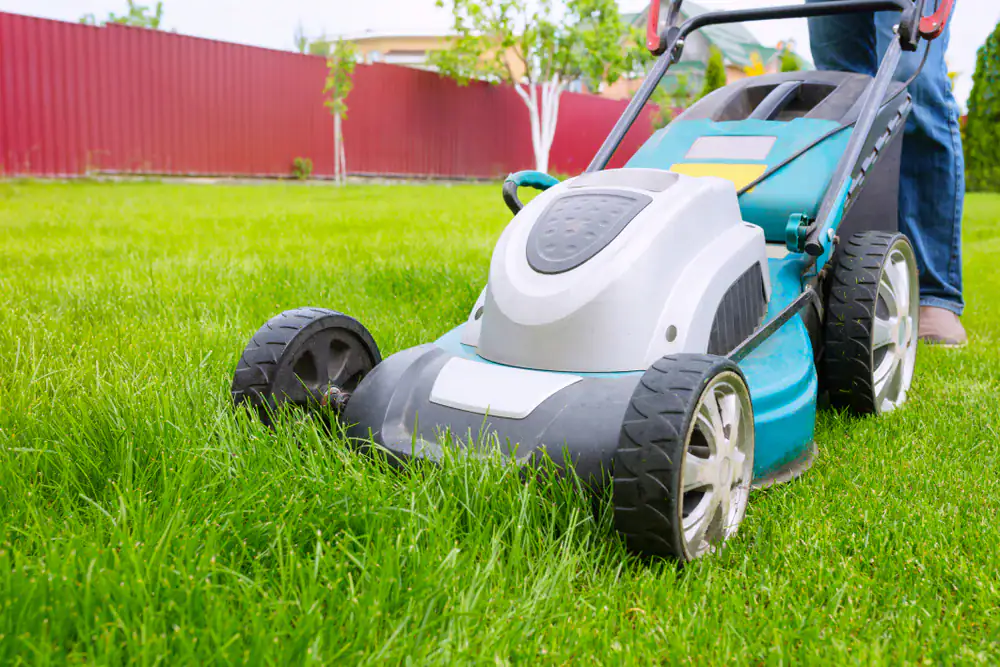
This is probably the most common lawn treatment mistake in the region, and it costs homeowners real money every year. The impulse makes sense — it’s April, the snow is gone, and you want to get ahead of it. But grass can’t absorb fertilizer until the soil reaches around 55°F. Apply it before that threshold and you’re not feeding your lawn. You’re either burning it or washing nutrients straight into the ground before roots can use them.
In Warren County, that soil temperature threshold typically isn’t reached until mid-to-late May, sometimes later if you’re up toward Thurman or the higher elevations near Gore Mountain. The Glens Falls and Queensbury areas warm up a little faster, but even there, an early April fertilizer application is usually premature.
The fix is simple but requires patience: wait. A soil thermometer costs about ten dollars. Stick it in the ground at a few spots around your yard. When you’re consistently reading 55°F or above at a two-inch depth, you’re ready. Not before.
There’s also the question of what you’re applying. Without a soil test, you’re guessing at what your lawn actually needs. Warren County soils tend to run acidic — partly because of Adirondack precipitation patterns and the region’s natural geology. When soil pH drops below 6.0, grass can’t absorb nutrients effectively even if you apply the right fertilizer at the right time. A soil test from Cornell Cooperative Extension of Warren County runs about $15 to $25 and tells you exactly what you’re working with. It’s the single highest-return step most homeowners skip entirely.
Here’s something most homeowners don’t realize: the lawn that looks terrible in July of this year was probably undertreated in October of last year. Cool-season grasses — Kentucky bluegrass, tall fescue, and perennial ryegrass, which are the dominant grass types in Warren County — build their root reserves in fall. That’s when they’re actively growing, storing energy, and thickening up. Spring is recovery season. Fall is growth season.
When fall treatment gets skipped or pushed too late, the grass goes into winter with shallow roots and depleted reserves. It survives, but just barely. Then summer heat arrives, and there’s nothing left to draw on. The lawn care goes dormant or dies in patches, and the homeowner assumes it’s a summer problem. It isn’t. It’s a fall problem that showed up six months later.
The fall treatment window in Warren County runs roughly from early September through mid-October, before the first hard frost. This is the time for fertilization, overseeding thin areas, lime application if your pH is off, and aeration if the soil has compacted over the season. Missing this window — or cutting it short because it’s getting cold — is one of the most expensive mistakes a lawn owner can make.
It’s also worth noting that fall is when the ground is most receptive. Soil temperatures are still warm enough for root activity, air temperatures have dropped enough to reduce stress on the grass, and there’s usually enough moisture from September rains to help seed and fertilizer work the way they should. If you’re only going to do one thing well for your lawn each year, make it the fall program.
Want live answers?
Connect with a Emerson Excavating and Trucking expert for fast, friendly support.
A lot of lawn treatment programs treat the grass as the problem. Weeds show up, so you spray. Bare patches appear, so you seed. The lawn looks thin, so you fertilize. But in most cases, those symptoms are just the surface expression of something happening in the soil underneath — and no amount of product fixes a soil problem.
This is especially true for newer homes in the Queensbury and Glens Falls areas, where active construction has stripped topsoil from a lot of lots over the past several years. When a builder excavates for a foundation, that topsoil — the biologically active layer that grass actually grows in — often gets pushed aside and never properly replaced. What’s left is compacted subsoil with almost no organic matter, no drainage capacity, and no ability to hold nutrients. Seeding or fertilizing that ground is like painting over a water-damaged wall. It looks okay for a while, and then it fails.
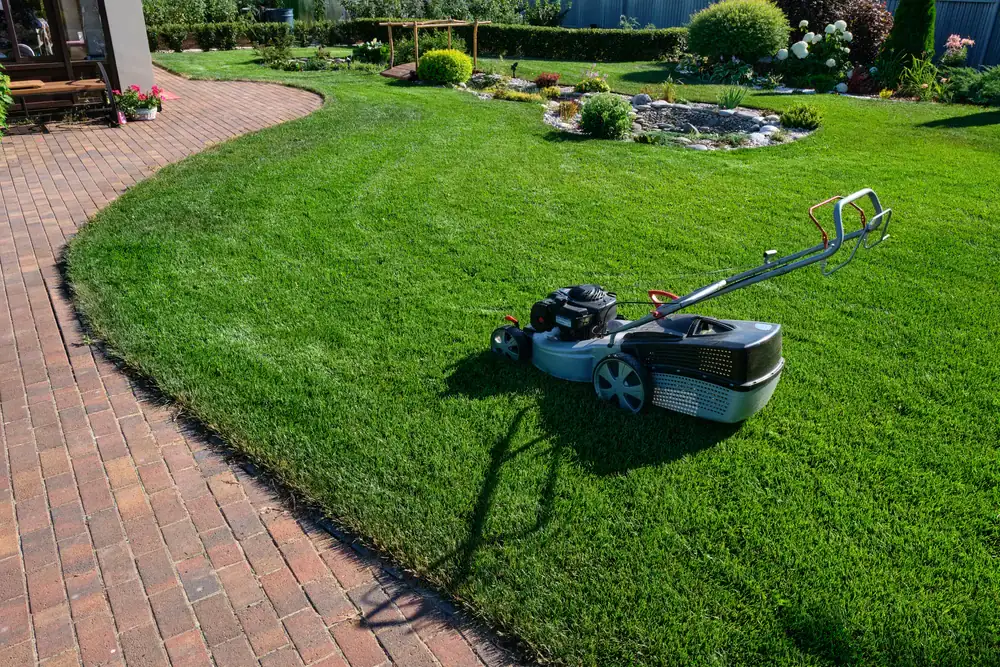
Standing water, soggy spots that stay wet long after a rain, and bare zones near downspouts or low areas of the yard — these are drainage problems, not treatment problems. Grass roots need oxygen. When soil stays saturated, roots suffocate. Fungal disease moves in. The grass thins out and eventually dies, and no fertilizer or weed control program is going to change that outcome.
Warren County’s clay-heavy soils — particularly in the valley areas around Glens Falls — are especially prone to this. Clay compacts easily, drains slowly, and creates anaerobic conditions that grass simply can’t survive in long-term. The freeze-thaw cycle that hits every March and April makes it worse. By the time mud season clears and the ground dries out enough to walk on, the soil structure has been compressed and the drainage is worse than it was the previous fall.
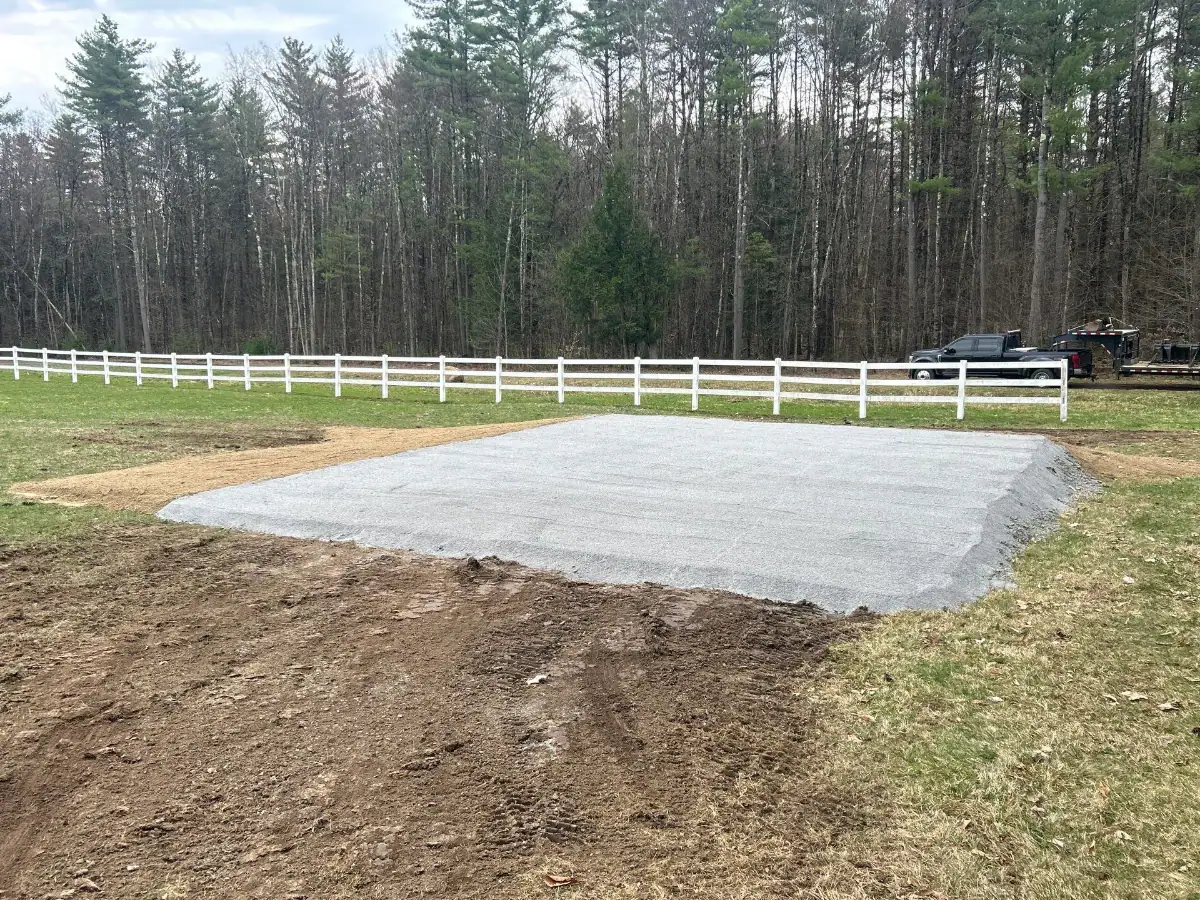
The right fix for a drainage problem is a grading and drainage solution — regrading the yard to direct water away from problem areas, installing French drains where needed, and in some cases bringing in quality topsoil to rebuild the growing layer before any seed or treatment program is applied. That’s foundational work, and it’s the step that determines whether everything else you do to your lawn actually works.
We’ve seen this situation more times than we can count across Warren County — homeowners who’ve spent years and real money on treatment programs that never quite delivered because the underlying drainage and soil conditions were never addressed. Fix the foundation first. Everything else follows from that.
Not all weeds respond to the same products, and using the wrong herbicide doesn’t just fail — it can actively damage your lawn. Broadleaf herbicides work on dandelions, clover, and plantain. They won’t touch nutsedge or crabgrass, which require completely different chemistry. Non-selective herbicides like glyphosate kill everything they contact — including your turf. Using a non-selective product to spot-treat weeds in an established lawn creates bare patches that become the next season’s weed habitat.
Crabgrass is a particularly common issue in Warren County, and the window to control it is narrow. Pre-emergent crabgrass control needs to go down in spring before soil temperatures reach 55°F — which is also before you should be fertilizing. That timing conflict trips up a lot of homeowners. Apply the pre-emergent too late and crabgrass has already germinated. Apply fertilizer at the same time and you risk doing it too early for the grass to benefit. Getting the sequence right matters.
There’s also the issue of proximity to water. If your property is near Lake George, the Hudson River, the Schroon River, or any other water body in Warren County, New York State law prohibits applying nitrogen fertilizer within 20 feet of the shoreline and restricts phosphorus use on established lawns. These aren’t obscure regulations — they carry real fines. Understanding local requirements keeps you on the right side of that line without having to track it yourself.
The five mistakes covered here — fertilizing before the soil is ready, skipping fall treatment, ignoring drainage problems, planting into stripped subsoil, and using the wrong products in the wrong sequence — are responsible for the overwhelming majority of lawn failures in this region. None of them are about buying the wrong brand. They’re about timing, soil conditions, and understanding what your specific yard actually needs.
If your lawn has persistent bare patches, drainage issues, or compaction problems that treatment programs haven’t been able to fix, the answer probably isn’t more treatment. It’s addressing the ground conditions underneath. That’s where we come in. At Emerson Excavating and Trucking, we’ve been working in Warren County soil since 1997 — we know how the ground behaves here, what the terrain does to drainage, and what it takes to give a lawn a foundation it can actually grow from. If you want to talk through what your yard needs, give us a call or send a text. We’re straightforward about what we can help with and honest about what we can’t.
—
**Frequently Asked Questions**
**What types of lawn treatment do I need for healthy grass?**
Most lawns in Warren County need four to five treatments per season to stay healthy — not the nine or ten visits some national programs recommend. A solid program covers pre-emergent weed control in spring, fertilization timed to soil temperature, broadleaf weed control in late spring, a summer stress treatment if needed, and fall fertilization with overseeding and lime if your pH is off. The exact program depends on your soil test results, your grass type, and whether your yard has drainage or compaction issues that need to be addressed first.
**How do professional grass treatment programs work?**
A good professional program starts with a soil test, not a sales pitch. The test tells you what your soil is actually missing — pH, nutrient levels, organic matter — and that drives the treatment plan. From there, a professional schedules applications around soil temperature and seasonal growth patterns rather than a fixed calendar. In Warren County, that means working around the late spring frost dates, the compressed growing season, and the fall treatment window that matters most for cool-season grasses like Kentucky bluegrass and tall fescue.
**When should lawn treatments be applied during the year?**
Timing depends on what you’re applying and what your grass type is. For Warren County’s cool-season grasses, the two most important windows are late spring (once soil temperatures hit 55°F, typically mid-to-late May) and early fall (September through mid-October). Pre-emergent weed control goes down earlier in spring, before crabgrass germinates. Summer applications are minimal — cool-season grass is semi-dormant in heat and over-fertilizing in July or August causes burn. Fall is when the real work happens.
**What’s the difference between DIY and professional lawn treatments?**
The main difference isn’t the products — it’s the diagnosis. A professional starts by understanding your soil conditions, drainage patterns, grass type, and history before applying anything. DIY programs typically apply the same product on the same schedule regardless of what the soil actually needs. In Warren County, where soil conditions vary significantly between a new construction lot in Queensbury and a lakefront property near Lake George, that customization matters. We also handle the compliance side automatically — applying the wrong product near a water body can put you in violation of New York State’s Lawn Fertilizer Law, a risk that comes with real fines.
Article details:
Share:
Continue learning: