
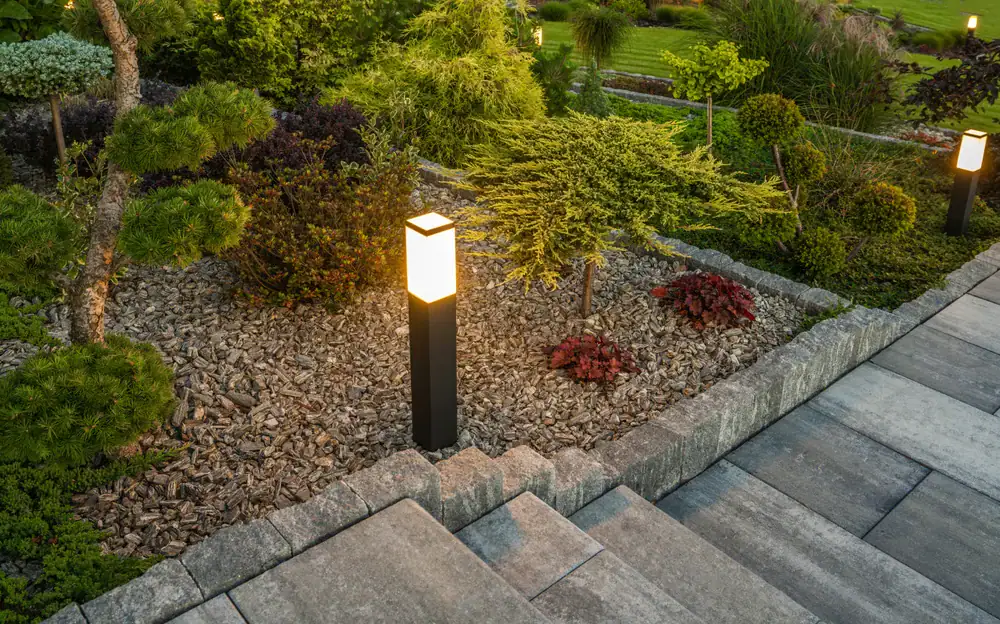
You’re not just covering dirt. You’re creating a barrier that cuts your watering time, stops weeds before they start, and keeps your soil from washing away every time it rains.
Good mulch installation in Riverbank, NY means your flower beds stay cleaner longer. The plants get consistent moisture instead of drying out between waterings. And when it’s done right, your property looks intentional—not like someone dumped a truckload and called it done.
Here’s what changes: less time pulling weeds in July, lower water bills through summer, and soil that actually improves instead of eroding. Your landscape beds hold their shape. The mulch stays where you put it. And you’re not redoing the same areas every spring because the last application was too thin or washed out.
The difference shows up in how your property looks six months later, not just the day we finish.
We’ve worked throughout Saratoga, Warren, and Washington Counties for over 25 years. We started as a logging operation and grew into full-service excavation and site work—including landscape mulching in Riverbank, NY that actually lasts.
Josh is on almost every job. Not because we don’t trust our crew, but because that’s how we’ve built our reputation—one property at a time, with someone who cares about the outcome present to make sure it’s done right.
We’re a family business. Josh’s son joined as a partner in 2022. We’re not trying to be the biggest operation in the area—we’re trying to be the one you call back next time because we did what we said we’d do, when we said we’d do it, without surprises on the invoice.
First, we look at what you’ve got. If there are weeds, we deal with them before any mulch goes down—because covering weeds doesn’t kill them, it just hides them temporarily. If your beds need edging or the old mulch needs removing, we talk through what makes sense for your property and budget.
Then we prep the area. That means cleaning out debris, defining bed edges if needed, and making sure water can drain properly. Mulch that sits in standing water breaks down too fast and can actually harm your plants.
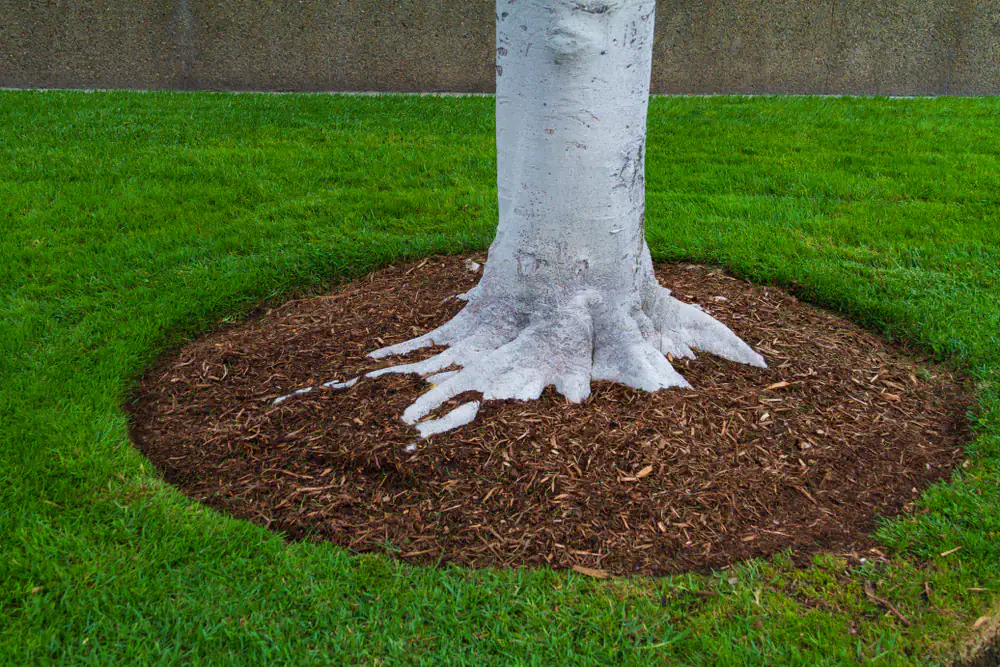
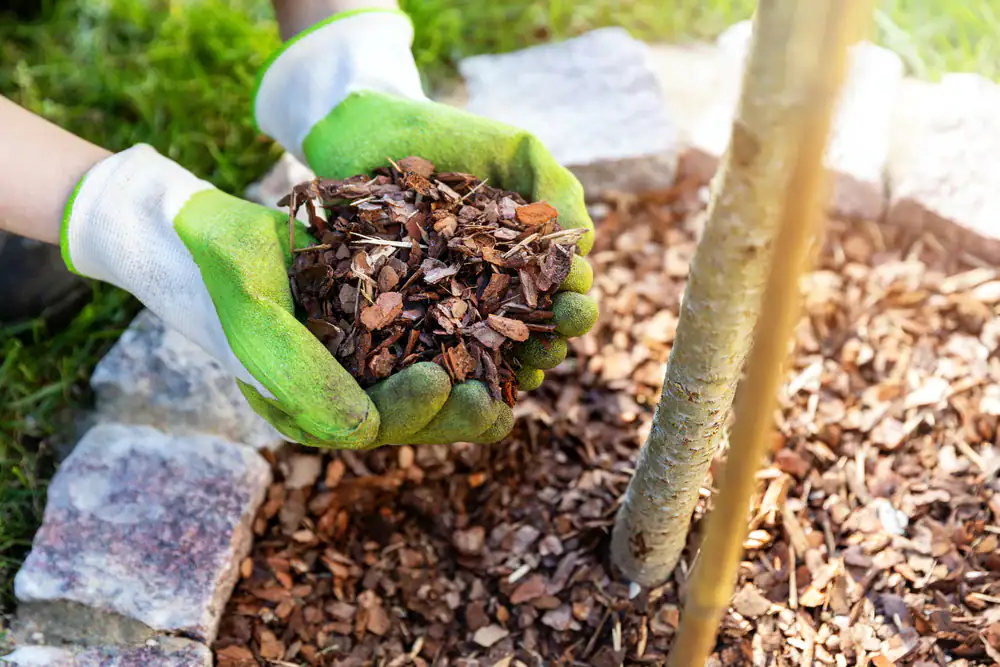
When we spread mulch, we do it by hand. Not with a pitchfork or shovel that leaves uneven piles, but actually distributed so you get consistent depth across the entire bed—usually 2 to 3 inches depending on what you’re covering. We keep mulch away from tree trunks and plant stems, because piling it up against bark causes rot and invites pests.
Before we leave, the site is clean. No scattered mulch on walkways or driveways. No half-finished edges. The job’s done when it looks done.
Ready to get started?
You get bed preparation, which means removing old mulch if it’s broken down or compacted, pulling existing weeds, and edging beds so they hold their shape. We’re not just dumping new material on top of problems.
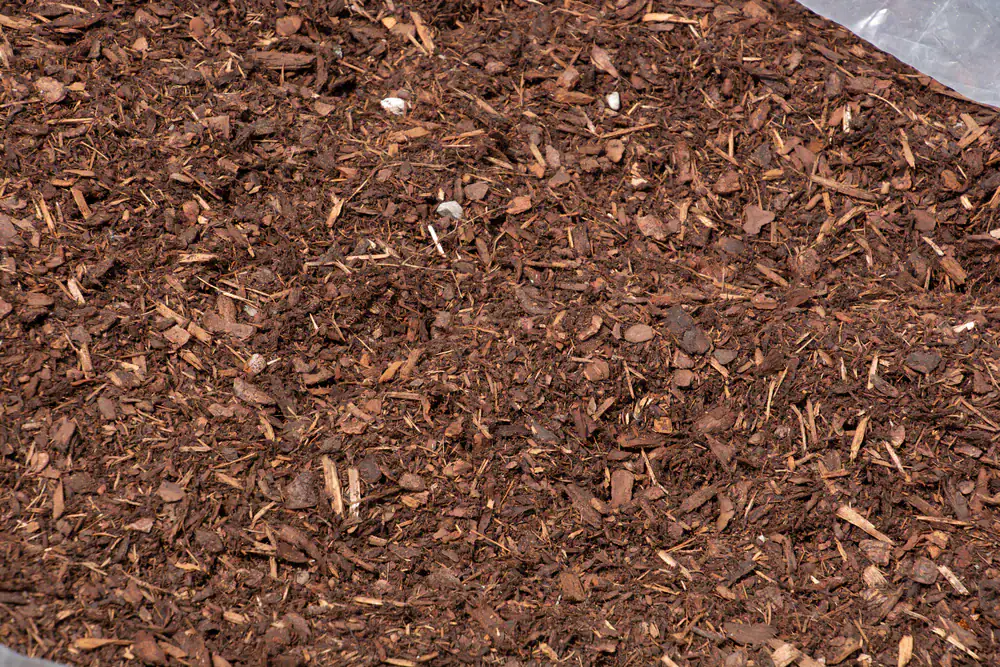
We source quality mulch—typically double-ground hardwood or pine that breaks down slowly and doesn’t contain the artillery fungus you’ll find in cheaper bulk mulch. That fungus leaves black spots on your siding that are nearly impossible to remove, and it’s more common than most homeowners realize until it’s too late.
Our mulch installation in Riverbank, NY includes even hand-spreading at the right depth for your specific beds. Vegetable gardens and flower beds often need different approaches than around trees or shrubs. We adjust based on what you’re growing and what your soil needs.
In Riverbank and the surrounding area, properties deal with clay-heavy soil and variable drainage depending on how close you are to the Hudson. We account for that when we’re planning depth and material type, because what works in sandy soil doesn’t always work here.
You also get a clean site when we’re finished. We haul away old mulch if needed, sweep hardscapes, and leave your property ready to use—not waiting on cleanup.
Most properties need fresh mulch every year, applied in late spring after the soil warms up but before summer heat sets in. That’s typically May in the Riverbank area.
Mulch breaks down over time—that’s actually part of how it improves your soil. But as it decomposes, it gets thinner and stops doing its job as effectively. By the time it’s been down a full year, you’ve usually lost about an inch of depth to decomposition and settling.
If your beds still look good and the mulch layer is at least 2 inches deep going into spring, you can sometimes add a thin top layer instead of removing and replacing everything. But if it’s compacted, full of weeds, or broken down to less than an inch, it’s better to start fresh. We’ll tell you honestly what your property needs when we look at it.
Cheap mulch—the kind you get in plastic bags at big box stores or from discount bulk suppliers—often contains artillery fungus spores. This fungus thrives in wood mulch and shoots sticky black spores that land on your house siding, car, and anything else nearby. Those spots don’t wash off. You’re looking at scraping or repainting to remove them.
The mulch we use for landscape mulching in Riverbank, NY is double-ground hardwood or pine from suppliers we’ve worked with for years. It’s aged properly so it won’t pull nitrogen from your soil as it breaks down. It’s screened to remove debris. And it doesn’t contain the fungus that causes those black spots.
You’ll also notice the difference in how long it lasts. Quality mulch holds its color longer, doesn’t mat down as quickly, and breaks down into actual soil improvement instead of just disappearing. The upfront cost is higher, but you’re not replacing it twice as often or dealing with damage to your property.
Yes, and doing it correctly is one of the most important parts of garden mulching in Riverbank, NY. The key is keeping mulch away from direct contact with plant stems, tree trunks, and shrub bases.
When mulch sits against bark or stems, it holds moisture right where you don’t want it. That creates rot, attracts insects and rodents, and can kill established trees and shrubs over time. You’ve probably seen “mulch volcanoes” piled up around tree trunks—that’s one of the most common ways people accidentally damage their own landscaping.
We spread mulch out to the drip line of trees and shrubs (that’s the area directly under the outer edge of the branches), but we leave a few inches of space around the actual trunk or stem base. For perennials and smaller plants, we mulch around them carefully, not over them. If something’s newly planted, we’re even more careful about depth and placement since young roots are more sensitive to changes in soil temperature and moisture.
It depends on what condition it’s in. If your existing mulch has broken down to less than an inch, is full of weeds, or has become compacted and water-resistant, then yes—removing it gives you better results.
Old mulch that’s compacted actually repels water instead of absorbing it, which defeats the entire purpose of mulching. And if there are weed seeds throughout the old layer, adding new mulch on top just gives those weeds a head start.
But if your existing mulch is still doing its job and you’ve just lost some depth over the season, we can add a fresh layer on top. That’s a more affordable option and it still gives you the weed suppression and moisture retention you’re looking for.
When we give you an estimate for flower bed mulching in Riverbank, NY, we’ll tell you what we’re seeing and what we’d recommend. If removal makes sense, we handle that and haul away the old material. If a top layer works, we’ll tell you that instead. The goal is getting your beds functional, not selling you services you don’t need.
Two to three inches is the standard depth for most landscape beds. That’s thick enough to suppress weeds, hold moisture, and regulate soil temperature—but not so thick that it suffocates plant roots or stays soggy.
Anything less than two inches won’t stop weeds effectively. You’ll see them popping through by mid-summer, especially in Riverbank where we get plenty of rain to help those seeds germinate. And thin mulch dries out quickly, so you lose the moisture retention benefit.
More than three or four inches causes different problems. Thick mulch layers can prevent water from reaching the soil, especially if the mulch is fresh and hasn’t started breaking down yet. They can also create habitat for voles and other rodents that damage plant roots. And if mulch is piled too deep around trees or shrubs, it holds moisture against the bark and causes rot.
When we do landscape bed mulching in Riverbank, NY, we measure as we go to keep depth consistent across your entire property. That means your beds perform the same way everywhere, not great in some spots and ineffective in others.
Double-ground hardwood and pine mulch both work well here. Hardwood breaks down slower, so it lasts longer between applications. Pine is slightly more acidic as it decomposes, which can benefit acid-loving plants like azaleas and blueberries if you’re growing those.
We don’t recommend rubber mulch, even though it’s marketed as low-maintenance. It doesn’t improve your soil, it can leach chemicals, and it actually makes weed control harder because seeds blow in and root in the gaps between rubber pieces. It also gets hot in summer sun—hot enough to stress plant roots.
Cedar mulch smells great and has natural insect-repelling properties, but it’s expensive and breaks down quickly in our climate. You’ll replace it more often, which cancels out any benefit from the pest resistance.
For most residential properties getting mulch installation in Riverbank, NY, double-ground hardwood gives you the best combination of longevity, soil improvement, and cost. It looks clean, holds moisture well, and breaks down into organic matter that actually benefits your landscape over time instead of just sitting there.
Other Services we provide in Riverbank