
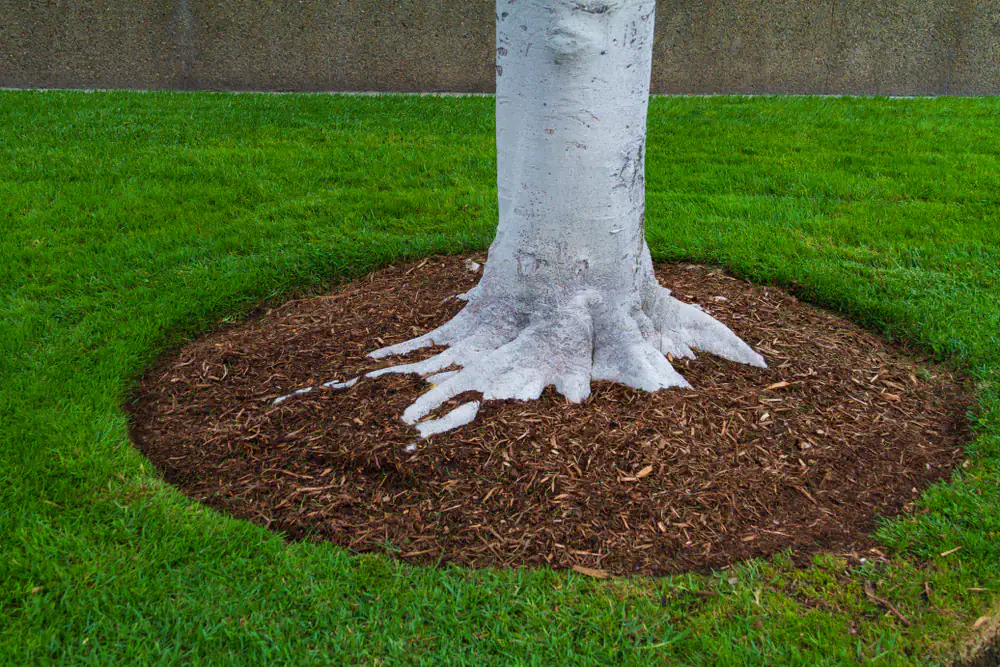
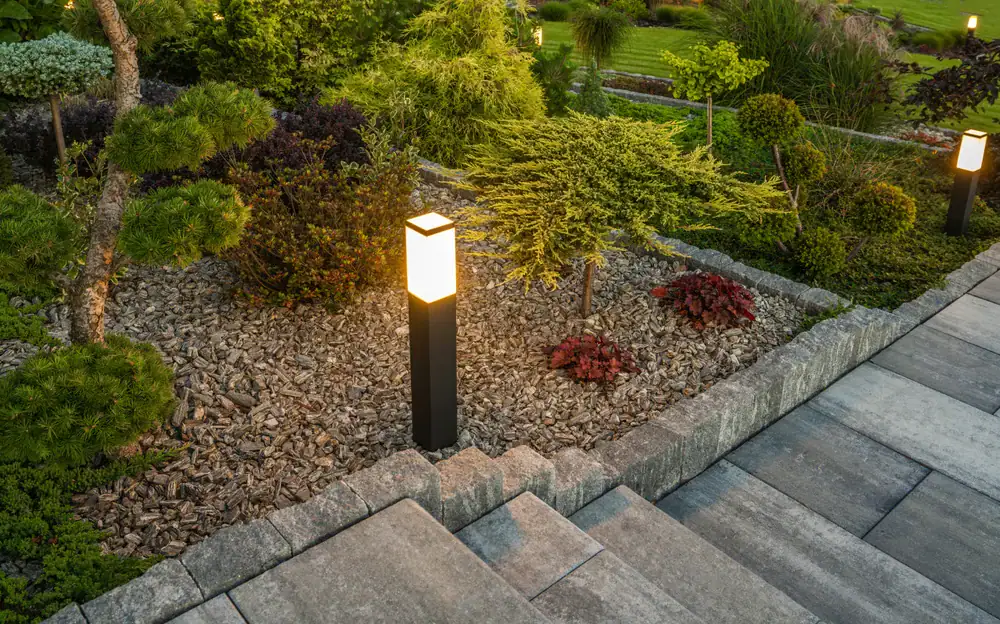
You’re not just covering dirt. You’re protecting your investment and cutting down on maintenance time.
Properly installed mulch keeps moisture in the soil where your plants need it, especially during those dry stretches we get in the Adirondacks. That means less watering, healthier roots, and plants that actually thrive instead of just survive.
It also stops weeds before they take over. A good layer of mulch blocks sunlight from hitting the soil, so weed seeds can’t germinate. You’re not out there pulling weeds every weekend or dumping chemicals you don’t want near your home.
And it regulates soil temperature. In winter, mulch insulates roots from freezing. In summer, it keeps the soil cooler and prevents heat stress. Your landscape stays balanced, and you’re not replacing dead plants every spring.
Fresh mulch also makes everything look intentional. Clean lines around flower beds, uniform color across garden areas, and that finished look that says someone actually takes care of the place.
Emerson Excavating and Trucking started as a logging operation back in 1997. We transitioned to full-time excavation and site work in 2020, and my son joined as a partner in 2022. It’s a family business, and I’m on almost every job.
We’re not trying to be the biggest company in the area. We’re trying to be your excavator and landscaping crew for the long haul. That means showing up when we say we will, doing the work right the first time, and being available when you need us again.
North River properties deal with rocky soil, elevation changes, and weather that swings hard between seasons. We know what works here because we’ve been working here for decades. You’re not getting a crew that learned landscaping from YouTube.
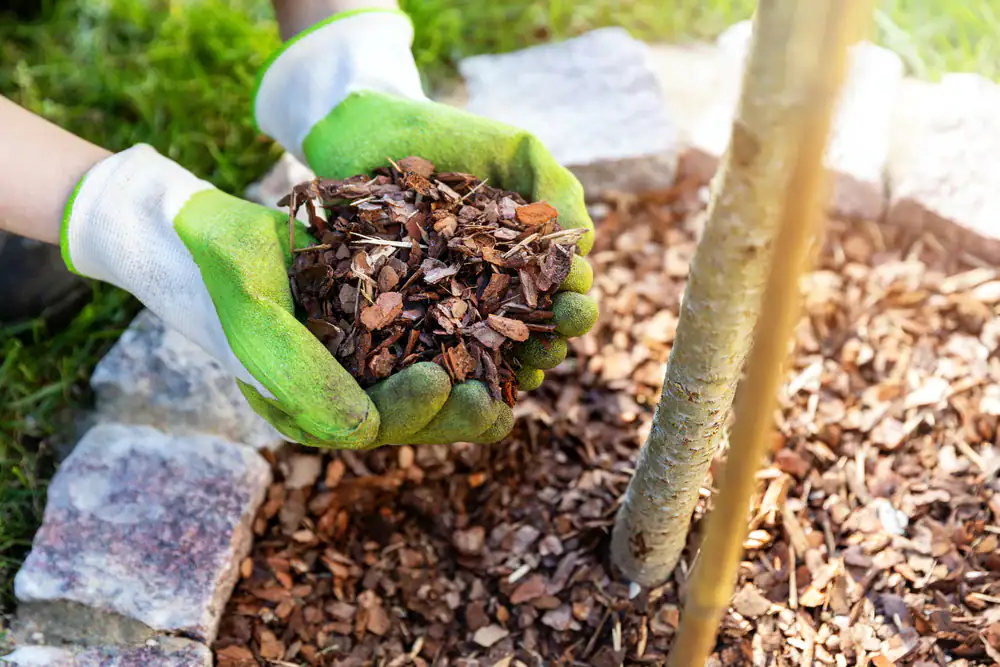
We start by looking at what you’ve got. If there’s old, compacted mulch or weeds taking over, we clear that out first. You can’t just pile new mulch on top of problems and expect good results.
Then we prep the soil. If your flower beds or landscape areas need edging or reshaping, we take care of that before any mulch goes down. Clean lines make a difference, and they help keep mulch where it belongs.
We apply mulch at the right depth, usually two to three inches. That’s enough to suppress weeds and retain moisture without suffocating plant roots or trapping water against tree bark. Too much mulch causes rot. Too little doesn’t do anything.
We spread it evenly across garden beds, around trees, and along landscape borders. No piles against trunks, no thin spots where weeds will break through. Just consistent coverage that looks clean and does the job.
Once it’s down, you’re set. Mulch breaks down slowly and feeds the soil as it decomposes. You’ll want to refresh it every year or two depending on the type, but that’s minimal maintenance compared to fighting weeds and watering constantly.
Ready to get started?
We handle landscape bed mulching for residential properties across North River and the surrounding area. That includes flower beds, garden borders, around trees and shrubs, and any other areas where you want mulch doing its job.
If you need mulch removal service before we install fresh material, we take care of that too. Old mulch that’s broken down into dirt or gotten matted and compacted needs to go. Otherwise you’re just stacking layers that don’t breathe.
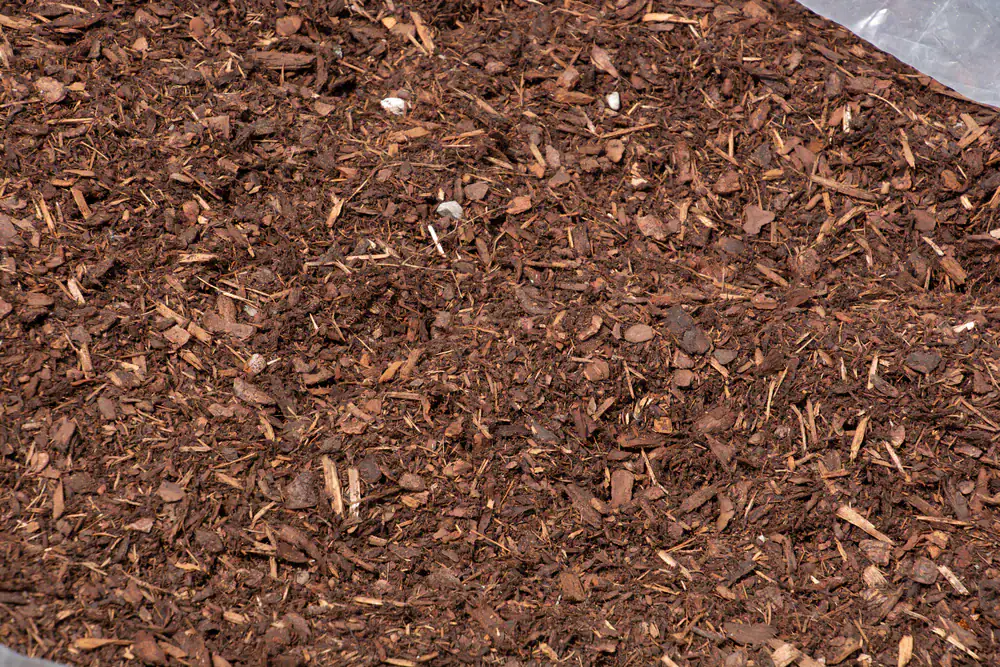
We source quality mulch that’s appropriate for the Adirondack climate. Hardwood mulch is common here because it lasts longer and handles our freeze-thaw cycles better than cheaper options. We can also work with specific types if you have preferences, like cedar for pest resistance or dark mulch for contrast.
North River properties often have slopes, rock outcroppings, and soil that drains fast. We account for that when we’re planning your mulch installation. Mulch helps slow water runoff on slopes and keeps topsoil from washing away during heavy rains, which we get plenty of in spring.
You’re also not dealing with a crew that disappears after one job. We’re local, we’re licensed and insured, and we’ve been serving Warren County for years. If something needs adjusting or you want to add more mulch next season, you call the same number and get the same people.
Most properties need fresh mulch every one to two years. It depends on the type of mulch you use and how quickly it breaks down.
Hardwood mulch lasts longer than softer materials like pine bark. In North River, where we get heavy snow, freeze-thaw cycles, and spring runoff, mulch breaks down a bit faster than it would in milder climates. You’ll notice it starting to look thin, faded, or decomposed into the soil.
If you’re seeing weeds popping through or the mulch layer looks sparse, it’s time to refresh. Some people top off their mulch every spring as part of regular landscape maintenance. Others wait until it’s clearly not doing its job anymore. Either approach works as long as you’re keeping that protective layer intact.
Yes, it matters. Different mulches have different lifespans, appearances, and benefits.
Hardwood mulch is durable and breaks down slowly, which means it lasts longer and adds organic material to your soil over time. It’s a solid choice for North River because it holds up through our weather. Cedar mulch repels insects naturally and has a distinct smell some people like. It’s more expensive but lasts even longer than standard hardwood.
Dyed mulch, like red or black, keeps its color longer and gives you a specific look. It’s mostly aesthetic, but if curb appeal matters to you, it’s worth considering. Pine bark is softer and breaks down faster, so you’ll replace it more often, but it’s cheaper upfront.
We’ll recommend what makes sense based on your landscape, budget, and how much maintenance you want to deal with. There’s no wrong answer, just trade-offs.
You can do it yourself if you’ve got the time, the tools, and the knowledge to do it right. Most people don’t.
The biggest mistakes we see are applying mulch too thick, piling it against tree trunks, or spreading it over weeds and old mulch without clearing anything first. Those mistakes lead to root rot, pest problems, and mulch that doesn’t actually suppress weeds.
You also need to move a lot of material. A typical landscape bed can require several cubic yards of mulch, and that’s heavy. You’re loading it, hauling it, spreading it evenly, and cleaning up afterward. If you’ve got a small flower bed and a free Saturday, go for it. If you’ve got a full property with multiple garden areas, it’s a bigger project than most people expect.
We bring the equipment, the experience, and the crew to get it done in a few hours instead of a full weekend. And it’s done right the first time.
Mulch itself doesn’t attract termites, but improper installation can create conditions they like.
Termites are attracted to moisture and wood that’s in contact with soil. If mulch is piled against your home’s foundation or stacked against wooden siding, you’re giving them a highway straight to your house. That’s why we keep mulch several inches away from foundations and never pile it against tree trunks or structures.
Cedar mulch naturally repels some insects, so that’s an option if pests are a concern. But the real key is proper installation. Mulch should be spread in a thin, even layer that allows airflow and doesn’t trap moisture against wood.
We’ve been doing this long enough to know what causes problems. You’re not going to end up with a termite issue because you mulched your flower beds. You might end up with one if someone piled mulch a foot high against your house and called it a day.
It depends on the size of the area, the type of mulch, and whether we’re removing old material first.
Mulch itself typically runs between thirty and one hundred fifty dollars per cubic yard depending on the type. Standard hardwood mulch is on the lower end. Cedar and specialty mulches cost more. Then there’s labor for delivery, spreading, and cleanup.
For a typical residential property with a few flower beds and landscape borders, you’re usually looking at a few hundred to a thousand dollars depending on scope. Larger properties with extensive garden areas or mulch removal service will cost more.
We give you a clear estimate upfront. No surprises, no hidden fees. You’ll know exactly what you’re paying for before we start. And because we’re local and we’ve been doing this for years, you’re getting fair pricing from people who plan to be around long after the job’s done.
Spring and fall are the most common times, but it depends on what you’re trying to accomplish.
Spring mulching, usually late April or May in North River, refreshes your landscape after winter and helps lock in moisture as plants start growing. It also suppresses the first wave of weeds before they take over your beds.
Fall mulching, done in late September or October, insulates plant roots before the ground freezes and protects against frost heaving. It also gives you a head start for next spring since the mulch is already in place.
You can mulch in summer if your beds are looking rough or you’re dealing with weeds and dry soil. It’s not ideal because plants are already stressed from heat, but it’s better than leaving them exposed. We work year-round, so if you need mulch installed outside the typical seasons, we can make it happen.
Other Services we provide in North River