You’re tired of pulling the same weeds every weekend. Your landscape beds look washed out by July, and you’re watering constantly just to keep things alive.
Proper mulch installation in East Greenwich, NY changes that. A professionally applied 2-4 inch layer blocks sunlight so weeds can’t germinate in the first place. It holds moisture in the soil like a sponge, cutting your watering frequency and keeping roots protected when temperatures spike.
Your flower beds and garden mulching stay darker and fresher looking through the season. The soil underneath stays cooler in summer heat and insulated when temperatures drop. You’re not out there every Saturday with a hose or on your knees digging out crabgrass.
Property values in East Greenwich, NY have climbed 2.75% year over year, with the median home now at $194,500. Well-maintained landscape bed mulching can add up to 15% to your property value. That’s not just cosmetic—it’s an investment that shows when it matters.
We started Emerson Excavating and Trucking in 1997, and we’ve been serving East Greenwich, NY and the surrounding areas for years. Josh is on almost every job, which means you’re getting consistent quality, not whoever showed up that day.
We’re a family operation—Josh’s son joined as a partner in 2022. That matters because we’re not trying to scale fast and cut corners. We’re building relationships with homeowners who want their landscaping done right the first time.
East Greenwich has 1,606 residents, and most of you own your homes. You’re not looking for the cheapest option that’ll fade by August. You want mulch that’s applied correctly, at the right depth, around the right plants, by someone who knows the difference.
First, we assess your landscape beds, garden areas, and flower beds to see what you’re working with. If old mulch has compacted or decomposed, we address that. If weeds have taken over, we clear them before laying fresh material.
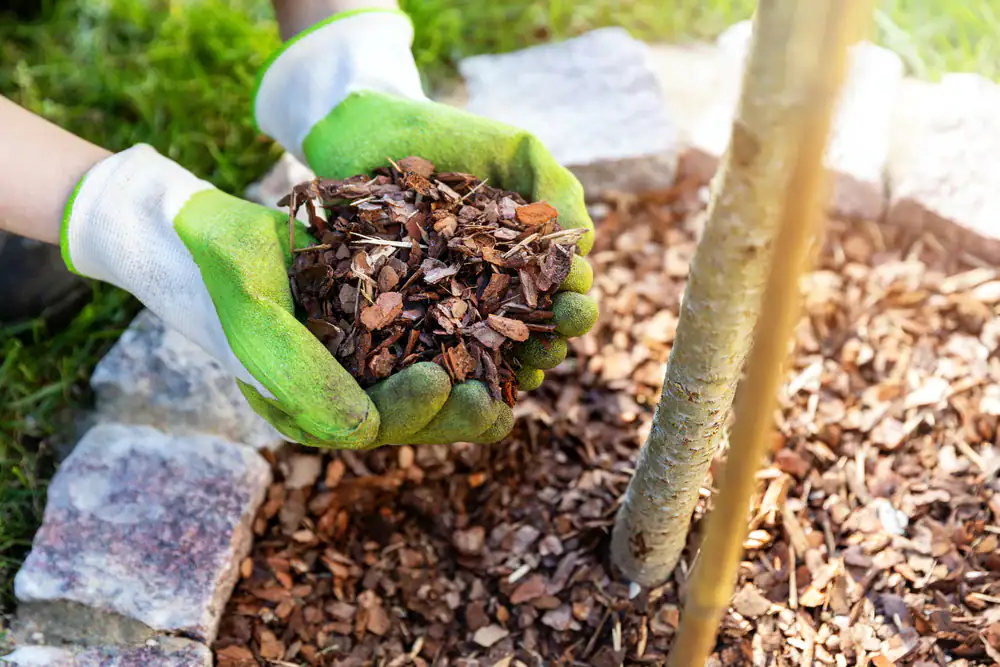
We don’t just dump mulch and spread it around. Proper garden mulching and flower bed mulching means hand installation so we’re not piling it against tree trunks or smothering plant stems. We apply about 2-4 inches depending on the area—enough to suppress weeds and retain moisture without suffocating roots.
The process is straightforward. We show up on time, do the work correctly, and clean up when we’re done. You’re not dealing with half-finished jobs or crews that disappear for days.
Once the landscape bed mulching is complete, you’ll notice the difference immediately. Everything looks cleaner and more defined. Within a few weeks, you’ll see the real benefit: fewer weeds, less watering, and beds that hold their color instead of fading to gray by mid-summer.
Ready to get started?
Our mulching services in East Greenwich, NY include site prep, material delivery, and professional hand installation. We’re not dropping bags on your lawn and calling it done.
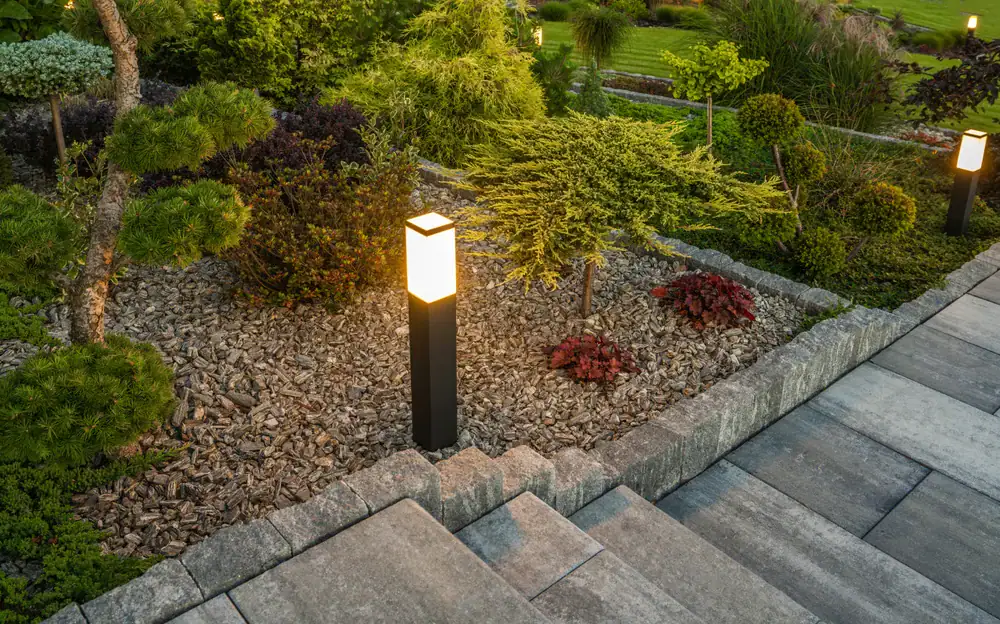
We handle landscape mulching for residential properties—flower beds, garden areas, tree rings, and full landscape bed mulching projects. If you’ve got bare soil or old mulch that’s broken down, we prep the area so the new layer actually works.
East Greenwich homeowners are increasingly focused on water conservation and low-maintenance landscaping. The median household income here is $78,398, and most of you are white-collar professionals who’d rather not spend every weekend doing yard work. Mulch installation cuts your maintenance time significantly while protecting your investment.
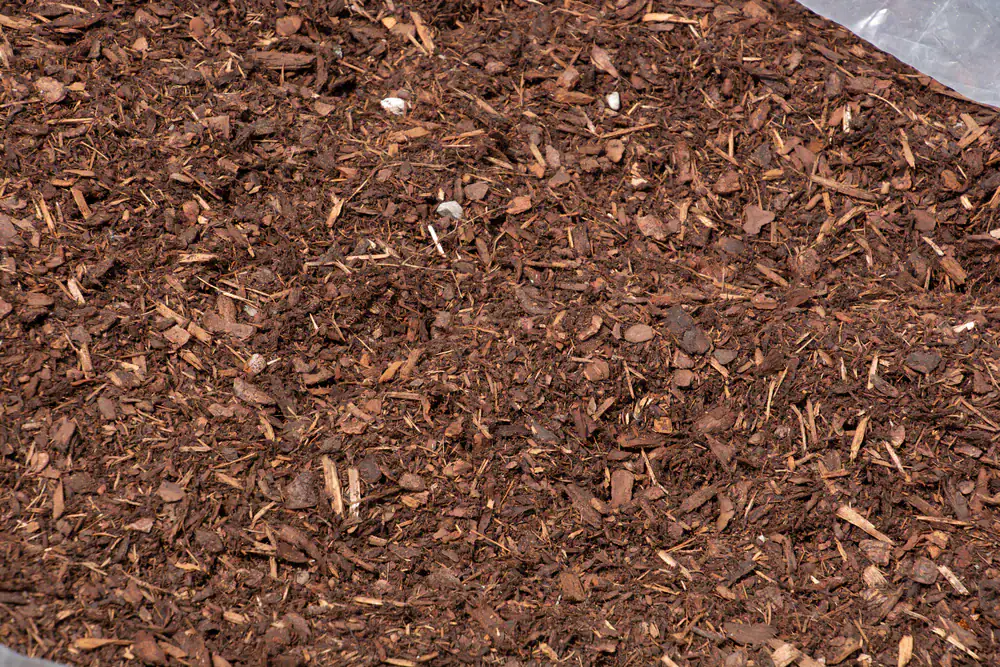
We use quality organic mulch that breaks down over time and improves your soil. You’re not getting dyed junk that looks good for two weeks and then fades. This is material that regulates soil temperature, reduces evaporation by up to 50%, and releases nutrients as it decomposes.
Most landscape bed mulching in East Greenwich, NY needs refreshing every 1-2 years depending on the material and exposure. Organic mulch breaks down over time—that’s actually a good thing because it’s feeding your soil. But once it’s decomposed to the point where you’re seeing more dirt than mulch, it’s not doing its job anymore.
If your mulch has faded to a light gray or tan color, it’s lost most of its effectiveness at blocking weeds and retaining moisture. You’ll also notice it’s compacted down to less than an inch in spots. That’s when you need a fresh layer.
Some homeowners add a thin top layer annually just to keep the color fresh and maintain that 2-4 inch depth. Others go two years between full applications. It depends on your priorities and how much sun exposure your beds get. More sun means faster breakdown.
For most flower bed mulching and garden mulching, you want 2-4 inches of mulch. That’s thick enough to block weed seeds from getting sunlight and germinating, but not so thick that you’re suffocating plant roots or holding too much moisture against stems.
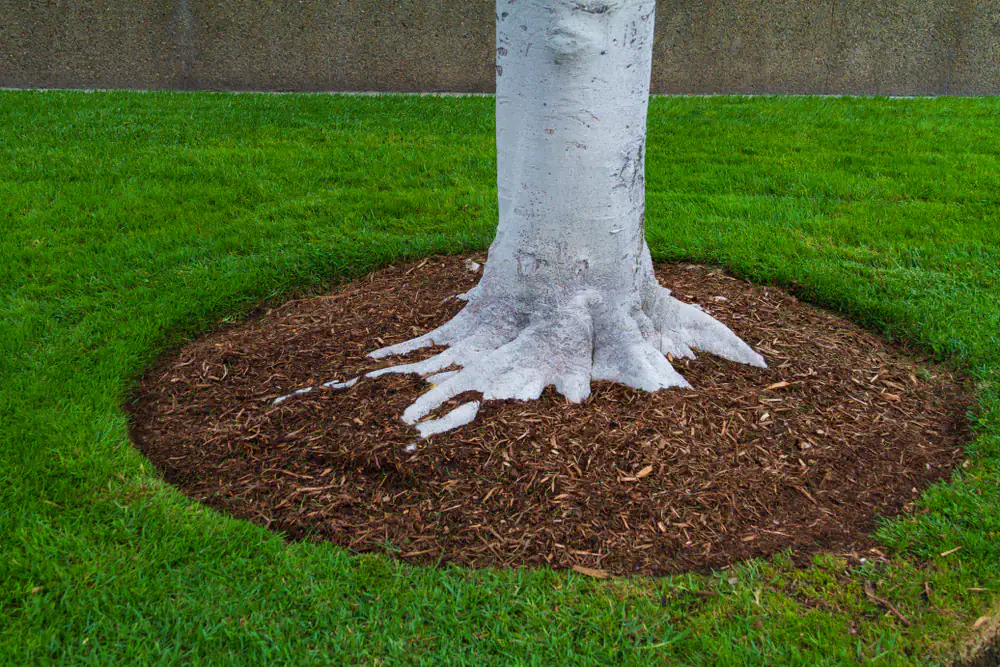
Around trees, keep mulch at least 3-6 inches away from the trunk. Piling it up against the bark—what landscapers call “volcano mulching”—traps moisture and can cause rot or invite pests. You want a donut shape, not a cone.
For new plantings or areas with heavy weed pressure, go closer to 4 inches. For established beds that just need refreshing, 2-3 inches is usually enough. The key is consistency—thin spots let weeds through, and thick spots can create problems with water penetration and air flow to roots.
Yes, and the difference is significant. Bare soil loses moisture fast—sun and wind pull water right out, and you end up with a hard crust that actually repels water when you do irrigate. Mulch acts as a barrier that slows evaporation and keeps soil temperatures more stable.
Studies show that proper landscape mulching can reduce soil water evaporation by up to 50%. That means you’re watering less frequently, and when you do water, more of it is actually reaching plant roots instead of disappearing into the air.
In East Greenwich, NY, where summer heat can stress your plantings, that moisture retention makes a real difference. Your irrigation bills drop, your plants stay healthier during dry spells, and you’re not out there with a hose every other day trying to keep things alive.
You can, but it’s more work than most people expect. Mulch is heavy—a 2-cubic-foot bag weighs around 40 pounds, and you’ll need a lot of them to cover even a modest landscape bed at the right depth. Hauling, spreading, and cleaning up is a full weekend project for most homeowners.
The bigger issue is application. Too much mulch suffocates plants. Too little lets weeds through and doesn’t retain moisture. Piling it against stems and trunks causes rot. If you don’t prep the bed first—pulling existing weeds, edging, leveling—you’re just covering up problems that’ll come back worse.
Professional mulch installation in East Greenwich, NY means we bring bulk material, prep the site correctly, apply it at the right depth by hand, and handle cleanup. You’re not spending your Saturday wrestling with bags, and you’re not dealing with mistakes that cost more to fix later.
Organic mulch—usually shredded hardwood or bark—works best for most residential landscape mulching here. It breaks down gradually, which improves your soil over time by adding organic matter and nutrients. That’s especially valuable in East Greenwich, where soil quality varies and many properties have clay or sandy conditions that benefit from amendment.
Dyed mulch looks vibrant initially but fades faster and doesn’t offer the same soil benefits. It’s mostly for appearance. Inorganic options like rubber mulch don’t break down, which sounds good until you realize your soil isn’t improving and you’re not getting that natural nutrient cycling.
For flower bed mulching and garden mulching, stick with natural hardwood. It holds moisture well, suppresses weeds effectively, and doesn’t create problems with pH or soil chemistry. It’ll fade to a natural brown over time, but that’s when you know it’s doing its job—decomposing and feeding your landscape beds.
It depends on the condition of what’s already there. If your existing mulch has broken down to less than an inch and is mostly decomposed into the soil, we can often apply new material right over it. That decomposed layer is actually beneficial—it’s organic matter that’s improving your soil.
If the old mulch is thick, compacted, or hasn’t broken down, we’ll remove or redistribute it first. Layering new mulch on top of old creates problems—you end up with too much depth, poor water penetration, and anaerobic conditions that harm plant roots.
We assess each landscape bed individually during the estimate. Some areas need full removal, others just need the old material raked out and redistributed, and some are ready for a fresh top layer. The goal is proper depth and function, not just piling on more material because that’s easier.
Other Services we provide in East Greenwich