
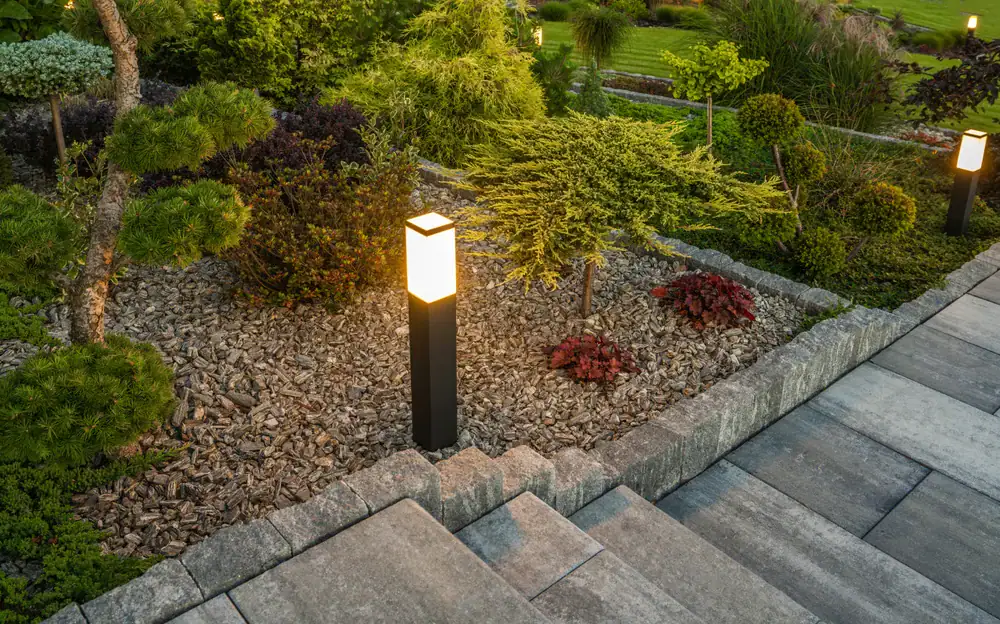
You’re not looking for a pile of wood chips dumped in your yard. You need landscape mulching in Birchton that actually does something—protects your plants through winter, holds moisture during dry spells, and keeps weeds from taking over your flower beds.
Properly applied mulch means you’re watering less, weeding less, and spending less time fixing problems that shouldn’t exist in the first place. It breaks down slowly, feeding your soil while keeping roots insulated from temperature swings that stress plants.
The difference between mulch that works and mulch that creates problems comes down to depth, placement, and material quality. Too much piled against tree trunks invites rot. Too little lets weeds punch through. Cheap mulch from big box stores can carry artillery fungus that leaves permanent black spots on your siding.
You want garden mulching and flower bed mulching done right the first time, so your property looks sharp and your plants stay healthy without constant babysitting.
We’ve been working in Saratoga, Warren, and Washington Counties since 1997. What started as a logging operation became full-time excavation in 2020, and now it’s a family business—Josh runs jobs with his son, who joined as a partner in 2022.
You’ll see Josh on almost every job. That’s not a marketing line—it’s how we operate. When you’re building something that matters, you don’t want a rotating crew that doesn’t know your property or your goals.
Birchton properties deal with clay-heavy soils, seasonal freeze-thaw cycles, and enough rain to either drown plants or bake them depending on the month. Local knowledge matters when you’re choosing mulch type, application depth, and timing. You’re not getting a one-size-fits-all approach shipped in from somewhere else.
First, you’ll talk through what you need—new mulch installation for fresh landscape beds, mulch removal service to clear out old decomposed material, or a refresh on existing beds. If you’re dealing with compacted or weed-infested beds, we handle that before new mulch goes down.
Next, we prep the site. Weeds are cleared, edges are defined, and old mulch is removed if it’s broken down or contaminated. This step matters more than most people realize—laying fresh mulch over a mess just hides problems temporarily.
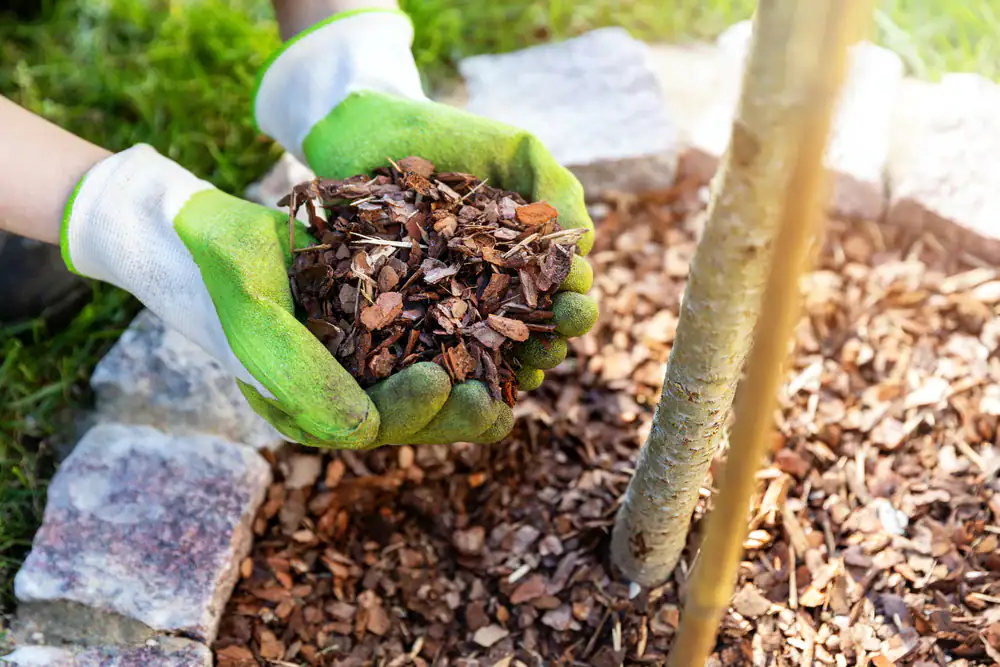
Then the mulch goes in at the right depth, typically two to three inches for flower bed mulching and landscape bed mulching. We keep it away from tree trunks and plant stems to prevent rot, and we spread it evenly so water penetrates properly and weeds don’t find gaps.
You’re left with clean beds, protected plants, and a property that looks maintained without you spending your weekends fighting weeds or worrying about whether your plants will survive the next cold snap.
Ready to get started?
You’re getting more than mulch delivery and a rake. Our landscape mulching in Birchton includes site assessment, old mulch removal if needed, bed preparation, and proper installation with the right material for your soil type and plant needs.
Birchton’s climate means your mulch needs to handle wet springs, hot summers, and freezing winters. Hardwood mulch works well for most landscape beds because it breaks down slowly and doesn’t blow away. Cedar mulch offers natural pest resistance for garden mulching around vegetables or sensitive plants. Hemlock is another option that holds color longer and resists compaction.
Depth matters as much as material. Too shallow and weeds break through within weeks. Too deep and you’re suffocating roots, trapping moisture against stems, and creating habitat for pests. The standard is two to three inches after settling, which blocks light from weed seeds while letting water reach the soil.
We define edges so mulch stays in beds instead of washing into your lawn or driveway. If you’re dealing with slopes or areas prone to erosion, we adjust installation to keep mulch in place during heavy rain. You’re not reapplying mulch every time it storms.
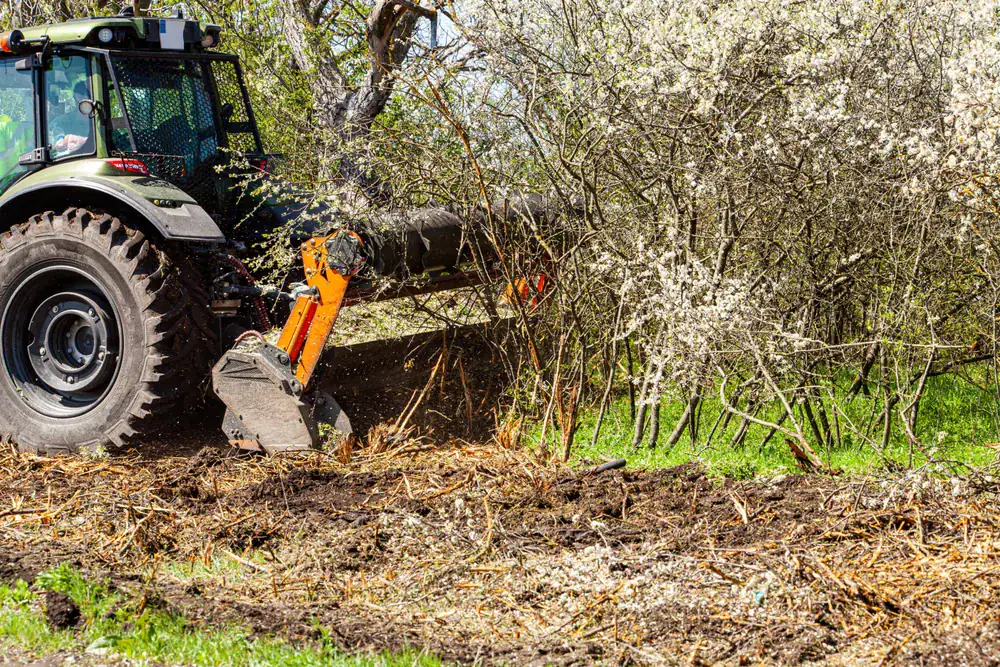
Most landscape beds need fresh mulch once a year, typically in late spring after the ground warms up but before summer heat sets in. Birchton’s freeze-thaw cycles break down organic mulch faster than in milder climates, so annual replacement keeps beds looking clean and functioning properly.
If your mulch has faded to gray, compacted into a dense mat, or decomposed enough that you’re seeing bare soil, it’s time for new material. Some properties can stretch to 18 months if mulch was applied thick initially and hasn’t been disturbed by heavy foot traffic or aggressive weeding.
Mulch removal service becomes necessary when old layers have built up too thick—more than four inches total—or if you’re dealing with contaminated mulch that’s harboring pests or disease. Scraping it down to soil level and starting fresh prevents problems from compounding.
Cheap bagged mulch from big box stores often contains artillery fungus, a spore that shoots tiny black tar-like spots onto siding, cars, and anything nearby. Those spots are nearly impossible to remove and can permanently stain your home. You’re saving a few dollars upfront and paying for it with damage that costs hundreds or thousands to fix.
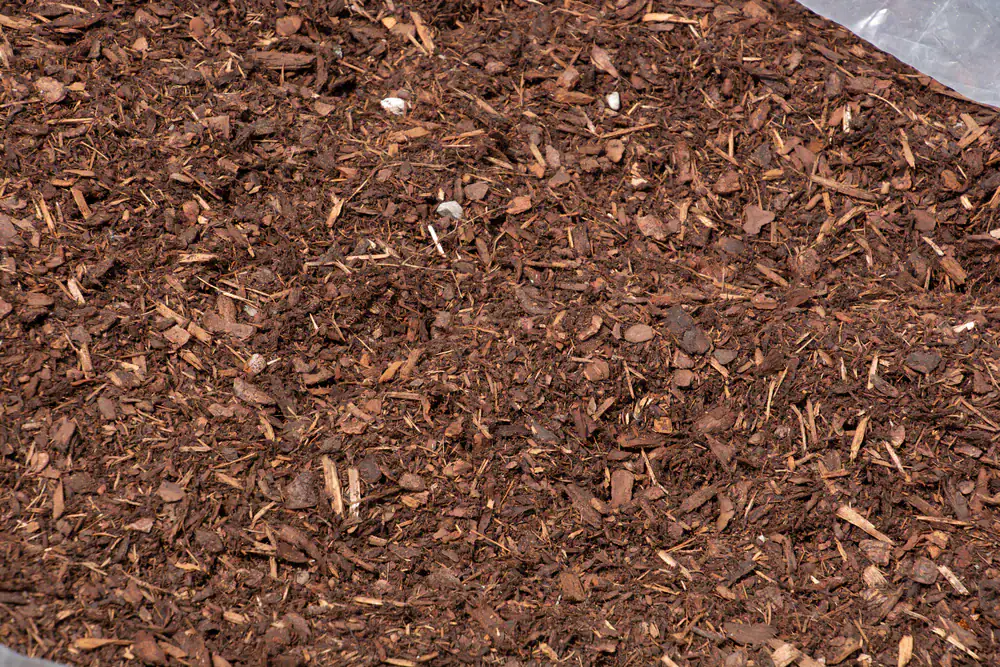
Professional-grade bulk mulch is sourced from reputable suppliers who process and age material properly. It’s screened for consistency, free from contaminants, and less likely to contain weed seeds or fungal issues. The particle size is uniform, so it lays flat, resists compaction, and breaks down at a predictable rate.
You also get better coverage per cubic yard with bulk delivery. Bagged mulch is fluffed up and settles dramatically once spread. Bulk mulch is already settled, so you’re paying for actual volume, not air. For larger landscape beds or multiple garden areas, bulk delivery is more cost-effective and higher quality.
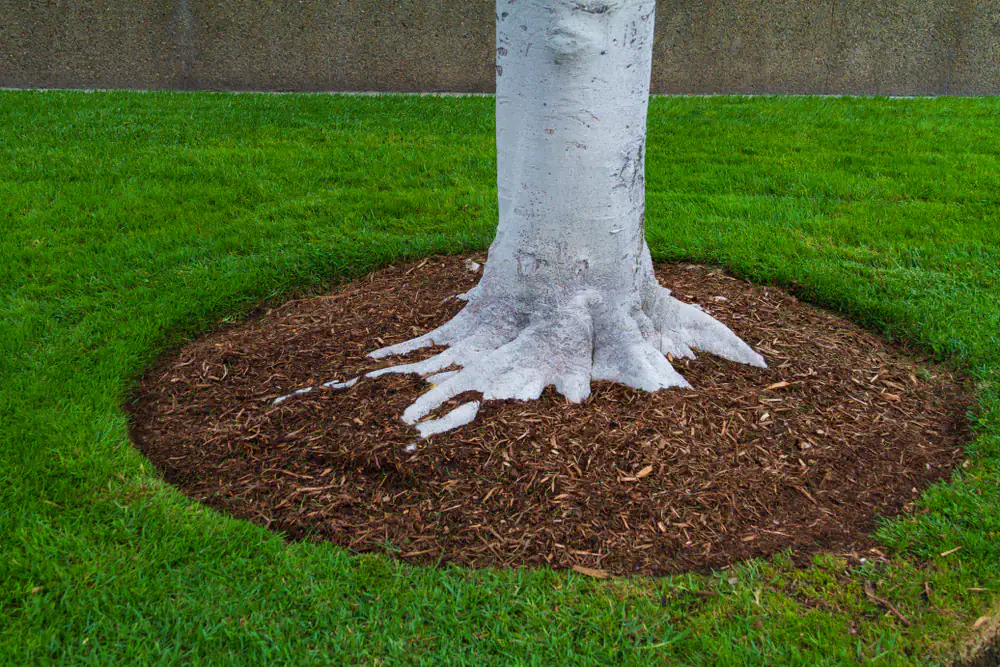
Yes, and it happens more often than it should. The most common mistake is piling mulch against tree trunks or plant stems, creating what’s called a “mulch volcano.” This traps moisture against bark, invites rot, attracts insects, and can kill mature trees over time.
Mulch should be pulled back several inches from trunks and stems, forming a donut shape rather than a cone. Roots need to breathe, and bark needs to stay dry at the soil line. Even a few inches of mulch pressed against a trunk creates enough moisture and darkness for fungal diseases and boring insects to move in.
Over-mulching is another issue. More than three to four inches of mulch suffocates roots, prevents water from reaching soil, and creates an environment where shallow roots grow up into the mulch layer instead of down into the ground. Those shallow roots are vulnerable to temperature swings and drought, weakening the entire plant.
Hardwood mulch is the most versatile option for landscape bed mulching in Birchton. It breaks down slowly, holds moisture well, and handles freeze-thaw cycles without turning into a soggy mess. It’s dense enough to suppress weeds but light enough that water penetrates easily.
Cedar mulch works well for garden mulching, especially around vegetables or areas where you want natural pest deterrence. It costs more than hardwood but lasts longer and resists decomposition, which means fewer applications over time. The scent is a bonus if you’re spending time in the garden.
Hemlock mulch is another solid choice for flower bed mulching if color retention matters to you. It holds its reddish-brown tone longer than hardwood and doesn’t compact as quickly. It’s a middle ground between hardwood and cedar in terms of cost and longevity.
Avoid dyed mulch unless you specifically want the color. The dye doesn’t hurt plants, but it fades unevenly and often looks worse after a season than natural mulch that’s aged gracefully. You’re also paying extra for aesthetics that don’t improve function.
Professional mulch installation in Birchton typically runs between $75 and $150 per cubic yard installed, depending on site access, bed preparation needs, and mulch type. That includes delivery, spreading, edging, and cleanup. Mulch removal service adds cost if old material needs to be hauled away first.
Most residential properties use between three and ten cubic yards for standard landscape beds and garden areas. Larger properties with extensive flower bed mulching or multiple planting zones will use more. A site visit gives you an accurate estimate based on actual square footage and current bed condition.
Bulk pricing is more economical than buying bagged mulch and spreading it yourself, especially once you factor in your time, the cost of bags, and the physical labor involved. You’re also getting professional-grade material and proper application, which means better results and fewer problems down the road.
If you’re comparing quotes, make sure you’re comparing the same scope. Some prices include bed prep and edging, others don’t. Some include mulch removal, others charge separately. The cheapest bid isn’t always the best value if it skips steps that matter.
Late spring is ideal for mulch installation in Birchton, typically mid-May through early June. The ground has warmed up, perennials have emerged so you’re not burying new growth, and you’re getting ahead of summer heat and weed pressure. Mulch applied in late spring protects plants through the hottest months and reduces watering needs.
Early fall is the second-best window, usually September into early October. Mulch applied before winter insulates roots from temperature swings and prevents frost heaving. It also gives you a head start on next spring since the mulch is already in place and breaking down.
Avoid mulching too early in spring when the ground is still cold and wet. You’re trapping cold moisture around roots and delaying soil warming, which slows plant growth. Wait until you’ve seen consistent warm days and the soil has dried out enough to work without compacting.
Mid-summer mulching works if you’re dealing with bare soil or severe weed problems, but it’s harder on plants since you’re disturbing root zones during active growth. If you’re scheduling landscape mulching or garden mulching for the first time, aim for spring or fall to give plants the best chance to establish with minimal stress.
Other Services we provide in Birchton