A clogged French drain is more than a soggy yard — it's a sign something deeper is wrong. Here's how to read it and what to do next.
Share:
Summary:
You installed a French drain to solve a water problem. Now the water’s back — pooling in the same spots, creeping toward the foundation, turning your yard into a mess every time it rains. That’s frustrating, especially when you did the right thing the first time.
The good news is that a clogged French drain doesn’t always mean starting over. But it doesn’t always mean a quick fix either. Knowing the difference saves you time, money, and the headache of patching something that’s going to fail again in six months. Here’s what’s actually going on — and what to do about it.
The most obvious sign is standing water in places that used to drain. If you’re seeing puddles that linger for hours after a storm — or days — and your French drain runs through that area, the drain is the first place to look. A functioning system moves water away quickly. When it stops doing that, something is blocking the flow.
Other signs are less obvious. A wet or damp basement wall that wasn’t a problem before can point to a failing exterior drain. Soft, spongy ground along the drain’s path suggests water is sitting in the gravel bed instead of moving through it. And if you can locate the outlet where the drain discharges, check whether water is actually coming out during or after rain. If it’s dry when it shouldn’t be, you’ve got a blockage somewhere in the system.
If you’re in the Glens Falls area, Queensbury, or out in Thurman or Warrensburg, you’ve probably noticed that spring is when drainage problems show up hardest. That’s not a coincidence. Warren County sits at the edge of the Adirondack foothills, and when the snowpack melts — especially after a heavy winter — the volume of water moving through the ground is dramatically higher than anything a summer rainstorm produces. A French drain that was technically functioning in August might completely fail to keep up in April.
The clay-heavy soils in the valley floor around Glens Falls and Queensbury make this worse. Clay doesn’t drain naturally. It holds water and moves it laterally, which means your French drain is doing more work here than it would in a sandier soil. Over time, fine clay particles infiltrate the gravel bed and the pipe itself, slowly choking the system from the inside out. The drain doesn’t fail all at once — it just gets a little slower every year until one spring it stops working entirely.
Freeze-thaw cycles add another layer to this. Warren County winters are hard, and the repeated freezing and thawing of the ground shifts soil, moves pipe sections, and creates low spots where sediment collects. A drain installed in the 1980s or 1990s has likely experienced enough soil movement that the original slope is no longer consistent. Even a single flat section is enough to trap silt and start a clog.
For hillside properties in Thurman, Stony Creek, or up near the Lake George area, the challenge is volume. Sloped terrain funnels large amounts of runoff toward the home, and a French drain on a hillside property is handling significantly more water than one on a flat lot. That extra load accelerates wear on the system and makes proper installation — especially the right slope and the right gravel — even more critical.
Mud infiltration is the most common cause of French drain failure, and it’s worth understanding why it happens — because the fix depends entirely on how far the mud has gotten.
A French drain is designed with a layer of filter fabric (geotextile) wrapped around the gravel bed to keep soil particles out while still letting water through. When that fabric is missing, degraded, or was never installed correctly, fine silt and clay particles migrate into the gravel over time. At first, the gravel still has enough void space to let water move through. But eventually, the spaces fill up. The gravel bed becomes essentially solid, and water has nowhere to go.
Flushing the pipe with a garden hose can clear a minor blockage in the pipe itself. But if the gravel bed is the problem — if it’s saturated with silt — no amount of flushing is going to fix it. You’d need to excavate the system, remove the contaminated gravel, clean or replace the pipe, install proper filter fabric, and backfill with clean stone. That’s not a DIY afternoon project. That’s excavation work.
The pipe material from the original installation matters here too. Cheap corrugated plastic pipe — the kind that looks like a flexible black tube — has a notoriously short lifespan. It collapses, it traps sediment in its corrugations, and it’s harder to clean effectively. Quality perforated PVC pipe holds its shape, maintains a consistent interior surface, and lasts far longer. If your drain was installed with the cheaper material, that’s worth knowing before you invest in repairs.
One more thing worth checking: the outlet. The point where the drain discharges water is a common failure point that gets overlooked. Debris, vegetation, or even a small animal nest can block the outlet and back the entire system up. Before assuming the problem is deep in the drain, locate the outlet and make sure it’s clear and discharging freely.
Want live answers?
Connect with a Emerson Excavating and Trucking expert for fast, friendly support.
Not every French drain problem is a clog in the traditional sense. Some of the most common issues come from how the system was originally built — and no amount of cleaning will fix a design or installation flaw.
Slope is the most critical factor. A French drain needs at least a one-percent grade — that’s one inch of drop for every ten feet of run — to move water by gravity. A flat section traps sediment. A reversed section (where the pipe dips and then rises) creates a pocket where water and silt collect and never fully clear. If the original installation didn’t maintain consistent slope throughout, the drain has been slowly clogging since the day it was put in.
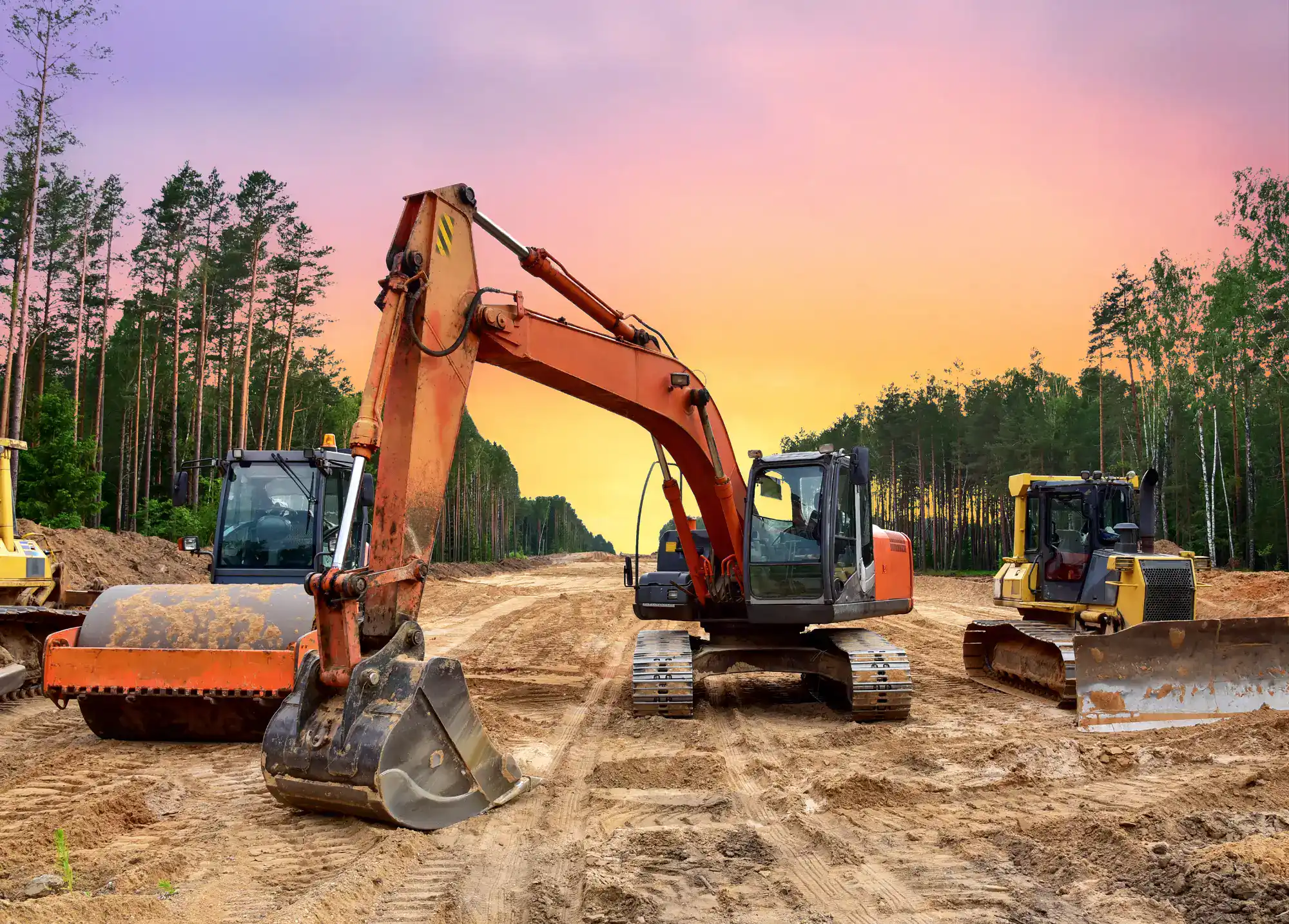
A French drain that fails within a few years of installation almost always has an installation problem at its root. The most common ones are missing filter fabric, the wrong type of gravel, insufficient slope, and pipe perforations installed facing upward instead of downward.
The filter fabric issue is significant. Some contractors skip it to save time or money, and some use a fabric that degrades quickly in the soil conditions of the installation site. Without it, silt infiltration begins immediately. You might not notice for a year or two, but the gravel bed is filling up from day one.
Gravel type matters more than most homeowners realize. Round, smooth river rock compacts over time and reduces drainage capacity. Angular, washed stone — crushed granite or similar — maintains void space and moves water efficiently. Using the wrong aggregate is a mistake that can’t be corrected without excavating the system.
Pipe perforation orientation is a subtle one. The holes in a perforated drain pipe are meant to collect groundwater from below, which means they should face down. When the pipe is installed with perforations facing up, it collects surface debris and silt from above instead. It’s a small detail, but it’s the kind of thing that separates a drain that lasts thirty years from one that fails in five.
If your drain was installed by someone who wasn’t primarily an excavating contractor — a landscaper who added it as an add-on, or a general handyman — these installation details are worth having a professional evaluate. We’ve seen plenty of systems in Warren County where the original work was done without a real understanding of how water moves through this specific terrain, and the homeowner has been dealing with the consequences ever since.
There are things you can reasonably try yourself, and there are things that will waste your time and money if you approach them as a DIY project. Knowing the difference is genuinely useful.
If the outlet is blocked, clearing it yourself is straightforward — remove the debris, check that water flows freely, and monitor the system through the next rain event. If the surface grate or catch basin has accumulated leaves and debris, cleaning that out is also well within reach. And if you have a cleanout access point installed in your system, running a garden hose through it to flush the pipe is a reasonable first step for a minor blockage.
Where DIY stops making sense is when the blockage is in the gravel bed itself, when the pipe has collapsed or shifted, or when the system has an underlying slope problem. Flushing a silt-filled gravel bed with a hose doesn’t restore drainage — it just moves water around temporarily. And if the pipe has shifted due to soil movement (which is common after years of freeze-thaw cycles in Warren County), no amount of cleaning will fix a structural problem.
The honest answer is that if you’ve already tried flushing it and the problem came back within a season, the issue is deeper than the pipe. At that point, you need someone who can actually look at the full system — not just the visible pipe end — and tell you what’s going on. That means someone with excavation experience, not just a drain-cleaning service.
We’ve been working Warren County terrain since long before we formalized as an excavating company, and the water behavior here — the clay, the snowmelt, the hillside runoff — is something we understand from direct experience. When Josh comes out to look at a drainage problem, he’s not guessing. He’s seen what failed systems look like from the inside, and he can tell you quickly whether you’re looking at a cleaning, a repair, or a full reinstallation. That clarity matters, especially when you’re trying to decide how much to invest in a fix.
A clogged French drain is fixable — but the fix has to match the actual problem. A pipe flush works for a surface blockage. Excavation and reinstallation is what’s needed when the gravel bed is gone or the original installation was never right. Trying to solve a structural problem with a cleaning is how homeowners end up spending money twice.
If your drain has stopped keeping up with spring snowmelt, you’re seeing recurring wet spots in the same areas, or your basement is taking on moisture it didn’t used to, it’s worth getting a real assessment before the problem compounds.
Emerson Excavating and Trucking serves Warren County and the surrounding area, and Josh is on almost every job personally. If you want a straight answer about what’s going on with your drainage — and what it will actually take to fix it — reach out by text or call and we’ll take a look.
Article details:
Share:
Continue learning: