What does land clearing actually cost in Saratoga County — and what permits do you need first? Here's what you need to know before you hire anyone.
Share:
Summary:
If you’ve got a wooded lot in Saratoga County, Warren County, or Washington County and you’re trying to figure out what it actually takes to clear it and build, you’ve probably already noticed that the answers aren’t easy to find. Most contractors hand you a number without explaining it. Most websites talk in generalities. And the permit question — which is the one that can actually stop your project cold — almost never gets addressed directly.
This page is meant to change that. We’ll walk through what the permit process actually looks like in this region, how soil conditions affect your cost and timeline, and what you should expect from a land clearing contractor before you sign anything.
This is the question most people don’t think to ask until something goes wrong. The short answer is: more than you’d expect, and the specifics depend on where your parcel is, how large the disturbance is, and what’s nearby.
At the local level, most land clearing projects in this region require a building permit before work begins. If the project involves a septic system — which most new home builds do — you’ll also need Health Department approval from your county. That process runs on its own timeline and can’t be rushed.
What catches people off guard is the state layer on top of that. Any land disturbance of one acre or more in New York State triggers coverage under the SPDES General Permit, which requires a Stormwater Pollution Prevention Plan before you break ground. Most residential clearing projects in this area exceed that threshold. If your contractor doesn’t know this going in, you’re the one who ends up dealing with the consequences.
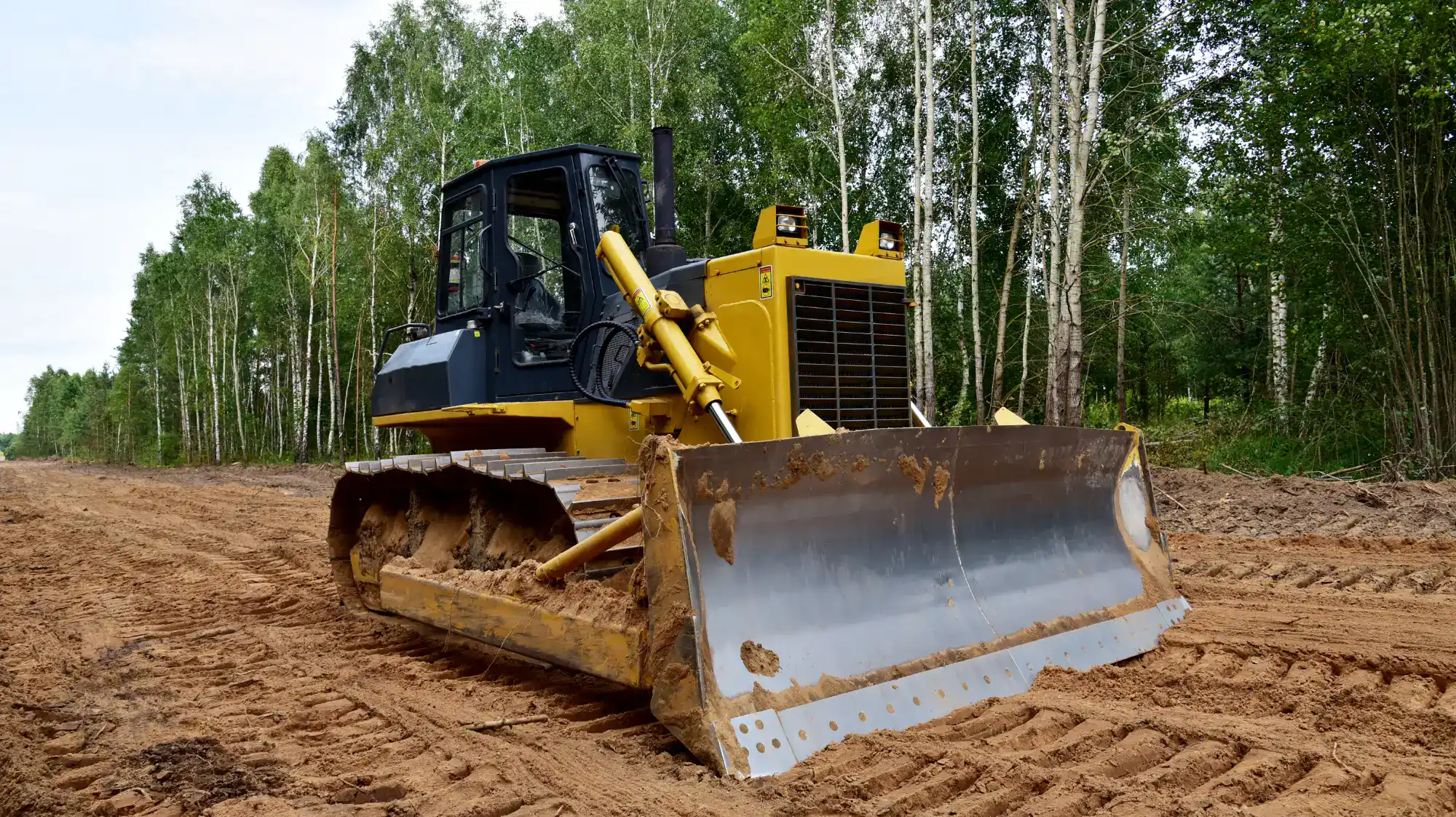
Here’s a detail that almost never comes up in contractor conversations but matters quite a bit in this region: the New York State DEC office that handles environmental permitting for Warren County, Washington County, Saratoga County, and surrounding areas is the DEC Warrensburg Office. If your project is near a wetland, a stream, or any regulated waterway — and in this region, that’s more common than you might think given the Hudson River corridor and the Lake Champlain tributaries — there’s a real possibility you’ll need DEC involvement before clearing can begin.
This isn’t a bureaucratic technicality. Projects that start without the right permits get stopped. A stop-work order mid-project doesn’t just cost you time — it can cost you significantly in rescheduling, penalties, and a site left in a disrupted state that you can’t do anything with.
For parcels in Warren County, there’s an additional layer that most contractors operating out of the Capital District simply don’t mention: the Adirondack Park Agency. Portions of Warren County fall within the Adirondack Park boundary, and development in those areas — including land clearing — requires APA review and potentially a permit. This applies to work near wetlands, at higher elevations, and within a quarter mile of certain protected rivers. If your lot is anywhere in the Lake George, Bolton, or Warrensburg area, this is worth asking about specifically before you hire anyone.
The permit approval process in this region typically takes two to four weeks once everything is submitted correctly. That means if you want to break ground in April or May, the permit process needs to start in February or March at the latest. Contractors who don’t factor that into the schedule aren’t doing you any favors — they’re just telling you what you want to hear to get the job.
We handle permits as part of what we do at Emerson Excavating and Trucking. We know which offices are involved, what each project type typically requires, and how to keep the process moving so your construction season doesn’t shrink while paperwork sits on someone’s desk.
One of the most common reasons land clearing quotes vary so dramatically in this region is that the soil isn’t uniform — not even close. Two parcels ten miles apart can have completely different ground conditions, and that changes everything: which equipment is needed, how long the job takes, and what it costs.
In the eastern lowlands of Washington County, particularly near the Hudson River corridor running through Fort Edward, Hudson Falls, and Greenwich, soils tend to be sandier and more workable. Equipment moves efficiently, clearing progresses on schedule, and the ground is generally forgiving. That’s the easier end of the spectrum.
Move west and north toward the Adirondack foothills — into the parts of Warren County around Queensbury, Lake George, and Warrensburg — and the picture changes. Rocky ledge is common. Tree root systems run deep and anchor into fractured rock. Equipment that works fine in Washington County’s lowlands may not be the right tool at all for a steep, rocky lot above Lake George. Contractors who don’t know this terrain quote based on assumptions, and those assumptions become your problem when the job hits unexpected rock and the timeline doubles.
Then there’s the clay question. Clay-heavy soils show up across parts of Saratoga County and certain areas of Washington County, and they create their own challenge: during spring thaw — what locals call mud season, typically running through April and into early May — clay soils become unstable. Heavy equipment can cause significant site damage if the contractor doesn’t know how to work around those conditions. It’s not a reason to delay your project, but it is a reason to hire someone who’s worked this ground before and knows when to push forward and when to wait a day.
We’ve been working this terrain since 1997, first as a logging operation and then as a full-service excavating company. That background matters specifically for land clearing because understanding trees — how they root, how they fall, how to sequence removal safely in dense forested terrain — is not something you pick up from operating a machine in a parking lot. When you’re clearing a heavily wooded lot in Warren County, Washington County, or Saratoga County, that knowledge is the difference between a clean job and an expensive mess.
Want live answers?
Connect with a Emerson Excavating and Trucking expert for fast, friendly support.
This is the question everyone wants a straight answer to, and the honest response is that it depends — but not in a vague, unhelpful way. There are specific factors that drive cost, and understanding them will help you evaluate any quote you receive.
For wooded lots in New York, clearing costs typically range from $500 to $5,000 per acre depending on tree density, and stump removal — which is often quoted separately — adds roughly $800 to $2,500 per acre on top of that. Those are real numbers, but they’re also wide ranges for a reason.
What moves the needle most is what’s under the surface, what’s being done with the debris, and what the site needs to look like when clearing is done.
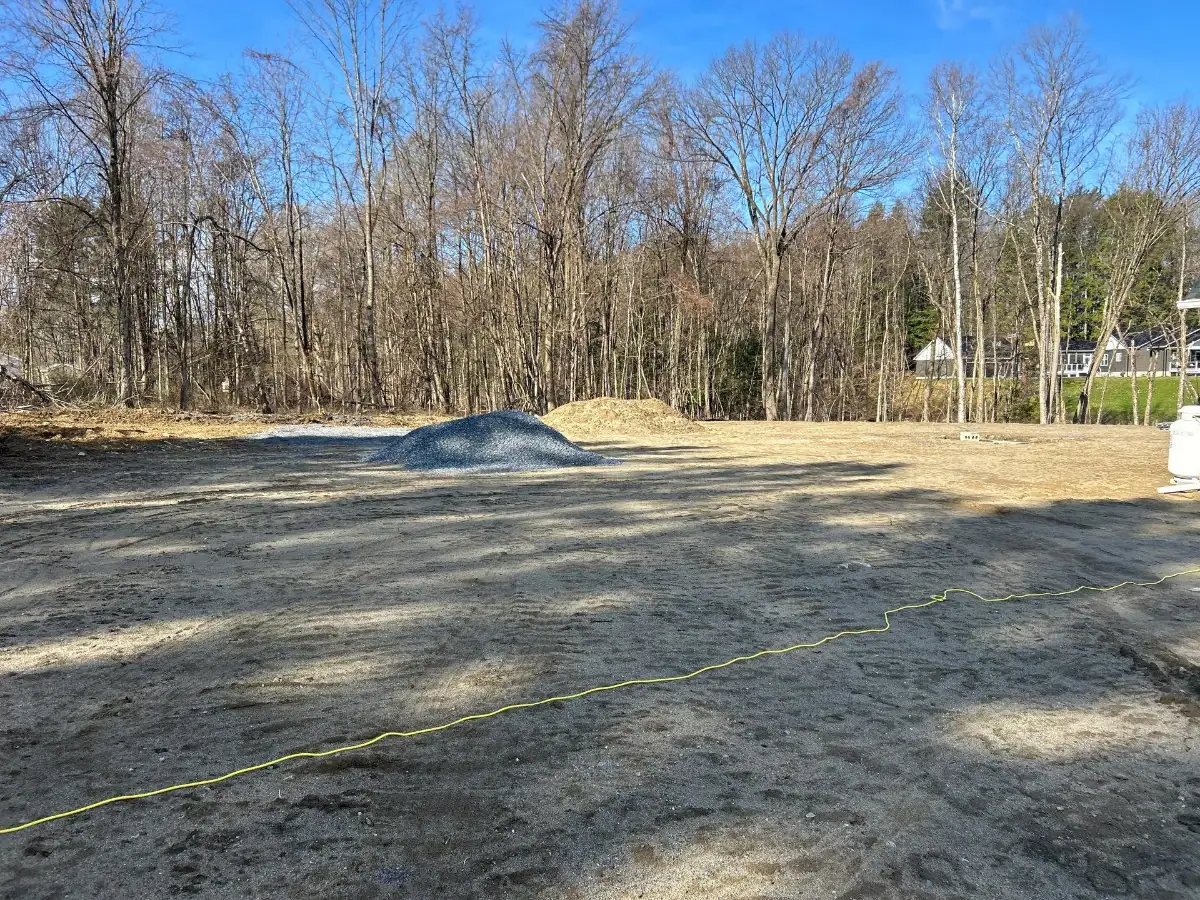
If you’ve already started getting quotes, you may have noticed that the numbers don’t line up — sometimes not even close. That’s not always a sign that one contractor is trying to rip you off. More often, it means the quotes aren’t actually for the same scope of work, even if they sound like they are.
A quote that doesn’t include stump removal is going to look a lot cheaper than one that does. A quote that leaves debris on-site is going to undercut one that hauls everything away. A quote from a contractor who hasn’t walked the lot and doesn’t know there’s ledge rock in the northwest corner is going to be lower than one from someone who has. That lower number feels good until the job starts and the add-ons begin.
The other factor is what happens after clearing. Getting trees and brush off a parcel is step one. Final grading — leveling and shaping the ground so it drains properly and gives your builder a foundation-ready surface — is what actually makes the site usable. Some contractors stop at the first step. If your quote doesn’t specify final grading, ask whether it’s included. If it’s not, you’ll be paying for it separately, and you’ll be coordinating a second contractor to come in after the first one leaves.
This is part of why we handle the full process at Emerson Excavating and Trucking — from initial clearing through grading and site prep. When the same company controls every step, there’s no coordination gap, no finger-pointing between vendors, and no site left in a half-finished state while you track down a second crew. Our excavating and trucking capabilities are integrated, which means debris hauling, material delivery, and grading all happen on one timeline. For buyers building new homes in Saratoga County, Warren County, or Washington County, that matters more than it might seem.
Forestry mulching is worth mentioning here as well. It’s a clearing method that grinds vegetation in place rather than removing it, and it averages around $800 per acre. It can be a good fit for certain sites — particularly where erosion control is a concern or where the cleared material can stay on the ground. But it’s not always the right choice for a site that’s going straight into construction, since the mulch layer may need to be removed before building can begin. We’ll give you a straight answer about which approach makes sense for your specific parcel.
Here’s something worth saying plainly: most excavation and land clearing companies focus their marketing and operations on Saratoga Springs and the Capital District. Washington County — towns like Hudson Falls, Fort Edward, Cambridge, Greenwich, Granville, and Salem — tends to be an afterthought. Some contractors will take the job, but they’re not working this ground regularly, and the difference shows.
Local knowledge in this business isn’t a soft concept. It means knowing which parcels near the Hudson River in eastern Washington County are likely to have sandy, fast-draining soil and which ones have clay layers that complicate drainage. It means knowing that a lot in the Lake George area of Warren County might look straightforward on paper but could hit ledge two feet down. It means understanding that the DEC Warrensburg Office is the right contact for environmental permitting in this region, not a generic state hotline.
When you’re evaluating contractors, a few things are worth paying attention to beyond the price. Ask who will actually be on your job site. At Emerson Excavating and Trucking, Josh is present on almost every job — not managing from an office, not sending a crew you’ve never met. That’s not a marketing line; it’s how we operate. When the owner is on-site, the work gets done the way it was quoted, and if something unexpected comes up — a patch of ledge, a drainage issue, a permit question — it gets handled immediately rather than waiting for someone to relay the information up a chain.
Ask about permits specifically. A contractor who handles the permit process knows which offices are involved, what triggers additional review, and how to keep the timeline moving. A contractor who leaves that to you is telling you something about how the rest of the job will go.
And ask for a written scope. Not a verbal estimate, not a ballpark — a written document that specifies what’s included: tree removal, stump removal or grinding, debris hauling, final grading, and any permit coordination. That document is what protects you if the scope starts to drift.
We’ve been building relationships in Saratoga County, Warren County, and Washington County since 1997, and the goal has never been to do one job and disappear. The homeowners we work with tend to come back for the next phase — the driveway, the septic, the foundation excavation — because the first job went the way it was supposed to. That’s the kind of contractor relationship worth looking for.
The permit process, the soil conditions, and the cost variables covered here aren’t meant to make land clearing feel complicated. They’re meant to give you enough context to ask the right questions and recognize a contractor who actually knows what they’re doing.
The short version: get a written scope, confirm permits are being handled, and make sure whoever shows up on your job site knows this terrain specifically — not just excavation in general.
If you’re planning a clearing project in Saratoga County, Warren County, or Washington County and want a straightforward conversation about what your parcel actually involves, reach out to Emerson Excavating and Trucking directly. Call or text — we’ll give you honest answers and a clear picture of what your project looks like from start to finish.
Article details:
Share:
Continue learning: