Most weed control programs treat the symptoms and ignore the cause. Here's what's actually going wrong in Warren County — and what a proper lawn treatment approach looks like.
Share:
Summary:
You paid for a lawn treatment program. You followed the schedule. Maybe you even did everything they told you to do. And by mid-June, the dandelions were back, the crabgrass was spreading, and the company’s answer was to sell you another application.
That’s not bad luck. It’s a pattern — and it happens to a lot of homeowners across Warren County every single season. The problem usually isn’t the product. It’s the approach. Most grass treatment programs are designed around what’s easy to sell, not what actually produces a healthy lawn. Understanding the difference is the first step to not wasting another season.
Ask most people what makes a weed control program work, and they’ll say the chemical. The right herbicide, applied consistently. That’s part of it — but it’s not the deciding factor.
Timing is. And in Warren County, the timing window is narrower than most companies plan for.
Pre-emergent herbicide has to go down before soil temperatures hit 50°F consistently — that’s the threshold where crabgrass seeds start to germinate. In Warren County, that window typically opens somewhere between late April and mid-May, depending on the year and the elevation of your property. Miss it by even a week, and you’re not preventing crabgrass anymore. You’re just waiting for it to show up.
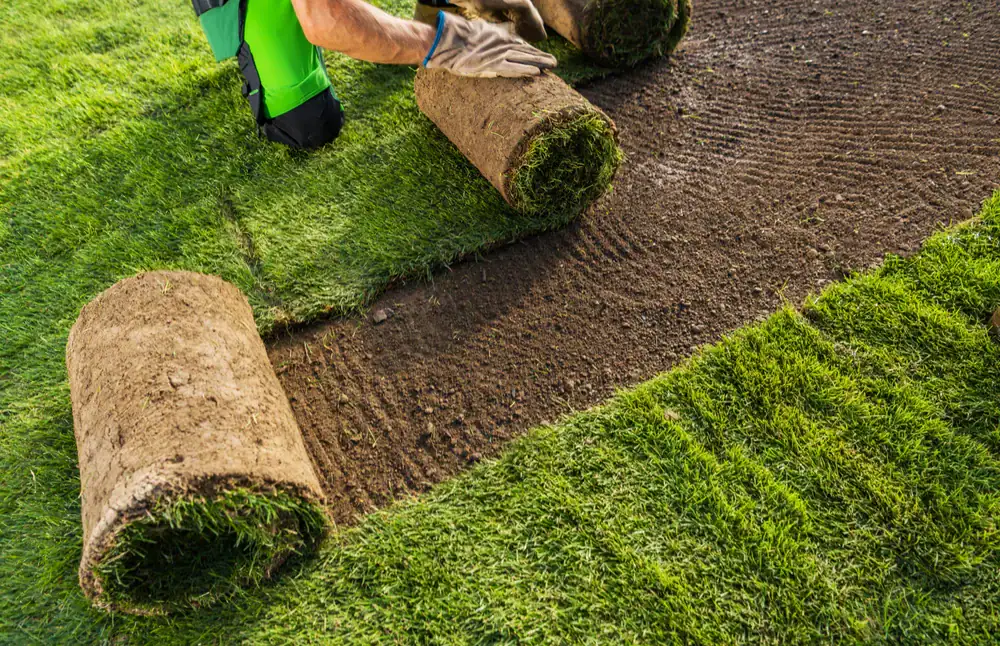
A real weed lawn care services program isn’t one visit a year. It’s a sequence of applications timed to specific growth stages, soil temperatures, and seasonal windows — each one building on the last.
Spring starts with pre-emergent for annual weeds like crabgrass, followed by post-emergent broadleaf control for dandelions, clover, and chickweed once they’ve broken the surface. Summer means spot-treating nutsedge and any stragglers that slipped through. Then fall — which most homeowners underestimate — is actually the most important window of the year for cool-season grasses like the tall fescues and perennial ryegrasses that do well across Warren County. A strong fall fertilization builds the root reserves that carry your lawn through winter and drive green-up in spring. Skip it, and you’re starting the following season already behind.
The other piece most programs miss is weed identification. There are hundreds of weed species, and they don’t all respond to the same products. Broadleaf herbicides are effective against dandelions and clover but do very little against grassy weeds like crabgrass or annual bluegrass. Applying the wrong product — or a generic one — doesn’t just fail to fix the problem. It can stress healthy turf and leave bare patches that become the next round of weed habitat.
What separates a program that actually works from one that just looks like it’s working is whether the company is treating your specific lawn or just running through a checklist. That means knowing what weeds are present, what your soil conditions look like, and what the turf needs to get dense enough that weeds don’t have room to take hold. Thin lawns are where weeds win. The goal of any serious treatment program is to build turf thick enough that weeds are competing on unfavorable terms from the start.
Warren County sits in the southern Adirondacks, and the soil here reflects that. Glacial till — the mix of clay, sand, gravel, and rock left behind by retreating glaciers — creates wildly variable drainage conditions from one property to the next, sometimes from one corner of a yard to another.
In areas with heavy clay content, water pools and stays. That’s where you’ll see nutsedge thrive, along with annual bluegrass and moss — all of them indicators of drainage problems rather than just weed pressure. In sandier areas with glacial outwash, water drains fast, turf dries out under summer heat, and crabgrass moves in wherever the grass gets thin. These aren’t the same problem, and they don’t have the same solution.
The soil in forested and semi-rural areas around Warren County also tends to run acidic — pH levels in the 5.5 to 6.5 range are common. Grass doesn’t absorb nutrients efficiently at that pH, which means fertilizer applications underperform, turf stays thin, and weeds have an easier time establishing. A lime application to correct pH is often the single most cost-effective thing a homeowner can do — but it only works if someone actually tests the soil first instead of assuming.
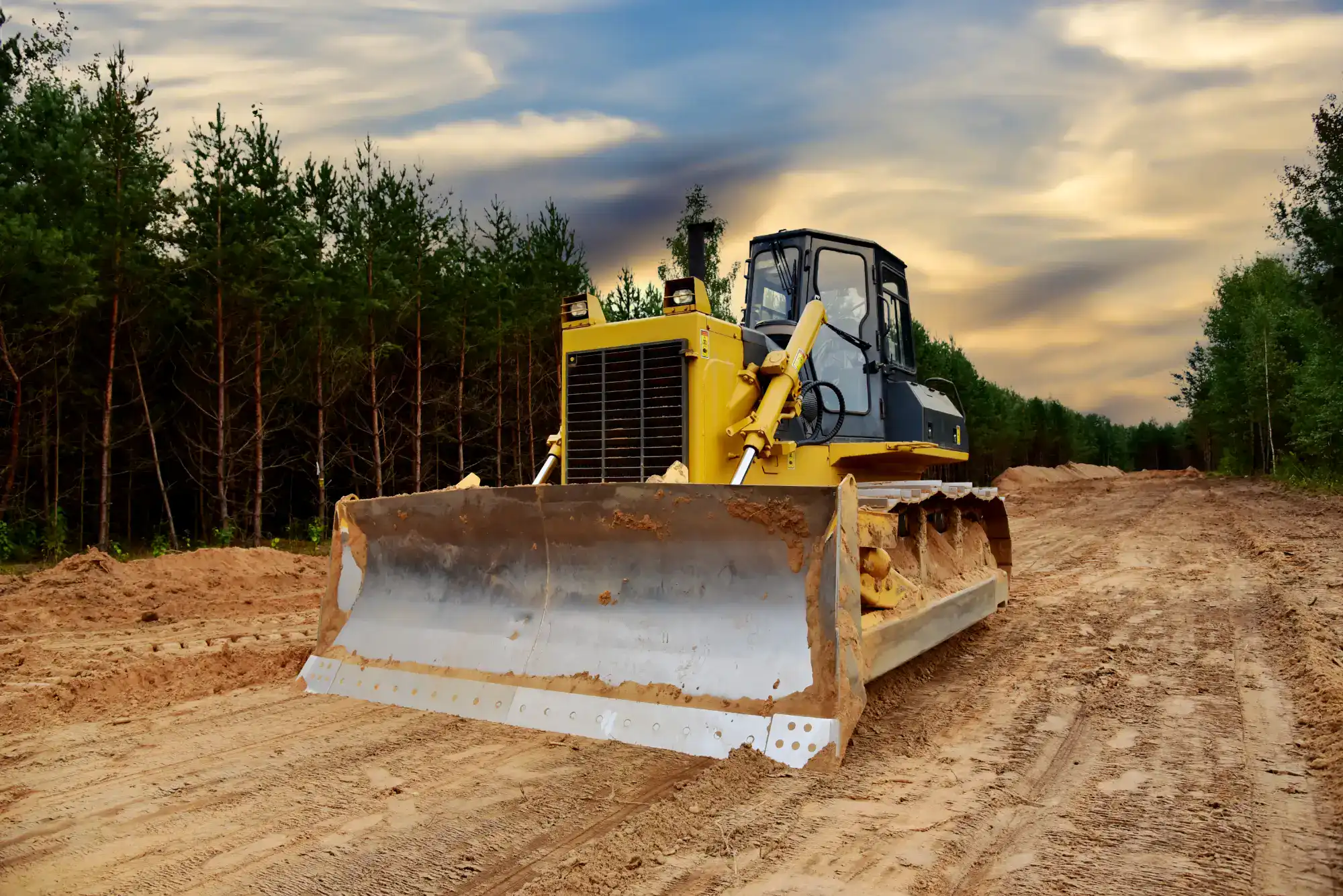
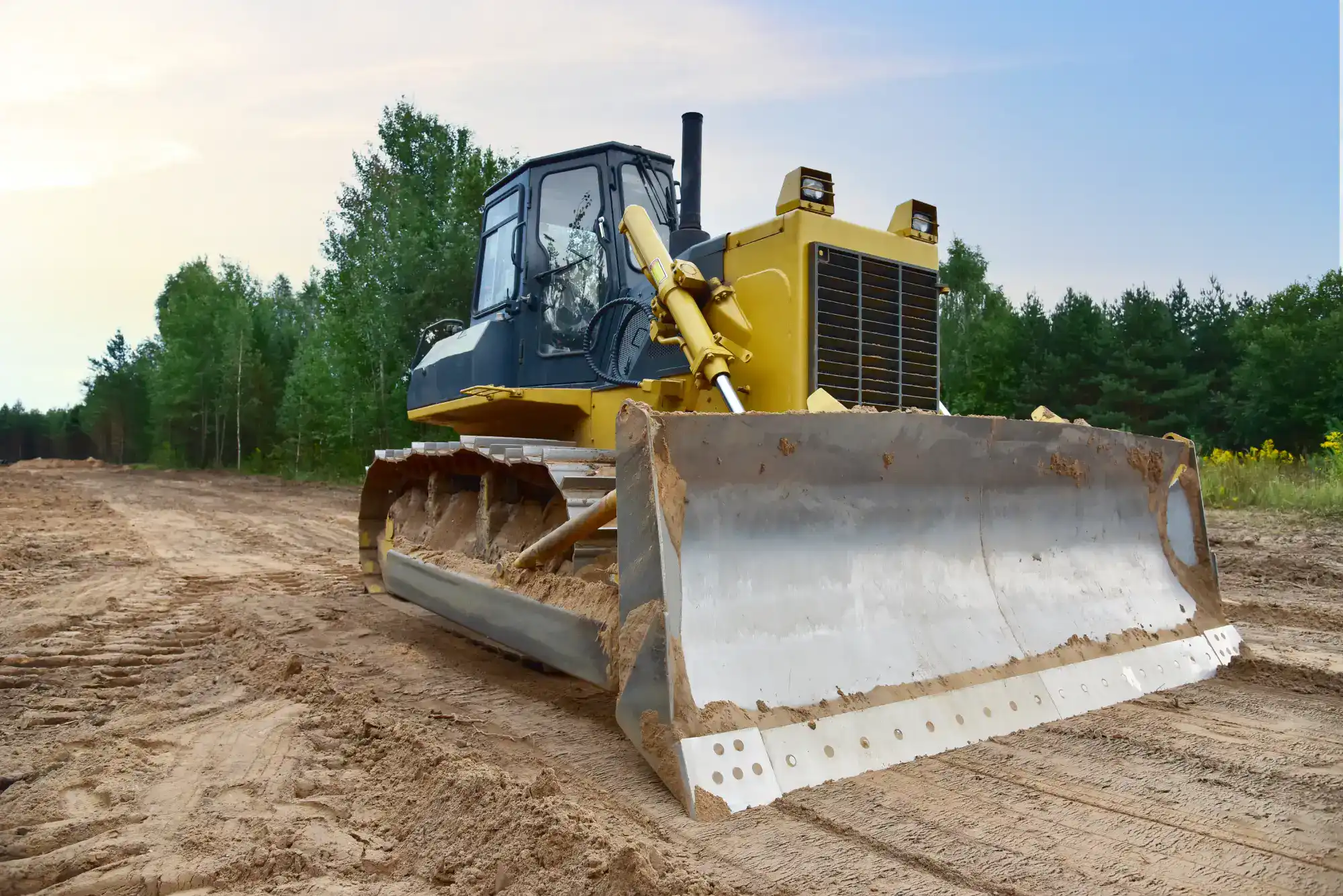
There’s also the new construction reality. A lot of homeowners in the Queensbury and Glens Falls corridor are starting from scratch on lots that were just cleared and graded. Construction equipment compacts soil to a fraction of its natural porosity. Topsoil gets stripped or buried. What’s left is a surface that resists root development, holds water in the wrong places, and drains too fast everywhere else. Standard lawn care programs written for established turf don’t address any of that. The problems that show up in year two and three of a new lawn — persistent bare spots, chronic weeds in low areas, thin turf that never seems to fill in — often trace directly back to site conditions that were set before the first seed went down.
Want live answers?
Connect with a Emerson Excavating and Trucking expert for fast, friendly support.
The lawn care industry is enormous — over 650,000 businesses nationwide — and quality varies just as much as the price. In New York State, any company applying pesticides commercially is required to register with the NYSDEC and employ at least one certified pesticide applicator. That’s the legal floor. Most homeowners don’t know to ask for it, and some companies operating in Warren County don’t meet it.
Beyond licensing, the things that actually separate a good provider from a mediocre one come down to accountability and local knowledge. Does the same person show up every visit, or does the crew rotate? Does the technician know what weeds are specific to your area and how your soil type affects treatment? Will they tell you exactly what they’re applying and when it’s safe for your kids and pets to go back outside?
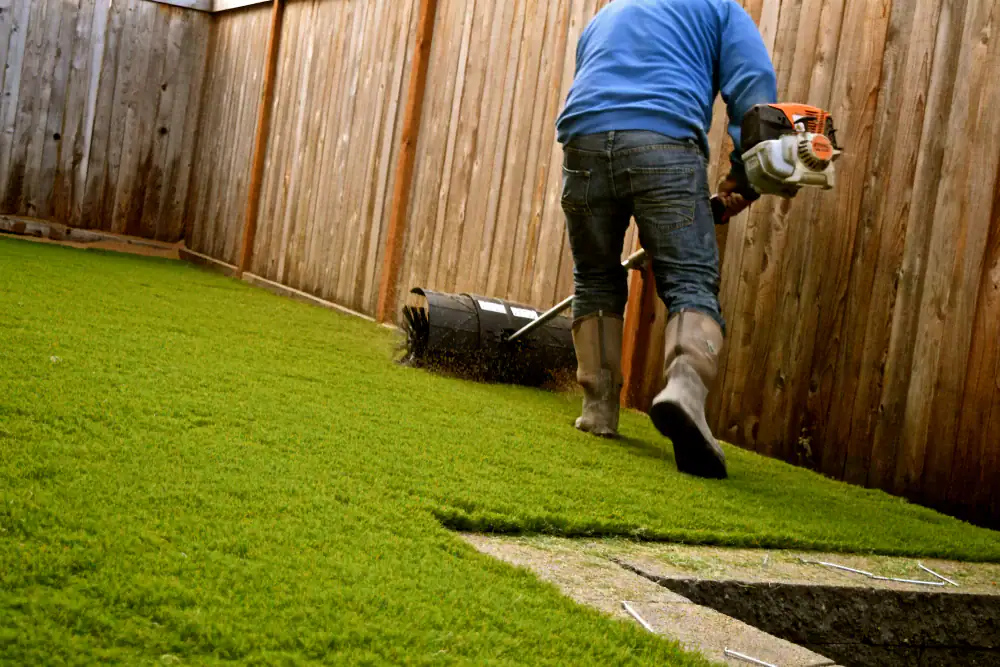
This is the part most lawn care companies don’t talk about — because it’s not something they can fix with a sprayer.
Weed pressure in a lawn is often a symptom of something happening below the surface. Compaction prevents roots from going deep, which stresses turf and leaves it thin. Poor drainage creates wet zones where certain weeds thrive and grass struggles. Low spots that hold water after every rain aren’t a fertilization problem. They’re a grading problem. And no amount of herbicide corrects a grading problem.
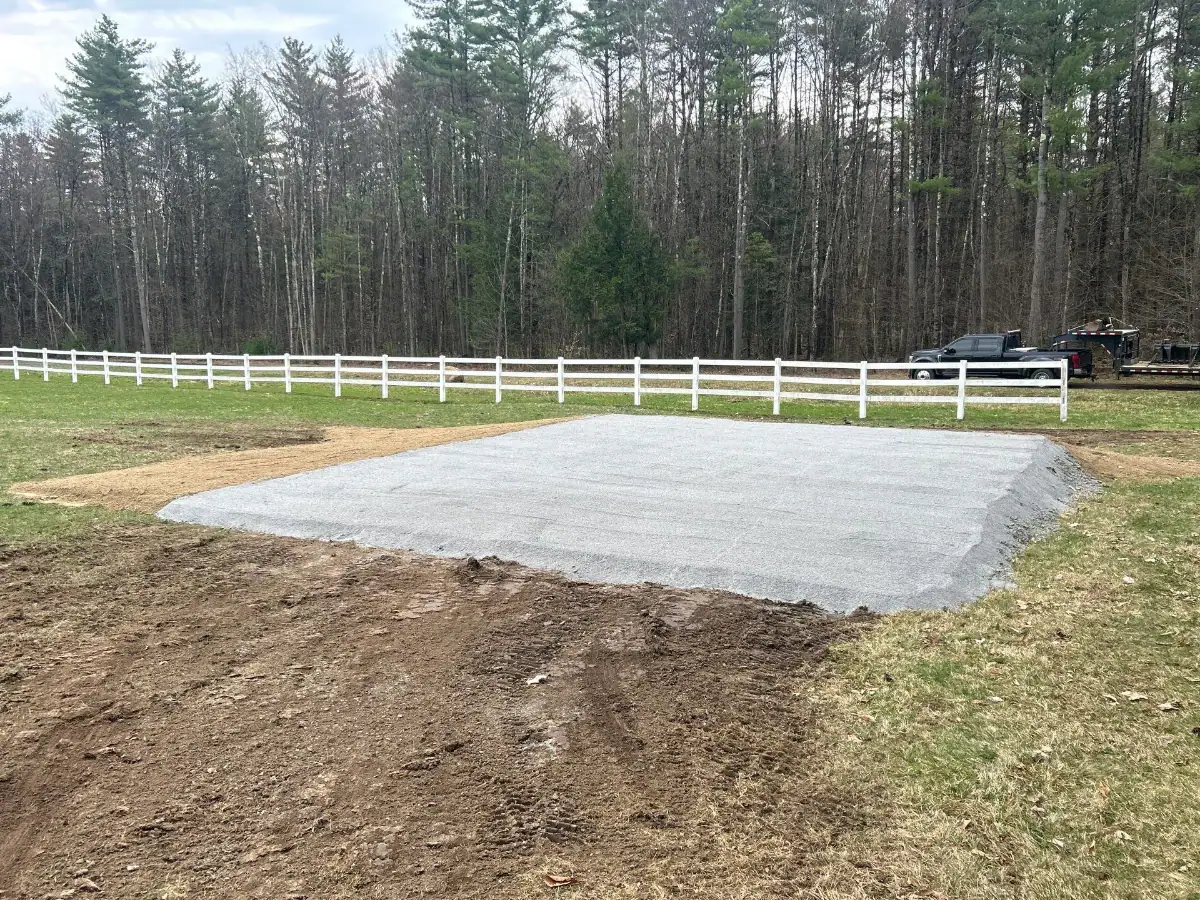
When a property has been properly graded — with drainage that moves water away from the lawn instead of pooling it — grass establishes faster, roots go deeper, and turf gets dense enough to crowd out weeds naturally. That doesn’t mean you’ll never need a treatment program. It means the treatment program you invest in will actually deliver what it’s supposed to.
For homeowners who just built in Warren County, or who are dealing with chronic drainage issues on an older property, understanding that lawn problems may have started the day the excavator left the site is crucial. Correcting the underlying site conditions — regrading low spots, improving drainage, bringing in clean topsoil where needed — is often the most direct path to a lawn that responds to treatment the way it should.
We work with a lot of homeowners across Saratoga, Warren, and Washington counties who come to us after years of fighting the same lawn problems. Once the site is graded and draining correctly, the lawn care side of things becomes significantly more manageable.
A lot of properties in Warren County sit close to — or within — the Adirondack Park boundary. That matters when it comes to pesticide application. The NYSDEC requires licensed companies to notify neighbors before commercial lawn applications, and responsible operators take that seriously. In a region where runoff can reach streams, wetlands, and protected natural areas, the “spray everything and see what happens” approach isn’t just ineffective — it’s genuinely problematic.
Good grass treatment in this area means using the right product for the specific weed, at the right rate, at the right time of year. Overusing herbicides doesn’t just risk damaging healthy turf — it can move through the soil and affect root systems in ways that show up as brown patches weeks after application. More product is not always better. Precision is better.
It also means knowing when not to spray. Applications during high wind, before heavy rain, or at the wrong point in a weed’s growth cycle are wasted at best and damaging at worst. A company that’s genuinely knowledgeable about Warren County’s climate — the short frost-free growing season, the variable spring temperatures, the specific weed pressures that come with glacial soil — will make better decisions about timing than a national franchise running a standardized schedule built for somewhere else.
The short growing season here — roughly 120 to 145 frost-free days at Glens Falls elevations — means every application window counts. There’s no room to make up for a missed pre-emergent in May or a skipped fall fertilization in October. Getting those windows right requires someone who actually knows this area.
Most weed control failures aren’t random. They come from programs built around convenience rather than what a specific lawn — in a specific climate, on a specific type of soil — actually needs. In Warren County, that means accounting for glacial till drainage, acidic soil pH, a short treatment window in spring, and the particular weed pressures that come with Adirondack region conditions.
If you’re dealing with chronic lawn problems that haven’t responded to treatment, the answer might not be a different herbicide. It might be looking at what’s happening at the site level — the grading, the drainage, the soil condition — before spending another season on products that can’t fix what’s underneath.
We work with homeowners across Warren County and the surrounding area on the site preparation side of that equation. If you’re starting from scratch or dealing with drainage issues that keep undermining your lawn, reach out and talk to us directly — by call or text. We’d rather help you understand the problem clearly than sell you something you don’t need.
Article details:
Share:
Continue learning: